Loading Map

Wednesday, August 02, 2006

Sail Day with Aquatic Adventures

I sent this to Latitude 38 to post on 'Lectronic or publish but just in case they don't, here it is for all our friends to read:

On July 23, 2006 six boats based in Bahia de los Angeles for the Pacific hurricane season hosted 15 boys and girls and six adults for an afternoon sail on the bay. The kids were here from Hoover High School in San Diego for a five week educational program with an emphasis on marine sciences, the environment, and community service organized by Aquatic Adventures (www.aquaticadventures.org). Hoover HS is an inner-city school, and it's the goal of Aquatic Adventures to supplement programs in schools where budget cuts have reduced coverage of the sciences.

We all anchored off of the dinghy landing at Guillermo's to await the arrival of our guests at 1 PM. Each skipper dinghied in to meet them on the beach, ferried out the passengers assigned to each boat, and then the "race" was on. Nakia raised anchor under sail and was first to lead the fleet out from the Village on a close reach towards Isla Cabeza de Caballo. There we tacked toward Isla la Ventana, and when it was time to return, most of the boats set their spinnakers for the downwind run back to the Village. It was a beautiful sight to see six boats sailing as a fleet out on the bay!

From all reports everyone had a great time. The kids were encouraged to raise and lower sail, perform tacking and jibing maneuvers, and of course, drive the boats. We told them a bit about the cruising lifestyle and they asked all sorts of wonderful questions. After the boats re-anchored everyone jumped in for a swim in the warm water before riding back to the beach in the dinghies. It was a nice way to cool off after a hot, cloudless afternoon. We were fortunate to have a perfect day which had been preceded by days of thunderstorm activity and was followed by the big south easterlies from tropical storm Emilia.

We can't say enough about how terrific this event was. The students were enthusiastic, inquisitive, and just a delight to have on board. And it's always refreshing for jaded old salts to experience the thrill of sailing through the eyes of appreciative youngsters.

We'd like to extend a big thank you to everyone who was involved:

Nakia (John and Linda) and SolMate (Stan, MJ, and el gato Gale) who got the ball rolling.
Ceilidh (Jay, Janice, and bad dog Buster) who picked it up and ran with it.
Milagro (Lance, Jo, and guard puppy Rocky) and OverHeated (Darrell and Rita) who rushed north from Santa Rosalia to be here in time.
Caravan (Gene, Vicky, Fiona-6, and good dog Clipper) who called us on the VHF and asked to be included.
Liberty (Larry and Jackie) who unfortunately had to cancel at the last minute due to engine problems.
Rancho Pacifico (Larry and Lois) who are land based in BLA for most of the year, and who threw the great parties that brought everyone together in the first place!

Linda Hill and John Gratton
S/V Nakia, Hans Christian 33
Redwood City, CA/Cruising Mexico

Thursday, July 27, 2006

Puerto Refugio

18 July 2006
29 33' N 113 34' W

Fishing report: John caught one 36" male dorado about five miles out of Isla Angel de la Guardia as we made our approach.

We only had time to anchor here for two nights on our way back to the village at BLA, but we're very glad we decided to include this stop. We were leery of staying here because everyone we know has been chased out by the jejenes, or no-see-ums, the bites of which drive John loco. We exercised extreme caution in the evening and morning hours (socks, long pants, long sleeves, bug repellant sprayed on all screens, and mosquito coils burning), and while hiking on shore (bug repellant and long sleeves for John). So we suffered from being fully dressed in the heat, but we departed with only a few bites between us.

Despite our biting insect paranoia the area more than lived up to its reputation for scenic beauty. The West Bay, where we anchored with SolMate, was swimming pool blue and clear. There wasn't a huge variety of fish but we saw lots of grouper and trigger fish and three turtles over the two times we snorkeled. It was so fantastic to be able to snorkel in warm, crystal clear water for a change.

We took a short walk on Isla Mejilla the afternoon of our arrival. Covered with the most organ cactus we've seen in one area, it was too bad that a fish camp or kayakers have left unsightly garbage along the beach. Today we all took a morning hike on Isla Angel de la Guardia, walking up ridges with views into the East Bay anchorages. This is a very active bird nesting area and we were at the tail end of the season. The gulls had all fledged, but there were still a few young pelicans walking around that didn't seem quite ready for flight. The ground was littered with dead pelicans, but there was a healthy population of juveniles hanging out at the middle bight in the East Bay and we have no way of knowing if this was a good or bad year for them.

We'd like to return for a longer visit but we hear that it gets hotter as the summer progresses. We're very glad we made the stop early in the season, and maybe we'll go back up in September before we cross to San Carlos for our haulout.

Linda and John

Friday, July 14, 2006

North Country

14 July 2006
Gonzaga Bay (29 45' N 114 18' W)

Yesterday at 5 AM we raised anchor at Isla Smith, off of BLA, and mostly motored the 65 miles NW to Bahia San Luis Gonzaga. We didn't drop the anchor until 6 PM which meant that John got to check in as an underway vessel (which take priority and get to go first) to all three radio nets - Sonrisa (HAM), Amigo, and Southbound (both SSB). John tried hard to get some sailing in, but we knew we had a long way to go and what wind there was was from directly aft (which is a very slow point of sail for us) so we only had the engine off for a couple of hours. The rest of the time we had the main up and we rolled the big jib in and out all day long whenever we thought it could help give us a push. We always motor with the main up, for shade if nothing else. We thought we might get an assist from an 8-12 foot flood tide (depending on whether you look at the tide table for BLA or Puertecitos farther north), but just because the beach gets huge at low tide doesn't mean you get any current out in open waters. The only place we really noticed it was exiting Canal de Ballenas that morning.

And the only interesting thing of note during the whole slow long day was a shark sighting. John looked aft and saw something big checking out his fishing lures. When it came to the surface we could clearly see that it was a 6-7 foot shark of some kind. John never felt any tension on the hand line, but after the shark departed and John pulled the line in, there was no lure and the 150 lb test line looked like it had been cut with a razor.

Our other shark story which I forgot to tell you about was when we had our really slow sail from Esta Ton on Isla Angel de la Guardia to Ensenada Alcatraz. We had the spinnaker up all morning making no headway, and by 1 PM we were actually just drifting, the spinnaker hanging limp. I had been thinking that a long day of slow sailing is fun when there's lots to see, but can be pretty boring when there's not much wildlife around. John stepped up to the starboard rail to give Mr. Winky some fresh air, and I looked to port from the cockpit when I heard a sound like an approaching wave in the glassy water. I whispered, "John, John" when I should have just screamed, "Shark!" This 7-8 foot monster made a direct bee-line for the cockpit end of the boat before rolling on its side to pass about two feet from the port side of the boat. Then it went around the bow to do the same thing on the starboard side. I guess I didn't really need to worry about scaring it away before John could see it! It was just incredible when it rolled on its side sort of looking up at us with a big eye in a very huge head. Friends of ours said it was probably a black fin, but it all looked dark gray to me with a big pointed head, so we thought maybe it was a mako. Good thing we hadn't decided to jump in for a refreshing swim before the wind filled in.

Anyway, we're now the farthest north that we've ever been in the Sea of Cortez and, boy, is it hot! It was over 90 degrees when we arrived and it was over 90 degrees when we woke up this morning. The good thing is that the humidity has been in the 30-40 percent range. The water temp is in the low 80's and we had a long soak before dinner last night. But the evening breeze felt like it came from a blast furnace (and is so dry you can't look directly into the wind or your eyeballs dry out), and every time I woke up during the night I was sweating even though we had two fans pointed at the bed. We are drinking liters of water at a time, and I even dreamt last night that I was snorkeling in cool water.

This morning we met SolMate on the beach at our usual 8 AM rendezvous time. (I had debated about making coffee when I got up at 6 AM, but I couldn't not have my morning cup in spite of the heat!) We took a leisurely walk through the section of "vacation homes" above the beach here. Much more primitive than at Punta Chivato, but I think that's because this is even more difficult to get to by dirt road (there's no water or power to these places, and they have dirt airstrips for private planes). There were lots of impressive solar arrays, but they all looked brown with age. The best part was when we got back down to the huge sandy beach exposed by low tide and found all kinds of small shells in the tidal runoff. The boys had to drag the shell collectors off the beach to return to the boats in time for a late breakfast.

Now we are hibernating in the heat of the afternoon. Tomorrow morning we plan to go a bit farther up to Bahia Willard, aka the other hurricane hole up in the Sea.

Linda and John

Tuesday, July 11, 2006

Eight Miles in Five Hours

11 July 2006
Mitlan anchorage, Isla Smith, Bahia de los Angeles (BLA)
29 04' N 113 31' W

Well, it would have been eight miles if we'd come directly here from Ensenada Alcatraz instead of trying to sail. You'd think between two boats and four sailors that one of us would have realized we'd burn less diesel by putting the pedal to the metal as soon as we left the anchorage. We all knew that we were soon going to be bucking an eight foot flood tide, and the reason we were leaving in the first place was to find a better refuge from the strong south easterlies that came up by mid-morning for the past two days.

But instead, intrepid sailors that we are, we sailed out of the anchorage hoping for more wind to take us south. Two hours later we had the engine on at low RPMs and 20 minutes after that we cranked it up to full cruising throttle after we realized we'd never make the new anchorage if we didn't beat feet. Even so our best hourly average speed over ground was only 3.0 knots, and we ended up covering 15.5 nautical miles.

But the new anchorage is calmer, though still windier than I'd like for swimming. At least there's not much in the way of wind waves so we'll be able to get out in the dinghy. Yesterday we didn't leave the boat at all. Instead John made a new wind scoop to replace the old nylon one that finally ripped in the previous night's high winds. And we watched a movie in the afternoon. He was able to go fishing before we left this morning and caught his first yellow tail jack of the season. He caught a second one but we already had enough for dinner so that one got thrown back in.

The weather had been hot and dry after a humid period, but this morning we woke up to soaking wet decks and 77 degrees in the cabin (was usually about 83). We've been doing a lot of hiking in the mornings with Stan and MJ from SolMate, and I got one nice warm snorkel (water was about 84 degrees on the surface) in at a place called Esta Ton at Isla Angel de la Guardia. That was a beautiful little anchorage (both boats had to bow and stern anchor - it would make a better one boat anchorage), but we got chased out by the no-see-ums. All of the anchorages on this island are notorious for the no-see-ums which is a shame since the places at the north end are supposed to be very pretty. But John is very susceptible to bug bites and we've already had a bad report of bugs up there, so we're probably going to give it a pass.

It was fun to visit the village of BLA again after being away for almost a year, and not much has changed. Laundry is still exorbitant (they wanted 250p for three regular loads - wash, line dry, and fold - but we talked them down to 200p which is still higher than anywhere else in Mexico). There's one additional tienda to add to our list when it's time to search for vegetables, and it's still easy to find most of what you need.

So it should be a good summer, and we're looking forward to seeing the rest of our friends up here soon.

Linda and John

Monday, June 26, 2006

Communing With Nature

25 June 2006
Isla Las Animas, Baja
28 42' N, 112 05' W

Yes, we're no longer up to date on our blog, but let's just jump back in from here. We spent an unheard of six nights in the lagoon at Bahia San Francisquito - unheard of because we're usually in and out of an anchorage after three nights max. But the anchorage there is very protected with no swell, which turned out to be just what John needed for removing the teak from the cabin top foredeck. Except for the cockpit, that's the last large area to be done. It's very nice to be able to walk around without leaving dirty footprints most of the time now. The gel coat is much easier to keep clean.

The bird activity in that area was amazing, and was starting to become a nuisance with all the noise they were making. Hundreds of birds - including pelicans, terns, Hermann's Gulls, blue-footed and brown boobies, cormorants, etc. - were after huge bait balls which ringed the bay. These were so thick that the sandy bottom appeared to be black with undulating "grass." We also saw several young sea lions enjoying the feast.

We took one hike and one beach walk while we were there, had three boats over for cocktails on Nakia, dinner on SolMate (we contributed some of the dorado John caught on the trip up from Santa Rosalia), and movie nights on both Nakia and SolMate. Besides the water being a refreshing 70-72 degrees, the only downside was the number of bees visiting the boat whenever the breeze was down (mostly mornings and evenings). This morning I decided I'd had enough of them and got up from my chair to come down below. I wasn't careful about making sure none were nosing around me and, when I flexed my foot to stand up, I felt something on my instep. I lifted my foot back up off my flip-flop in time to release the bee and see it fly away, but then quickly realized that it had already stung me. I immediately went below where John was waiting with a kitchen knife to scrape out the sting and poison sack, and then applied ammonia and ice. This afternoon the sting isn't much bigger than a mosquito bite and hasn't bothered me at all. I'm sure the key was getting the poison sack out in a matter of seconds after being stung.

We raised anchor at 8 AM and motored for an hour before sailing the rest of the way here. Actually there wasn't any wind to speak of but we got a push from the flood tide. The nice thing about only doing 2-3 knots under sail is that you see and hear so much wildlife. We heard the splashing of a large pod of dolphins before we could see it, and we were surprised a few times by the loud exhalations and inhalations of a few very large whales which we think were fin backs. And it's always fun to hear the splats of manta rays doing back flips in the air. They've already disappeared back into the water by the time the sound reaches us, but they usually accommodate us by doing two in a row so we can see the second aerial trick.

John's out fishing, trying to find the school of yellow tail that our neighbor reported seeing in the anchorage yesterday. We're a little exposed to weather out here so tomorrow we'll probably head back to the Baja coast to continue north.

Linda and John

Tuesday, June 13, 2006

Project

We've been doing a long term summertime project on NAKIA that I thought you'd all be interested in. We're removing the teak decking from everywhere except the cockpit. This is a long multi-step process which, ultimately, will prepare the deck for gluing down new non-skid fiberglass panels. The process goes as follows: First I take a small chisel and a hammer and remove the wood plugs which seal up the top of the screws. The plugs are about 3/8" of an inch wide and 1/8" deep. This turns out to be about the hardest part because the plugs are very well glued into the deck. In fact on a lot of times, the only thing sealing the screw is glue, the plug having long worn away. After removing the plugs from 150 or so screws, I take my drill driver and remove the screws. This is the fastest step - power tools are great! When all the screws are removed, the hard work begins. Using two pry bars, a couple of wood chisels, a heavy duty putty knife, and a big, heavy hammer I pry the teak planks from the underlying fiberglass. This is usually a challenging effort because the black caulking used to seal the teak planks to the fiberglass is still in pretty good shape and the teak is not in very good shape. Between the strong glue and old wood many of the planks break in the process of being removed, leaving a lot of splinters and short pieces. Once in a while I can actually pull an entire plank without it breaking. Once all the planks are off Linda and I go back over the fiberglass and scrape off as much of the black caulking as possible. The rest will be sanded off later. With all the screw holes open, I take some penetrating epoxy (a runny glue which soaks into wood and fiberglass and then hardens) and squirt it into the screw holes using a small syringe. That's left for 36-48 hours to cure and then I go back and drill out all the screw holes using a counter-sync bit to make a larger surface area for the filler to adhere to. I mix up some epoxy and thickener and then push it into all the holes. This cures over night so the next day I can finish off the job by sanding all the excess epoxy filler along with the left over black caulking. This is the dirtiest step with all the sanding dust blowing all over the place. Finally I vacuum up the dust and Linda wipes down the deck with a sponge and water and we're left with a clean smooth white deck.

Why, you may ask, are we doing this? The primary reason is heat. The teak decks are hot-hot-hot! If the mid-day sun is on the teak it's impossible to stand barefoot on the deck; you have to wear shoes to protect your feet. Also the teak is dirty. It holds dirt and mildew and slowly distributes it to the rest of the boat. So we're hoping that after the removal/replacement process we'll end up with a cooler, cleaner, and lighter boat.

We'll know for sure this winter when we're all done and the deck is newly painted.

John and Linda

Monday, May 15, 2006

Puerto Escondido

After staying in Puerto Los Gatos for a while we started getting itchy feet and since the weather was so calm we figured we'd go ahead and make a 'big jump,' all the way to Puerto Escondido.

Puerto Escondido (Escon-Gringo to some of the more cynical cruisers) is the home of Loreto Fest, a big cruiser party, that had just completed a few days before. We really only went in for one reason, to hook up with our friends Stan and MJ from SolMate. But since we were there anyway we thought we'd go ahead and get water.

PE has great fresh water. But only one spigot. The spigot is on a sea wall about 8 ft high, and the depth next to the wall is only about 4 ft (NAKIA needs 6). However, it's much deeper only a few feet from the wall. There are two ways to get water in PE. You run back and forth between the spigot and your boat with jugs or you can Med-moor to the sea wall and run a hose ashore. Since we were coming in for a quick turn around we decided on the second method.

Before you can get water in PE, you have to call Jose. Did I neglect to mention that the water spigot is under lock and key? Well, Jose has the key. Before you can get a single drop you have to call on the radio and in your best Spanish say "Jose, necesito agua, por favor." He'll come back in his best English, "OK, OK!"

Having contacted Jose, we called Stan and MJ to take our stern line for the Med-moor. (Med-mooring is done by dropping an anchor and then backing down toward a wall or other fixed structure and then tying a stern line to the wall. It's called Med-moor because the only way to moor in many ports in the Mediterranean is by this method.) We had one problem though, we didn't have any way to get our stern line to the wall. Enter John, super sailor. I quickly tied a monkey's fist using some old line and a tennis ball and then tied a 50 ft piece of small line onto the monkey's fist. I'd throw the fist ashore with our stern line attached so we wouldn't have to get to close to the shallow water at the base of the wall.

All set, we entered the harbor and went toward the spigot wall bow first to check the depth. Finding it sufficient, I pivoted the boat around, stern to the wall and motored forward to drop the bow anchor. This maneuver got a "you're showing off" rating from MJ. Before we dropped the bow anchor, Linda and I switched positions. She would drive and I'd handle the heavy anchor while I gave directions via hand signals from the bow (this is our normal anchoring procedure). In went the anchor, back went the boat, and just before we got too close I snubbed the anchor chain and walked back to the cockpit to throw the monkey's fist to Stan (this got an "You even have a monkey's fist!" rating from Stan). He tied off the stern line and we were set. You'd think we'd done it before. After that it was short work to fill NAKIA's tanks.

For our departure Stan just released the stern line and the anchor pulled us away from the wall. The only hiccup came when I wanted to tip Jose. I put a bill in the monkey's fist and threw it ashore, but for whatever reason I did it left handed and instead of arcing cleanly to the top of the wall it went wide left and too high, almost hitting a guy in his dinghy at the base of the wall. Oh well, you can't always be perfect.

John and Linda

Monday, May 08, 2006

LTR

LTR=Long Term Relationship

Sunday, May 07, 2006

Movin' up

Well it's been a long time since our last blog, so I thought I'd try to get up to date.

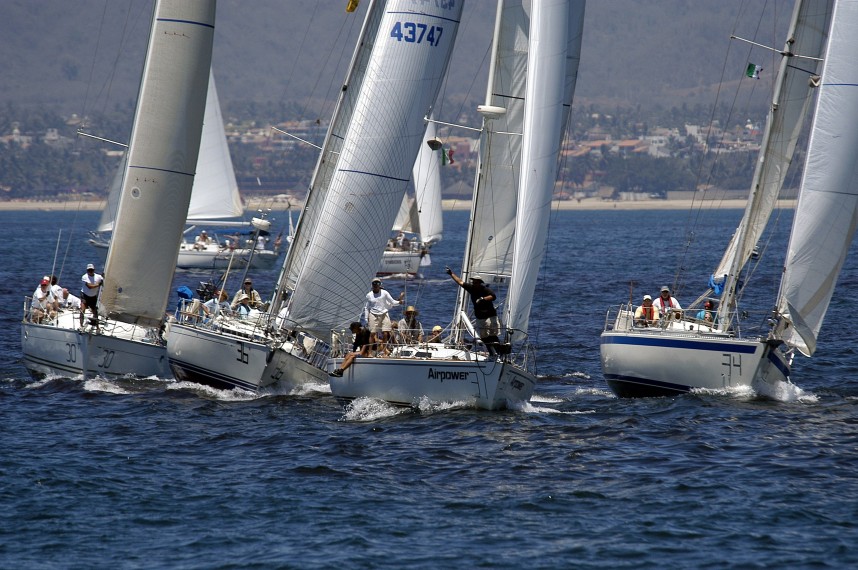
We spent the last part of April in La Paz where we did two things. Well maybe more than two, but two important things. First we renewed our FM-3 visas. We're now legal residents of Mexico for another year, and it only cost $100 each :-( The second important thing we did was to attend several of the seminars at La Paz Bay Fest. This used to be a real 'to do' in the Sea of Cortez but over time Loreto Fest got bigger and Sea of Cortez Race Week (as La Paz Bay Fest used to be called) got smaller. The new format is less party than Loreto Fest, but has a lot to offer in the form of seminars and a good race. Linda attended seminars on diving and snorkeling in the La Paz area, summering in the Sea of Cortez, Mexican laws applicable to Baja Cruisers, and First Aid. John, not as interested in continuing education programs for cruisers, got a race crew together for his friend Bob on Airpower and sailed the race.

While Linda was taking notes in seminars, John was out with Bob and Airpower trying to get the crew in order to race effectively. We must have done a pretty good job, because we won the race. Not only that we managed to fly two spinnakers at the same time in the process. Everyone was suitably impressed. Bob was a true friend and gave us the winning prize of dinner for two at La Divina Uva, which was a real treat and made for a very nice evening out for us.

After we received our new visas and got finished up with Bay Fest we moved Nakia into Marina Palmira for a two night, three day scrub-a-thon. The teak and fiberglass were looking pretty bad so it was time to spruce up for the coming summer. We also managed to do a bunch of last minute shopping, thanks to Lance and Jo on Milagro who have a truck and were based out of Marina Palmira all winter.

We were back out into the wild on April 30th. SolMate told us about a large beach on the east side of Espiritu Santo Island so we headed out that way. The wind didn't cooperate, and we ended up motoring almost the entire way. The beach was as advertised though - almost two miles of white sand. Of course the wind came up right as we were entering the anchorage so we had to wait until the evening before we could take a walk. Anytime we do something like this I think of the classic singles add: "SWF seeks LTR, enjoys long walks on the beach." Heck, we just take long walks on the beach because we want to take a walk, and the beaches are, well, long.

We left Bonanza Beach after only one night (I guess we don't like long walks on the beach that much) and headed out to the north end of Isla Partida. The weather forecast looked good to stay at a little cove there. Of course right as we're within one mile of the cove a Moorings charter boat comes screaming by in front of us, cuts into the cove and drops his anchor. As soon as their anchor was set, everyone went below. I went by close to ask if they were planning on staying the night and not just the afternoon. The cove is only big enough for one boat, and even though it was pretty clear they had 'taken our parking place,' Linda and I decided to let it go. After all, they're on vacation and we anchor in beautiful coves almost every night.

We set the spinnaker, right in front of the Moorings boat, and set off to Isla San Francisco. This is Linda's all time favorite island. We posted a picture of it in the blog last year showing its incredible turquoise water and crescent shaped white sand beach. The one bad thing about Isla San Francisco is that it doesn't protect you very well from the Coromuel, a southwest wind that blows out of the Bay of La Paz nearly every night in the spring and summer. In order to maximize our protection from the southwest, I decided to get in as tight as I could in the crescent. The water in there is not very deep, and there was a minus tide early the next morning, but I managed to get Nakia in far enough to get out of the worst of the wind generated chop and still keep about 6 inches of water under the keel even at low tide. It's a good thing the Coromuel did blow, because if it hadn't I'm sure we'd have ended up hard aground until the next high tide. One useful thing about being in shallow water, when I went down to clean the bottom of the boat I was able to _stand_ on the sand to scrub. Much more leverage that way. :-)

We spent three nights at Isla San Francisco, all of them in a stiff Coromuel. But thanks to our almost too shallow anchoring spot we were snug as could be. We'll have to try that again sometime. We had a good sail to Bahia Rincon, going through the usual antics with the sails: raise the main, roll out the jib on a broad reach, jibe the main, pole out the jib, hoist the drifter in double headsail configuration, drop the main, hoist the main, drop the drifter, jibe the jib, take in the pole, roll up the jib, drop the main, drop the anchor. Sounds like a lot of work for a 15 mile sail, no?

We actually survived our night at Bahia Rincon. It was just what we expected when we got there Wed afternoon; a nice calm anchorage with the wind out in the San Jose channel blowing 12-15. We anchored in 35 ft and put out 200 ft of chain, being careful to set the anchor in anticipation of a west wind Wed night. We went snorkeling and I got a medium sized crawler. Evening was calm and we went to bed.

About 1100 the wind started blasting down a little canyon that Lance warned me about on the Southbound net. We don't have a wind meter, but judging by the spray and short fetch I'd say some of the gusts were in the mid 30s. The wind died about 0100 only to start up again at 0400. No big deal really, we were only in danger of getting blown offshore, but it was hard to sleep with all that noise!

We set sail Thursday morning with the last of the blusterlies and dropped anchor on the north side of the Moreno Rocks. There's a little protection here from the SE wind that came up _after_ we motored almost all the way here. We put the dinghy in and went ashore and walked the beach; no snorkeling, it's just too darn cold. After our walk we got back to the dinghy and noticed a large flock of turkey vultures circling over Punta Cobre. That's when we noticed the smell.

We jumped in the dinghy and went around the south side of Punta Cobre and there on the beach was a medium sized gray whale. Or at least what was left of it. We were motoring away from the scene and, swimming between Isla Morena and Punta Cobre, was a small gray whale. Obviously a baby. Neither Linda nor I thought the whale on the rocks was big enough to be a full grown mother, but what do we know, we're not whale bio-persons. We were probably underestimating the size since we were viewing it from a distance, and there wasn't much left of the animal other then the skeleton and a nasty smell.

When we went ashore the next morning to scavenge a bone for Duffy's Tavern up in BLA, it was apparent that the whale was much bigger than we had originally thought. What a sad story if it really was the mother of the baby we saw in the channel. We chased the turkey vultures off and circled the carcass/skeleton taking pictures. I'd had visions of collecting the jaw bone, but it was huge when we got close enough to really see it. Instead we settled for one of the smaller vertebra, which was still a heavy load for John to carry back to the dinghy. John tied it to the back of the pushpit where it doesn't stink as long as we face into the wind. Let's hope we don't get a true downwind sail until it has a chance to bleach out in the sun. [Addendum: SolMate reports the whale was mostly still intact when they were there a week before us. It will be interesting to compare photographs with them.]

We had a great sail up the beach about 10 miles to Puerto Gato, and anchored next to friends Bob and Jennifer on Nuestra Isla. Other than some overcast, Puerto Gato has been very nice. We've been here three nights and haven't had so much as a light breeze. I did a little snorkeling, complete with wet suit jacket, to see if there were any crustaceans crawling around the rocks. There weren't. We also met a nice couple from Colorado who were on a bareboat charter from the Moorings. We spent an afternoon hiking together in the desert and invited them over for cocktails in the evening.

One of the things we found on our walk ashore was a terrible pile of garbage which looks like it was left by kayakers of all people. So this morning we got a bucket, some kerosene and a lighter and went ashore to clean up a little. We picked up as many of the cans and bottles as we could fit in a 5 gal bucket and then picked up all the paper garbage and burned it in a nearby fire pit. We also gathered as much of the plastic trash as we could and consolidated it into a large bag. We had to leave the plastic trash behind, since we're not going to be anyplace with good garbage service for a while, but we did take all the cans and bottles back to the boat so they can be deposited in deep water (over 600 feet) on our next passage. The beach looks much better.

Well, that should bring you up to date. More adventures to come.

John and Linda

Thursday, April 27, 2006

New Pics

Here are a few pictures of what we've been doing lately (mostly racing AIRPOWER). We did two races: the Banderas Bay Regatta, and the La Paz Bay Fest.

La Paz Bay Fest crew

Here's the crew from the La Paz Bay Fest showing what place we came in.

Another view

Here's another view of the two spinnakers.

Two spinnakers!


During the La Paz regatta, Bob called the race commitee to ask if we'd get 'points' by doing a spinnaker change. The commity said we'd be penalized if we had two spinnakers. We countered by asking what it was worth if we flew both spinnakers at the same time. They were duely impressed, we got the extra points.

Airpower at the start

Here's a picture of AIRPOWER at the start of the Banderas bay Regatta.

Nikki and Ralph


This is Nikki and Ralph sailing their San Juan 24 near Punta de Mita. They run a bakery from thier home where they make pizza and wonderful bread.

Hitch hiker


We had a little hitch hiker while crossing Banderas Bay. This turn stoped on our chairs to take a break and preen.

Sea turtle release


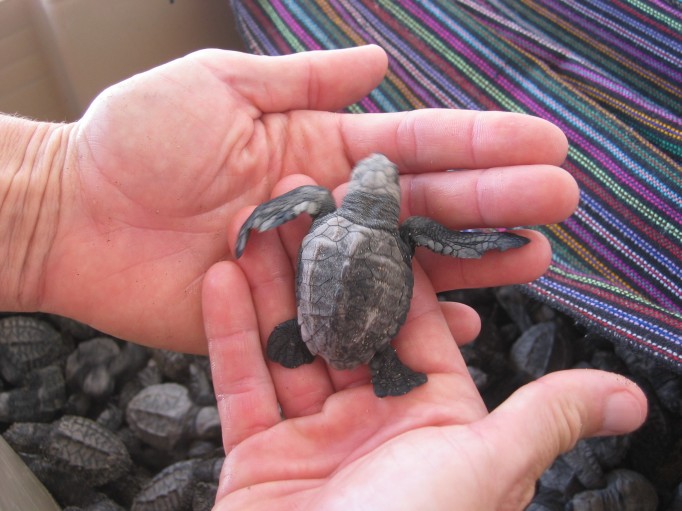
Here is a baby sea turtle getting ready to hit the waves. Linda spent an evening 'launching' two sea turtles into the wide world.

Thursday, April 13, 2006

Mazatlan to La Paz

13 April 2006

Underway at 0500 from Mazatlan headed for La Paz. Passed a Carnival cruise ship on its way into the port. This makes number five since we arrived - Monday, the Mercury (is that Celebrity Cruise Line?); Tuesday, Holland America; Wednesday, both the Viking of the Seas (RCCL) and the Sapphire Princess. Plus there were two Baja car ferries in and out while we were anchored in the old harbor. Needless to say the Port Captain was too busy to talk to us on the radio, so we didn't really get checked in/out there.

Yesterday we took the Sabalo Centro bus (eight pesos each) all the way from the old harbor (where we were anchored) to Marina Mazatlan. We just wanted to see what it looked like since we've never stayed in either of the two Mazatlan marinas. It's surrounded by condo construction and there's no shopping within walking distance, so it didn't seem like a very nice place to hang out. In spite of its drawbacks (the smell from the sewage treatment plant when the wind blows in the right direction, being the main one) we prefer anchoring in the old harbor. It's an easy walk to the old part of town with the mercado, church, zocolo, and theater, and an inexpensive bus ride back to the boat when you're tired and loaded down with all your purchases. The Club Nautico charges 30 pesos per day to tie the dinghy to their dock and use their showers in the bathrooms (which are old and a bit rundown, so we shower on board). They will also arrange propane and laundry services for you, and they have a shallow draft fuel dock.

On our way back from Marina Mazatlan we took the bus to La Gran Plaza which is the largest upscale shopping mall (with a Mega as its anchor store) we've seen in Mexico. It has a movie theater and we must have passed at least two or three other movie theaters on the bus back to the old part of town. There is also a baseball stadium, but unfortunately we didn't make a side trip to see it this time. We like Mazatlan and can see the Marina area turning into a kind of Nuevo Vallarta when all the condos are finished.

We may end up doing a lot of motoring this trip, but will hope for some wind to sail. We're not sure if we'll go all the way into La Paz for Easter weekend, or stop out at one of the islands until the businesses are open again after the holiday. Either way we should be dropping the hook sometime on Saturday.

Linda and John

Monday, April 10, 2006

Banderas Bay to Mazatlan

9 April 2006 (late Sunday night)

We departed Punta de Mita this morning before dawn (7:15 AM Puerto Vallarta time which I think is 5:15 PDT). It was tough getting up in the dark for the first time in ages. Normally we wake up when it starts getting light out or just before sunrise, so having to use the alarm was painful.

Had an uneventful day motoring until 2:30 PM, sailing until 8:30 PM, and now motoring again. It was actually very nice to be the only boat out there with just the gentle swells, turtles, and sea birds to keep us company. We passed closer to the Tres Marias islands than to the mainland, but kept it mostly up the middle. At least one of these islands is a prison and you are required to keep clear of them. They don't keep the prisoners locked up since they are on an island out in the middle of the ocean. I was a bit concerned when I spotted a fishing panga and saw that the two fishermen were wearing orange jumpsuits (panga fishermen usually wear regular clothes and maybe a black garbage bag with head and arm holes cut out in the bottom to keep them warm and dry at night). I monitored them through the binoculars but they didn't wave for help or approach us so maybe they were out on a day pass.

We're almost half way there now, so we should arrive in Mazatlan by late tomorrow. We'll spend a few days there before looking for a weather window to cross over to La Paz. John may crew for Air Power again in the La Paz Regatta which is sometime around April 20-23.

Linda and John

Friday, April 07, 2006

Banderas Bay

Thursday, 6 April 2006

We were sucked into the black hole of Banderas Bay on March 18 and we're only just barely making our way back out of it.

We left Chamela at 6:30 PM on March 17 for the overnight trip to round Cabo Corrientes. Unfortunately it took us until 4:00 AM to break an average of four knots of speed - motor sailing! I'd look out at the ocean during my watch and I was sure that if I could only walk on water, I'd get there faster that way. It felt like we were wading through molasses. We finally rounded Cabo Corrientes on flat seas at 10:00 AM. This felt great until we remembered that we still had to cross Banderas Bay to get to Punta de Mita. We finally turned the engine off at Noon and sailed slow for four hours. Ninety two nautical miles from our start we dropped the anchor at almost 6:00 PM. Yeehah!

We moved into Marina Nuevo Vallarta almost a week later and tied up to a set of concrete pilings. This was a great deal. No dock, no water, no electricity - but only $7 a night. The two (unisex) bathrooms are nice and clean, and Juan, the dock master, is a very nice guy. John spent the next four days training with Bob and crew on Air Power, a J-41, for the Banderas Bay Regatta. He'd come home wiped out from a long day in the sun, and we'd go out to dinner more than usual as a result. It was non-stop busy and I didn't even have time to check email. It didn't seem like I was getting all that much done on the boat, and I know I wasn't doing much reading, but the time just flew. There's a huge amount of socializing here because it's a such a major waypoint on everyone's itinerary. When John wasn't racing we both had our teeth cleaned, ran errands, and even managed to see a movie (Kiss, Kiss, Bang, Bang). I got my haircut and bought three kilos of good coffee beans in Puerto Vallarta. I also walked down the beach one evening with some friends to participate in a baby turtle release in Nuevo Vallarta. We each got two baby turtles, set them down on the beach (well after sunset), and watched them slowly walk the 3-4 feet to the water. One of mine was especially reluctant to go, and kept turning around the wrong way, but it finally got swallowed up by the swell.

If you're wondering how the race went, Airpower got a second in class and third over all. We placed second in the first race, third in the second race and second in the third race. All in all a pretty good showing for a (mostly) inexperienced crew. John only had to apologize for yelling 5 times, so you can tell it was a lot of fun.

Tuesday we left Nuevo Vallarta, filled up on diesel and gasoline at Opequimar in Marina Vallarta, and sailed out here to Punta de Mita. Yesterday John changed the oil and we spent the rest of the day reading and doing nothing. Today we had to go back in to Nuevo Vallarta, but we struck out on the two errands we'd hoped to accomplish. We made up for that by having a huge shrimp lunch at Mauricio's in Ixtapa. For 110 pesos each (plus drinks and tip), this is the best deal in all of Mexico.

Now we're thinking about how soon we'll get to La Paz. We may end up skipping Chacala and San Blas on our way to Mazatlan. It will depend on how the trip goes. We're anxious to get "home" to Baja so we'll probably be on the fast track once we leave Banderas Bay.

Linda and John

Thursday, March 16, 2006

Chamela

16 March 2006

Wow, what a great sail from Tenacatita to Bahia Chamela! We got underway at o-dark-thirty as planned and we had Nakia gliding under main and jib 15 minutes after raising the anchor. In less than an hour we cleared the rocks at the main entrance to the bay and had the spinnaker set in plenty of time for John to run the Amigo net. I drove the whole time he was transmitting since the radio sends the autopilot into fits. We were on a course to take us off the coast in preparation for the freak southerly we were having to clock around as usual from the north in the afternoon. This gave me lots of room so all I had to do was steer and try not to hit any other boats (and there were about four or five out there with us). It was a blast!

The wind never stopped coming from the south so we had a brief debate about continuing north to Banderas Bay, but there's no reason for us to be there this early so we jibed the spinnaker and sailed back in towards Chamela. It really hurt not to take advantage of the prime weather window, since you never know if you're going to get another one as perfect again (especially when you know at least half a dozen other boats who are charging ahead)!

We finally doused the spinnaker after hitting seven knots pretty consistently and went in to the islands for shelter. We'd heard reports from the anchorage off town that the wind chop was getting a little high since it's wide open to the south. Island Girl followed us in and we ate lunch and hung out for a few hours until the wind died down enough for us to continue on to the main bay. It was a little rolly at first but had calmed down quite a bit by bedtime.

We went into town for fresh provisions yesterday morning and I had a brief swim around the boat in the afternoon. The water is very murky (I hate it when I can't see the bottom) but there are lots of birds, fish, and yesterday a pair of dolphins hung out around the anchorage all day, scratching themselves on Island Girl's rope anchor rode in the morning and leaping clear out of the water before sunset. Just like Flipper, except without all the annoying chatter. I was a little apprehensive about swimming with all the dolphin activity nearby, not to mention that it was only 73 degrees and we'd seen a big long worm swimming by the boat the evening we arrived. So I did a fast 10 laps around Nakia and lived to tell about it.

On our last two passages we've seen dolphins, a ray, a big bill fish leaping out of the water, and a shark swimming on the surface within a boat length of Nakia. The shark was about 3-4 feet from its dorsal to its tail fin, but we don't know what kind it was. The dolphins stayed with Nakia for longer than usual as we were sailing into Tenacatita Bay. I told John that was because the adults told the youngsters that here was a nice slow boat on which they could practice bow riding. John hasn't been fishing at all in ages, so no fish report.

There's a Polish man here named Janusz who runs a beach palapa called La Manuelita (which has a nice professional sign out front complete with a picture of a ketch). He and his Mexican wife both speak excellent English, serve delicious food, and he's begun to offer his services (medical assistance, gasoline, propane) to cruisers on VHF 22. Island Girl tried it yesterday by ordering three blocks of ice which were then delivered by panga fisherman on their way out fishing last night at 10 PM. The price was right, and Janusz could prove to be a great resource for the cruising community.

We'll probably be in Chamela for a few days hoping for another magical southerly to take us sailing again.

Linda and John

Monday, March 13, 2006

Tenacatita

12 March 2006

We had a pleasant 15 mile sail from Barra de Navidad to Tenacatita on Thursday, although it took us six hours to get here. It was a close reach in light air for the first 10 miles with John hand-steering because of the 20 degree wind shifts, puffs, and swells. After we rounded the point to make the right hand turn into the bay, we set the spinnaker and had a great time doing 4-5 knots. There were several other boats making this short hop but the only ones sailing it were headed south. When we were settled into the anchorage we got lots of compliments on our red and white spinnaker and the fact that we came in and anchored under sail (main only). All that practice in the Sea of Cortez last summer has paid off nicely.

Since the "Mayor of Tenacatita" departed for the season several weeks ago, John declared Friday's traditional "Mayor's dinghy raft-up" to be "The Great People's Republic of Tenacatita Citizen's raft-up" and instead of holding it off of "Good Dog Beach" it was "Comrade Dog Beach." He used an interesting blend of communist and anarchist terms to announce it over the radio, but people came and had a good time, ignoring politics as usual. The Friday night dinghy raft-up here is a nice winter tradition which typically gets going when the more or less permanent population arrives and a "mayor" is drafted or volunteers. It's mostly a meet and greet position - kind of like a welcome wagon. The mayor anchors his dinghy off shore and all the other dinghies tie up together. Everyone brings their own drinks and some type of finger food to be passed around. It's a nice way to meet people from other boats. The especially cool outcome of this particular raft-up is that after we finished anchoring our dinghy the first couple to row over and tie up to us was John and Kathy from the Bristol Channel Cutter, Gertrud, whom we met up in Canada (see 7/20/2004 blog entry). Another one of those "small world" moments!

After a walk on the beach this afternoon I helped John scrub the bottom. He's been working on it every day since we left Barra and it's ready to take us on a fast passage north now. He says there are spots where the bottom paint is disappearing fast, and it will be a challenge to get through the summer before our haul out in San Carlos in September. But it's great exercise and we always come out of the water feeling that good kind of tired.

We're buddy boating with Christie, who's single handing on Island Girl, because her engine is a bit on the fritz and we're slow enough for her to keep up with sailing. We both plan to leave for Chamela on Tuesday assuming the wind lays down after tomorrow as forecasted. It's been unusually windy down this part of the coast (well, not for March according to Don on Summer Passage), and there are several boats here waiting it out to go north. It's been very comfortable here in the anchorage since the wind doesn't come up until around 1:00 in the afternoon, and later it makes for cool evenings which are so nice and cozy for sleeping.

The last time we were here a couple of friends reported catching dorado right from their boats in the anchorage! The water temperature is back up to around 78 now and no one appears to be catching anything, but it's just perfect for swimming. John hasn't gone out at all yet - I think he's waiting for the better fishing in the Sea, but it sure would be nice to eat dorado again!

Linda and John

Wednesday, March 08, 2006

Inland Trip Notes (Part 1 of 5)

7 March 2006
Barra de Navidad

We're back on the boat in the lagoon after our first bus trip to some inland cities here in Mexico. These are some miscellaneous notes regarding the trip in general. The entire report contains more detail than most of you are interested in, but I'm writing it both for our benefit and for those cruisers who plan to make a similar trip.

We used "The Rough Guide to Mexico" (July, 2004 edition) and a January, 2006 trip report from S/V Secret O' Life as our references. As to be expected there were several errors and/or outdated info regarding hotels/restaurants in the Rough Guide (RG).

We made no reservations for bus travel or hotel stays. We did usually remember to check the bus schedules for our return leg when we arrived in a city, but for the most part we were just very lucky with our connections. I reviewed hotels listed in the RG, and had an order of preference based on price, description, and location before we arrived in each city.

The buses we took were all varying degrees of First class service. When we looked into Second class service it seemed to take about a third longer (e.g., a four hour trip on First would take six hours on Second), for only three to six dollars less per person. A "stewardess" gave us a snack (usually something a step below airline food) and our choice of a drink (bottle of water or can of soda) as we boarded each long distance bus. These are very comfortable buses with bathrooms and movies, think about the fancy tour busses you see running around popular tourist cities in the US. Much nicer than Greyhound. All the movies shown were dubbed in Spanish.

We tried to keep hotel costs to a minimum without staying in flea bags. Asking to see the room before committing to payment is very important! Rooms with a single bed ("matrimonial" - a small double-sized bed) were cheaper than those with two. The beds were usually hard, often with lumpy pillows. No room was without its faults but we planned to spend most of our time out touring and mostly wanted a place to sleep and shower. When we had TV it was never satellite (local broadcast stations in Spanish only). No room came with wash cloths, only one came with a hand towel, and all included a small bar of soap. We usually paid only one night at a time with the understanding that we might want to stay over another night and would let them know in the morning. This way we could move to another hotel if we wanted to.

All of our transactions were conducted in Spanish. I don't recall speaking English to locals during the trip.

The prices noted include tips where applicable.

We ate a lot of street food because we happen to like it and because it's inexpensive. I don't recall any particularly memorable meals during this trip probably because we deliberately kept them simple. I found the chilaquiles (usually one of my favorites) to be wetter than on the Baja which I didn't care for.

We were unprepared for the high elevations of Guadalajara and Guanajuato, and had some trouble with the extremely dry climate. We tired more easily, and woke up every morning with a sore throat. Next time I would take a saline nasal spray and eye drops. The good thing is that my hair wasn't frizzy and we never felt sticky.

We traveled with a normal sized ("school") backpack each, fanny packs, and my small canvas shopping bag. John could get away with shorts for the bus rides or during the day, but he always changed to slacks at night and I never wore anything but the latter. This was a wise move since no one except children wore shorts in any inland city.

Expenses Summary (six night/seven day trip for two; averaging the peso at 10.5 to the dollar):

Transportation (all buses): 2,023 pesos ($193)
Lodging (6 hotel nights): 1,950 pesos ($186)
Meals/Snacks/Drinks: 1,526 pesos ($145)
Total: 5,499 pesos ($524)
Approximate number of hours spent on bus travel (local and long distance): 24

Colima/Comala (Part 2 of 5)

Monday, 27 February 2006

After John finished the Amigo net Monday morning, Roy on Jellybean gave us a ride to the dinghy dock at the Sands Hotel and we walked to the Primera Plus bus station to catch a 10:15 AM bus to Manzanillo.

DEP Barra de Navidad 10:25 AM (Servicios Coordinados, 39p each)
ARR Manzanillo 11:40 AM
DEP Manzanillo 12:05 PM (Servicios Coordinados, 52p each)
ARR Colima 1:25 PM
Colima Central Terminal to Centro on local bus (4p each)

We walked a couple of blocks to what I thought was the Nunez hotel (Juarez 88), but which turned out to be the La Merced right next door. The latter appeared to be better maintained so we took Room #17 (220p/night) which was off of a small courtyard with tables for playing cards or writing post cards. We dropped our bags in the room and headed straight out for Comala.

Centro to Terminal Suburbana on local bus (4p each)
Transfer to Comala bus (6p each)

Comala is supposed to provide a better view of the two volcanos north of Colima, which we knew we weren't going to see at all because of a huge thunder storm over the mountains that day. Instead we went for the second best thing about Comala - free botanas (snacks) with your drink order at the restaurants next to the square. John had a margarita and a poncha (the local specialty), I had a limonada, and the snacks were enough to make a light meal (102p). The combination of it being a Monday and late siesta made it pretty quiet, but there were a few mariachi bands playing for other diners.

Same bus drill as above for the return trip to Colima.

We walked around the Centro area from Jardin Nunez to Jardin Libertad and tried our first churro rellenos at the pedestrian mall off of Madero (to the right) and across from the cathedral. This was a tube of churro (like a fried donut stick) filled with your choice of chocolate, caramel, or strawberry cream. Yum!

We really enjoyed our brief visit to Colima. It was a bigger city in some ways than we expected (complete with a Wal-Mart, two Sorianas, and a multiplex movie theater), but the historic center was charming with plenty of green spaces in which to relax and people watch. It was warmer than we thought it would be, even at night, and we slept with the ceiling fan on and only a sheet until very late. It's a nice place to break the trip to Guanajuato but if you're only going to spend one night, I'd skip the Comala day trip in favor of spending more time exploring Colima.

Colima to Guanajuato (Part 3 of 5)

Tuesday, 28 February 2006

Colima Centro to main bus terminal (4p each)
DEP Colima 9:05 AM (La Linea Plus, 142p each)
ARR Guadalajara 12:05 PM
DEP Guadalajara 12:25 PM (Primera Plus, 234p each)
ARR Guanajuato 4:30 PM
Local bus to Centro (4p each)

We sat on the left side of the bus out of Colima and got a good view of the volcanos in the clear skies. No snow on them this late in the winter, so it would be more scenic to make the trip in December or January (although then you would have very cold nights).

Note the 20 minute turn around time in Guadalajara. We didn't plan it, had no reservations and basically walked off the bus from Colima into the terminal and just started looking for the next first class bus to Guanajuato. Primera Plus had a bus leaving in 15 minutes so we bought our tickets and boarded the bus. Try that with an airline :-)

In Guanajuato we checked in to Casa Kloster (Calle de Alonso 32) for our first (and probably last) attempt at hostel style accommodations (with communal bathrooms). We had our own room (240p/night) and the place was clean and attractive with a pretty courtyard, but we wouldn't stay there again. It was very noisy with 20-something backpackers coming in at all hours of the night, and bath towels so thin that I accidentally ripped mine while drying my back!

We absolutely loved Guanajuato which was declared a UNESCO World Heritage Zone in 1988. The bus ride through tunnels into town was reminiscent of Mr. Toad's Wild Ride, and when we stepped off the bus I felt as if we were in Europe. The city was absolutely charming everywhere we turned. It was hard to keep walking because there were so many beautiful things to look at. The streets were narrow and winding; there were lots of visitors but it wasn't touristy at all. There were shady squares all over, and lots of road improvement projects in progress using small cubes of granite. The University students keep things lively and are probably the reason for the inexpensive (6p/hour) and plentiful internet cafes. Surprisingly, the pace of life was very hectic; people seemed in a big hurry to get wherever they were going which made walking on the narrow sidewalks difficult. But it was always easy to duck off into a shady square for a respite.

We had a simple meal at Pinguis (NE corner - at Allende - of Jardin de la Union, across from the top end of the row of expensive restaurants) that night. We asked for the specialty of the house and thought their "miner's enchiladas" were delicious and hearty (110p).

Wednesday, 1 March 2006

After the noisy night John woke up at 5 AM and went out to take pictures of the city while the streets were still dark and empty. We ate breakfast at Truco 7 (Truco 7, 80p), explored the Mercado, and wrapped up the morning with a very worthwhile visit to the Diego Rivera House/Museum/Gallery (15p each).

After lunch we moved to the Hostel Cantarranas (Cantarranas 50, almost hidden behind a small tree-shaded square half a block from the Teatro Principal; Room #104, 400p/night). This seemed like a splurge (large room, king size bed, TV, phone, two small sofas), but it was still noisy with Cal-Poly architecture/engineering students working on a project next door and getting in late at night. Maybe a room on the top floor would have been quieter, but we had to take what was available. There was a large roof top terrace with lounge chairs, and photos of all the rooms in the reception office.

John napped while I Skyped and did internet, then we climbed up to Pipilal for the view of the city just before sunset. We walked around the center of town grazing on street food. At 8:30 PM we accidentally hooked up with one of the student musician walking tours on the steps of the Teatro Juarez (we were attracted by the cheers of the young student group which had bought tickets). We followed them to their first stop for more music and story telling in Spanish, but it was all lost on us and we were beat so we gave up and called it a day.

Thursday, 2 March 2006

We returned to Pinguis for breakfast (91p), shopped, spent about an hour at the Alhondiga museum (if you've already seen plenty of pre-Columbian artifacts elsewhere, and aren't too interested in Colonial portraits and misc. items, you could give this a pass - although the building itself is interesting; 30p each), and took a local bus (4p each) to the Templo de San Cayetano de Valenciana church. This was very impressive, though as with most of the buildings, it's in serious need of restoration/cleaning. An alternative to these sights might have been a visit to the Ex-Hacienda de San Gabriel de Barrera 2 km outside of town. This former colonial home turned museum, with its extensive restored gardens, sounds like a nice excursion. It was very hard to decide how to spend our limited time.

We went back to the Centro and ate a delicious, large cup of strawberries (17p) and some sort of empanada filled with cheese (28p for four) which we ate in nearby squares for our lunch. Did some internet, napped, and shopped. Had drinks and guacamole at La Tasca de la Paz (Plaza de la Paz 28, 110p) and ate a simple meal of soup for me and enchiladas for John at Truco 7 (77p) We were very curious about elaborate stages being set up in the city but they turned out to be for some World Road Rally. Unfortunately the sight lines at the main stage near the Jardin de la Union were blocked by the low trimmed trees making it hard to see the entertainment. By the time things finally got started it was late and we were tired from our long day so we never even saw any of the cars! Later we heard fireworks from our room and managed to run up to the rooftop in time to see a few of them fired off from up at the Pipila.

Guanajuato to Guadalajara (Part 4 of 5)

Friday, 3 March 2006

Guanajuato Centro to bus terminal (4p each)
DEP Guanajuato 8:45 AM (Primera Plus, 234p each)
ARR Guadalajara 12:40 PM
Camionera Nuevo to Centro (TUR bus - with A/C, 9p each)

We wanted to be sure we got on the morning bus out of Guanajuato so we woke up early and arrived at the bus terminal an hour before our departure time. On arriving in Guadalajara we checked out the Hamilton hotel (Madero 381) but this was dreary and too spartan even for us. The Posada San Rafael (Lopez Cotilla 619) was full but a nice tourist followed us out to the street and told us that Posada San Pablo (Madero 429) was run by the same people. I'd passed it by because the Rough Guide has it in the same price category as the Hamilton, but maybe this is a new ownership since it's now more expensive. We took Room #104 (330/night) off of a sunny courtyard. The floor in the room was a little dirty, but otherwise it was fine. While we were there several people came in having been referred there from the Posada San Rafael, so it might be a good idea to make an advance reservation if PSR is your first choice. The biggest pain about staying at PSP is that you're not given a key to the front door which is locked 24/7. You have to wait to be buzzed both in and out. Ninja, the white poodle, looks scruffy but she loves to be petted.

We ate a late lunch at La Dona ("Tacos El Pastor" in my Rough Guide, Juarez 424) which may have been a mistake, though it was very popular with locals. I had three tacos al pastor and a jamaica agua fresca, and John had torta ahogada al pastor (a roasted sandwich which is covered in au jus, he noted it was very spicy) and two beers (70p).

After a nap we spent the evening walking around. We visited the big Cathedral and main plazas in the nearby vicinity. I'm told there are nice parks farther to the NE which we didn't get around to seeing, but what struck us about Guadalajara (especially in comparison to the cities we had just seen) was the lack of green spaces in their shopping Centro. The plazas we saw were huge expanses of pavement with very few trees, and fountains and outdoor art instead of landscaping. After Guanajuato this city seemed noisy, dirty, and crowded, with the pedestrian areas crammed full of the cheap types of trinkets and pirated DVDs/CDs which we've seen at every small town market day.

By this time our batteries were running low and we were ready to return home. That night John's ahogada sandwich came back for a little visit and he had to get up to vomit a few times. By morning he was running a fever.

Saturday, 4 March 2006

John stayed in bed all day. I went out for Tylenol, a thermometer, and Gatorade for John, and meals for me; otherwise I stuck pretty close to our room. The Tylenol brought his fever down and he didn't throw up anymore, but he couldn't eat anything at all. We really aren't sure if it was the ahogada that didn't agree with him, or just a 24 hour bug.

Guadalajara to Barra de Navidad (Part 5 of 5)

Sunday, 5 March 2006

John felt well enough to make the trek to Tonola with me this morning so we caught a TUR bus (9p each) at 8:30 AM. Sunday happened to be market day which meant that there were literally acres of shopping for everything under the sun - food, kitsch, plants, ceramics, leather, linens, glassware, etc. One stop shopping! We made a relatively quick pass through it all - including a stop for brunch - and were out of there by 11:30 AM when it was starting to get too crowded to walk the narrow passes between the stalls (which were set up two deep outside the sidewalks of the shops). I highly recommend scheduling your Guadalajara stay to encompass either of the two market days in Tonola (Thursdays and Sundays), and save all your souvenir/gift shopping for here. We could have easily spent all day just walking up and down the market and never seen everything.

Since our TUR bus back to the Centro made a stop at the main bus terminal (where we needed to catch our bus to Barra de Navidad), we decided to have John get off there to buy our tickets for the 2 PM bus and rest, while I continued on to our hotel to get our backpacks. It's a good thing I kept our hotel receipt (which I had repeatedly eyed, thinking I might throw it away) because when I went to check out, the manager thought I owed her for another night. After a few minutes of her checking our file, me trying to understand what she was saying and then trying to explain that we had paid for two nights in advance, I produced the receipt and she was profusely apologetic for her mistake. We parted on good terms, I quickly walked the four blocks to the bus stop carrying all our gear, and I arrived at the bus station half an hour before our departure time where John was waiting with our tickets.

We took the mountain route from Guadalajara to Barra rather than going to Manzanillo first and then transferring. Although I felt car sick a couple of times from the winding roads, this was a much more scenic route through agave, sugar cane, corn, and melon fields, and several kinds of groves we were unable to identify. It's a slower route so I don't think John would choose to do it again, but the only other departure times on Primera Plus were 9 AM and 7 PM. I'm sure there were others we could have found, but with John sick and me getting there so late we weren't in a position to schlep around shopping for another bus.

DEP Guadalajara 2:05 PM (Primera Plus, 234p each)
Stop at Autlan 5:15 PM
Stop at La Huerta 6:35 PM
Stop at Melaque 7:20 PM
ARR Barra de Navidad 7:30 PM
Panga to Nakia (25p total)

Home Sweet Home!

Monday, March 06, 2006

Inland trip complete

We've just returned from a 7 day, 6 night trip to Colima, Guanajuato and Guadalajara and, while Linda's writing the trip report (to be started any day now, really), here are some pictures from the trip.

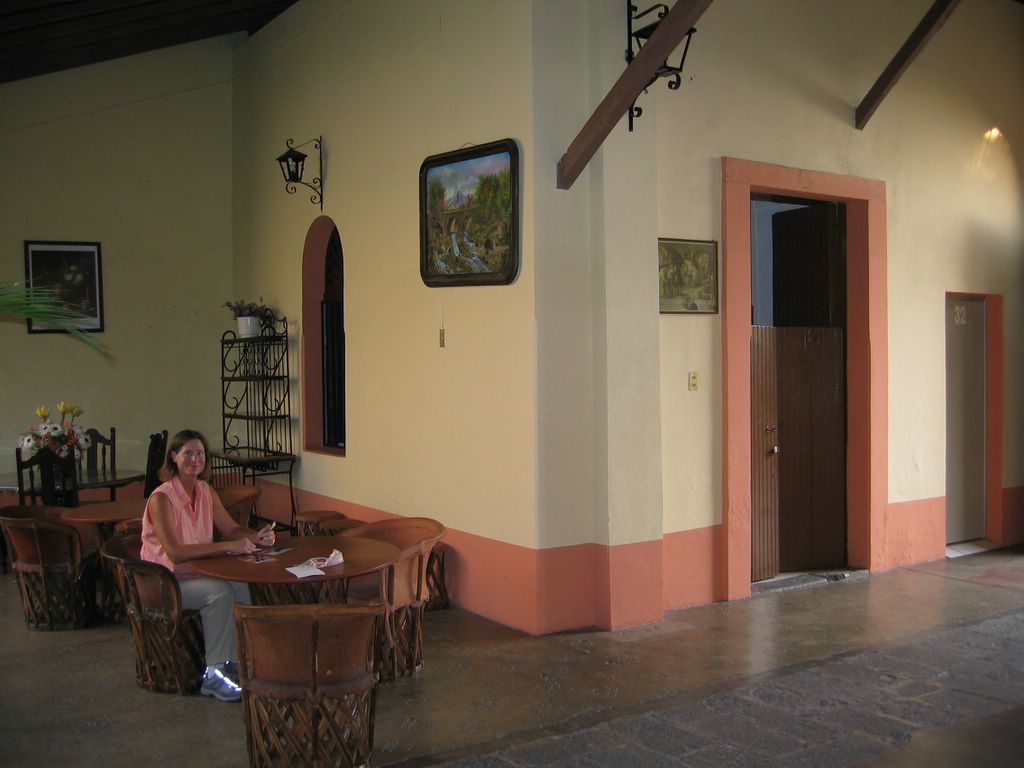
Linda sitting outside our room in Colima

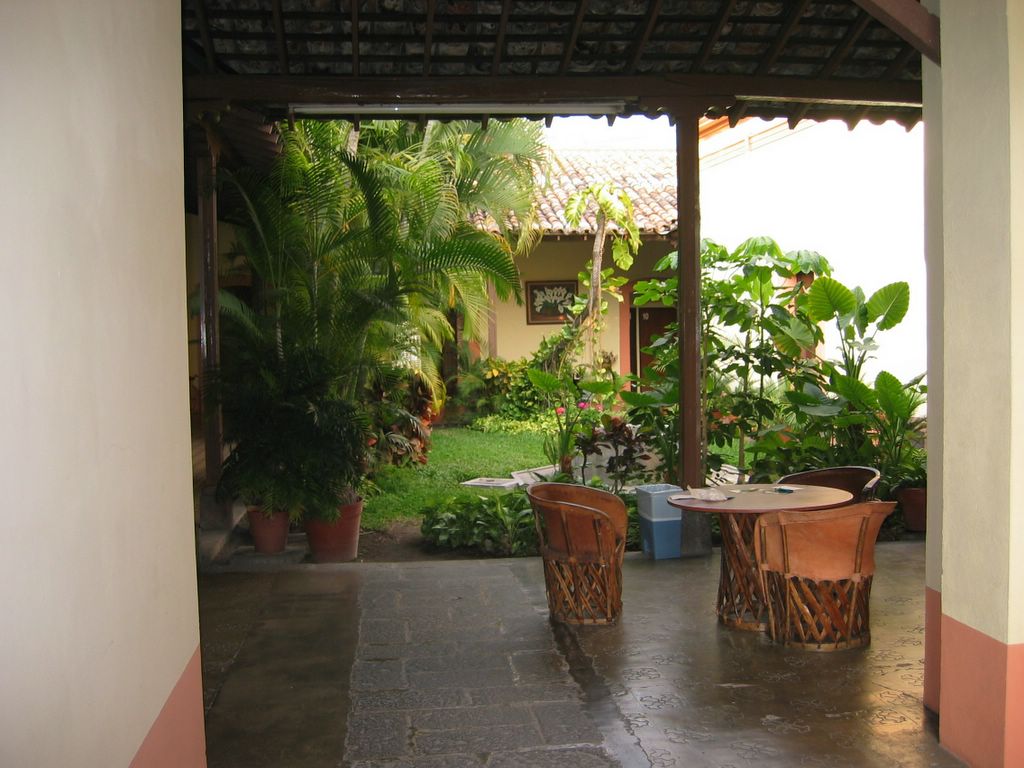
A view of the courtyard of our hotel in Colima

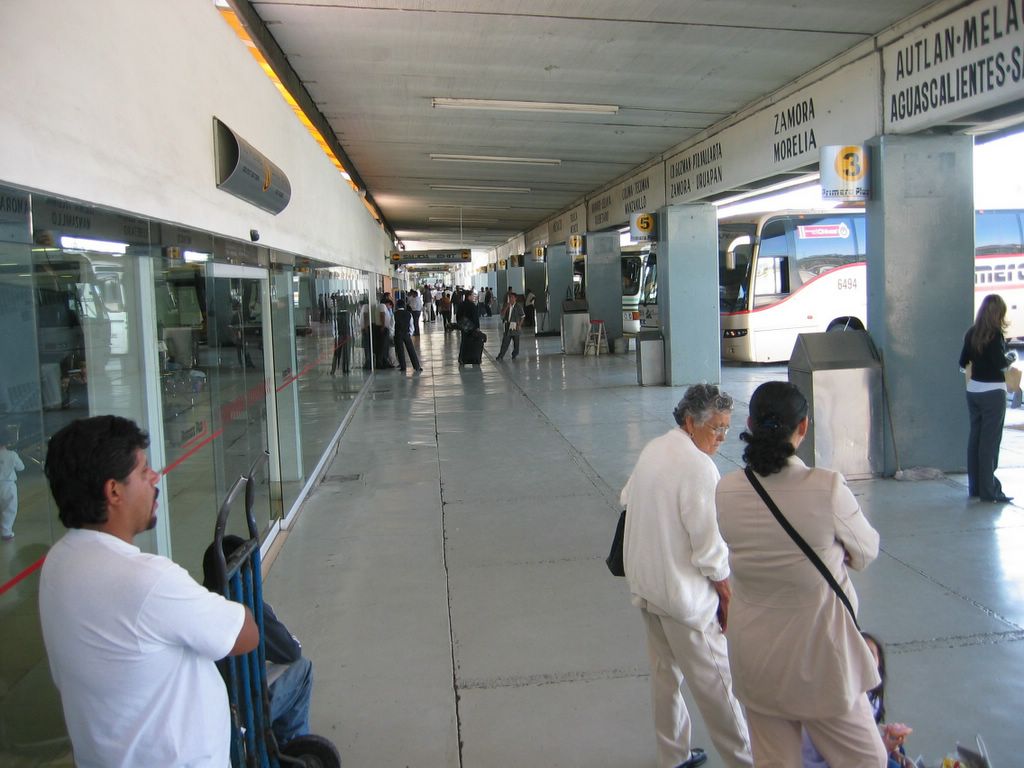
This is one of seven bus terminal buildings in Guadalajara. It has the feeling of an airport terminal. (Guadalajara)

A late evening shot of the hills over Guanajuato.

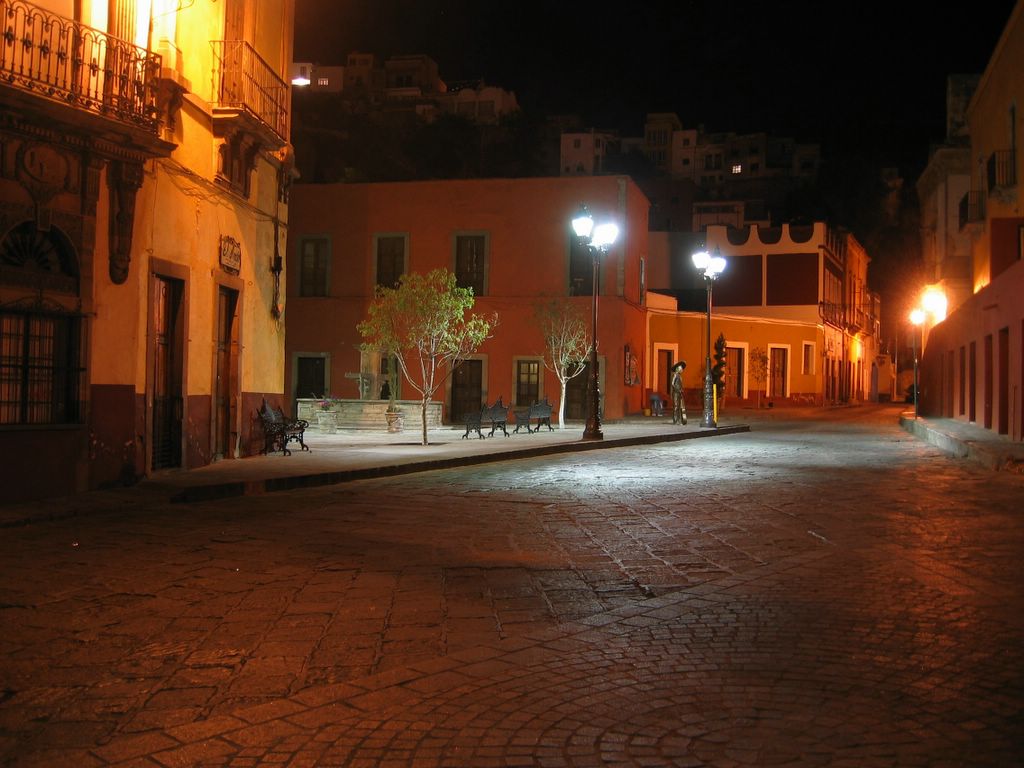
Here's what Guanajuato looks like at 5 AM. When John can't sleep he gets up and walks around town taking pictures. By 6 AM the place was too busy to be standing in the street. (Guanajuato)

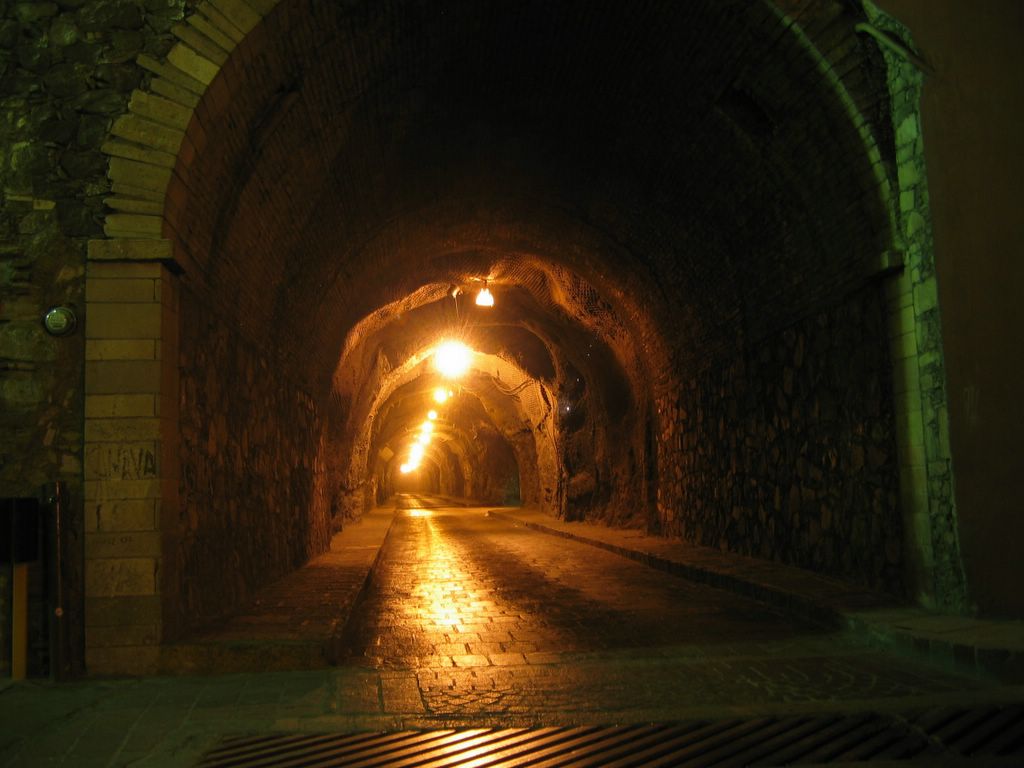
An early morning shot of one of the tunnels in Guanajuato. River water used to be diverted through these before they were converted to roadways.

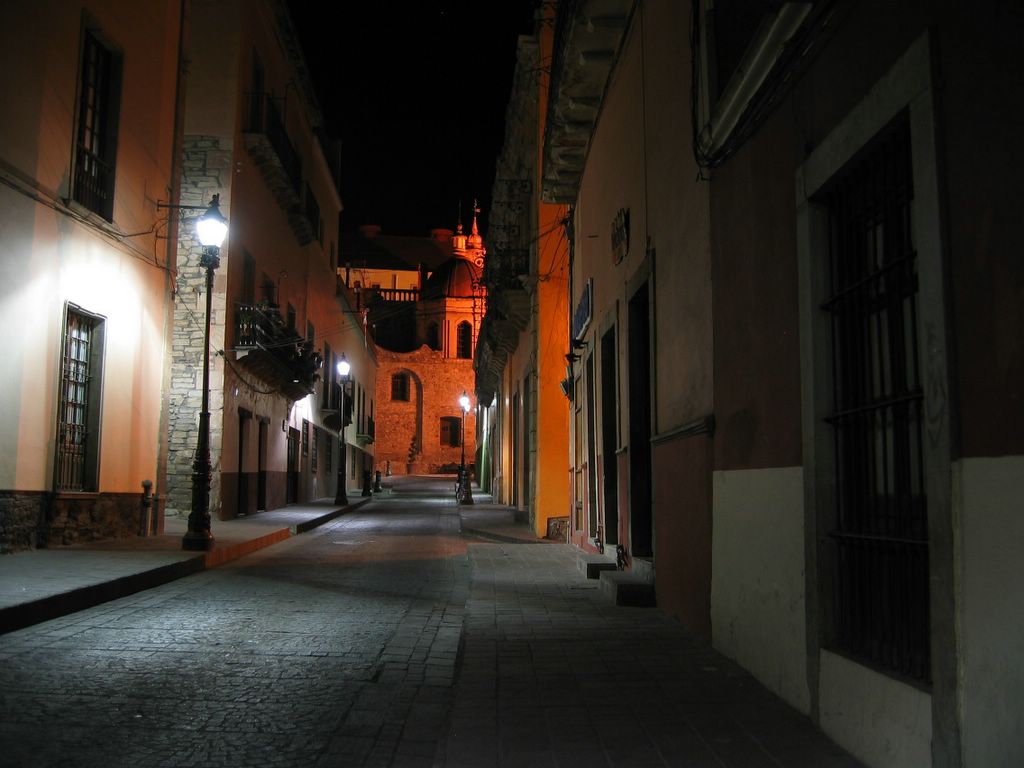
Another 5 AM picture of Guanajuato. Instead of using cobble stones to pave the streets they use square cut granite rocks which are arranged in patterns. (Guanajuato)

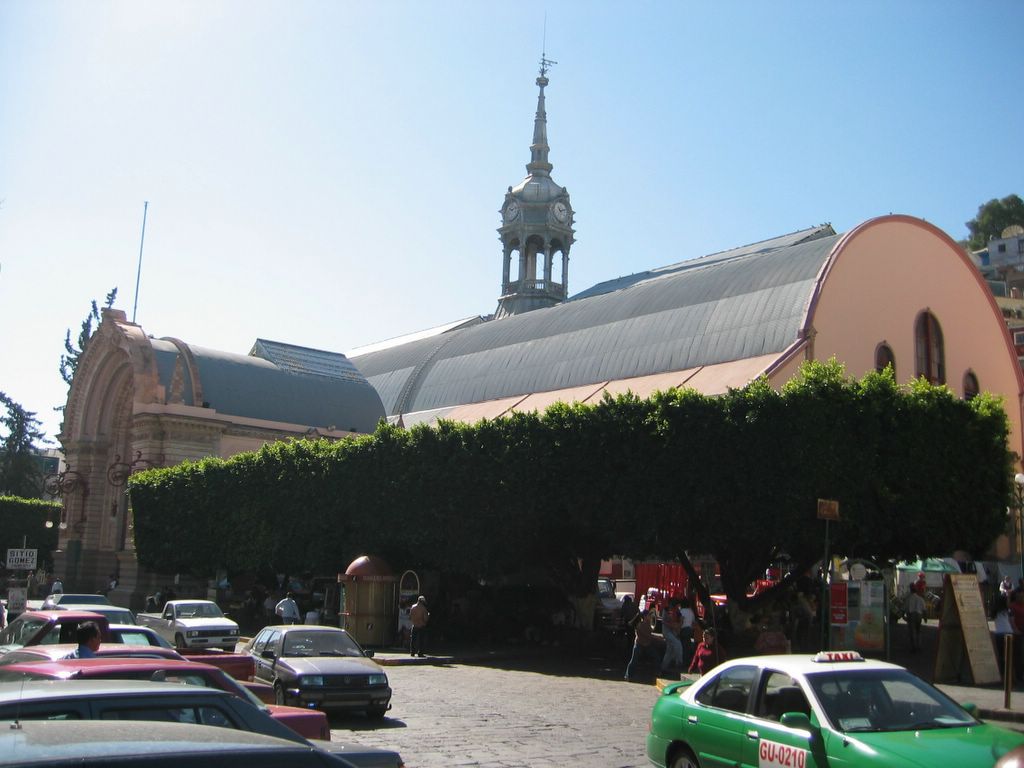
The outside of Mercado Hidalgo. (Guanajuato)

The Teatro Juarez, a favorite hangout for the University students. (Guanajuato)

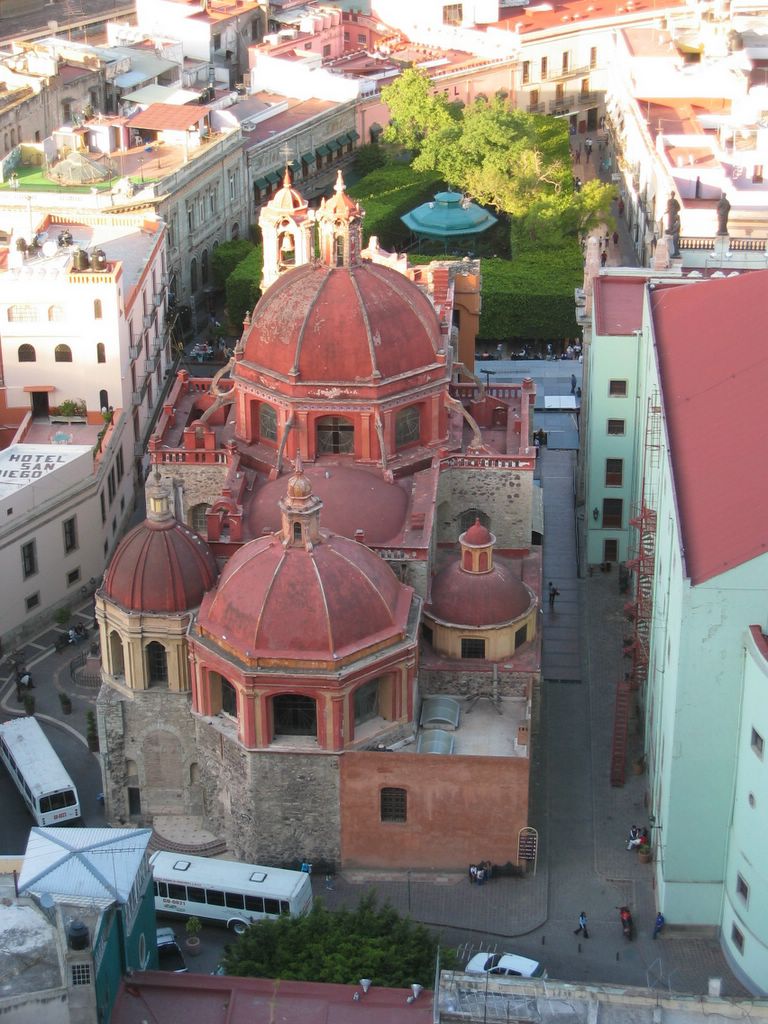
View from the Pipila. The Temple of San Diego in the foreground with the Jardin Union in the background. The trees in the Jardin are a kind of ficus which are cut high enough to walk under, creating a very shady park. (Guanajuato)

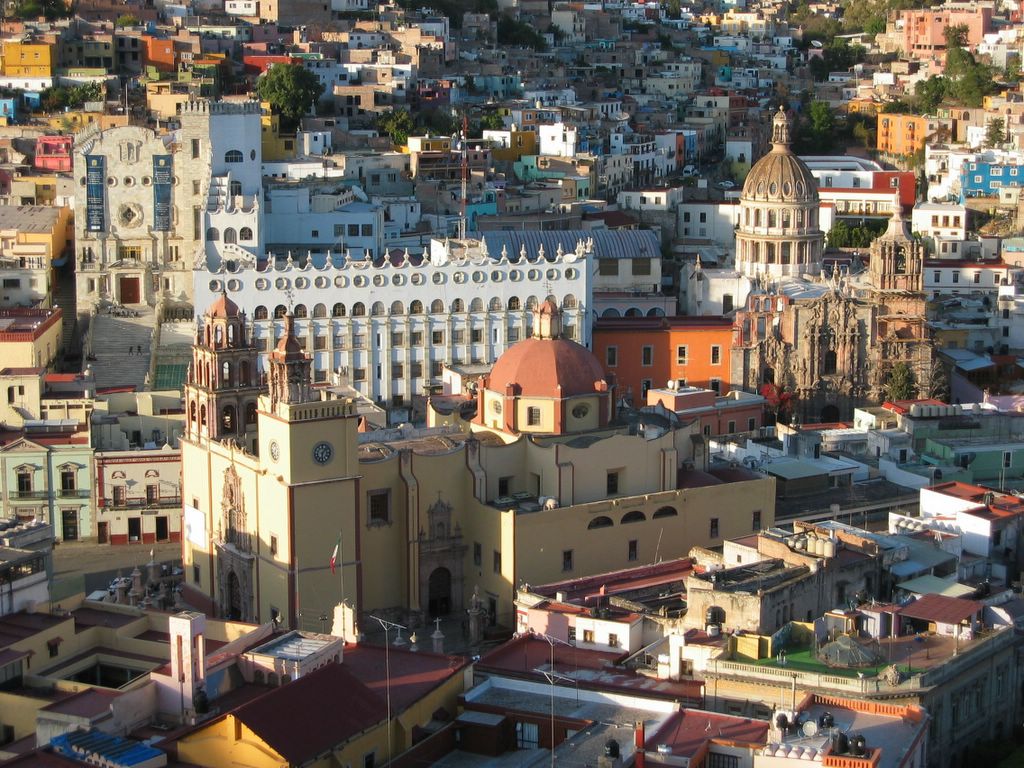
A view from the Pipila. Low center is the basilica of Our Lady of Guanajuato. Upper right is the Temple of the Compania. Upper left is the University of Guanajuato. (Guanajuato)

Here's a picture of the roof-top terrace of our hotel in Guanajuato. The white building in the center of the picture is the Hotel Cantarranas. (Guanajuato)

Another view from the Pipila. Center left is the Museum Alhondiga. I'm not sure what the two domes in the foreground are. (Guanajuato)

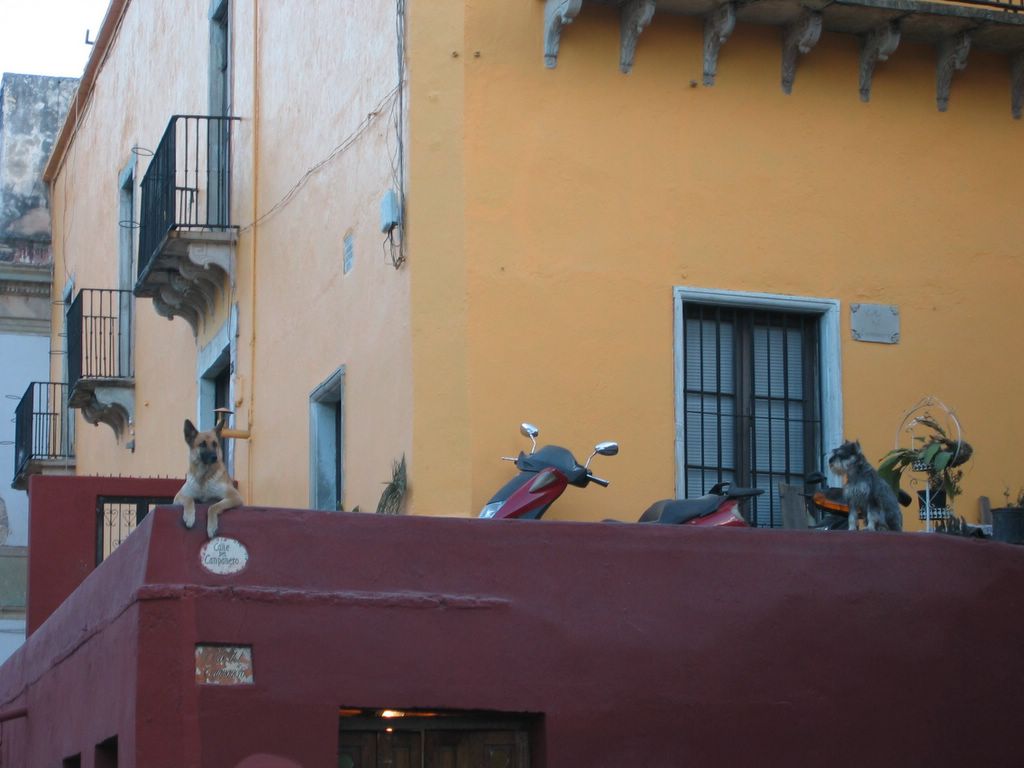
A couple of pooches watch the evening traffic on the city streets below. (Guanajuato)

Linda really loved the potted garden on the balconies of this house. (Guanajuato)

The Basilica at La Valenciana

Thursday, February 16, 2006

Quarantined

16 February 2006
Bahia Santiago

It started with a sore throat on my birthday. Now I'm beginning to get over my cough and congestion, but John's coming down with the same thing. Yesterday morning we dinghied ashore, walked out to the highway, and took the bus to Comercial Mexicana (one of the big U.S. style super market chains) with Joe and Cindy from Maggie Drum. Other than a delicious Valentine's Day lasagna dinner and pinochle on MD, it was the first time I'd left the boat since my birthday in Barra. We shared a taxi all the way back to the dinghies with our groceries so the trip itself wasn't particularly arduous, but the highly air-conditioned hike up and down the store aisles probably didn't do us any good. It's a good thing I bought another jumbo box of Kleenex! We've heard from boats now making their way north after SailFest that a similar bug made its way through the Zihuatenejo fleet.

We saw quite a bit of fog early yesterday, and when we woke up this morning the anchorage was socked in. We suppose this must be due to the colder water temps we noticed on our way down from Barra. It's 72 degrees here in the anchorage, but we logged 67 offshore at one point. This is quite a change from just a few weeks ago, but not a problem now since we won't be doing any snorkeling until we're feeling better.

I think being ill is the hardest thing about living on a boat, and it's even harder when you're cruising. Your "nurse" (the well partner) can't exactly hop in the car for cough drops, DVDs (thank you Maggie Drum for loaning us your collection!), soup, orange juice, and a People magazine to cheer you up. And with both of you cooped up on a small boat the lack of personal space will eventually make both parties testy, to say the least. The good thing is that it's harder to catch anything nasty out cruising because you have less exposure to germ carriers.

I forgot to mention that John stepped in a hole and took a hard fall on concrete around the same time I was catching my cold, and he now has a purple bruise the size of a cantaloupe on the outside of his thigh. A couple of days later he tripped and fell against a stanchion, so he has a matching (though smaller) bruise on the other thigh. Both of these falls were the result of things I did or didn't do so now I have three strikes against me (being the cause of his two spills and a cold) and am serving my time!

But the sun is shining, the days are warm (high 70's), the nights are cool (high 60's), the fish wake us up during the night bumping into the hull (big fish chasing little fish?), John's back into playing Pokemon Pinball on his Gameboy (he now owns a high score of 12 billion points), and I'm reading a wonderful novel that I will be sorry to finish ("Swimming" by Joanna Hershon).

Life is good!

Linda and John

Tuesday, February 14, 2006

Mainland vs. Baja

John originally called Baja, "Mexico, Rev 2" because it was so different from the Mainland. Now that we're back on the latter I thought it would be fun to compile a list of what makes them different for us.

Mainland (November through March):
Butterflies in lots of cool colors.
Birds and beautiful bird song - Tropicbird, Heermann's Gull, Heron Family (Great Blue, Little Blue, Green-backed, Great Egret, Snowy Egret, White Ibis), American Oyster Catcher, Crested Caracara, Black Vulture, Belted Kingfisher, Ani, Swallows landing on Nakia in the Barra Lagoon, Yellow-winged Cacique, and many others we can't identify.
Greenery and thick woods/jungle mean that you need trails and roads in order to do any land hiking.
Higher humidity makes hot even hotter.
Beach landings (actually it's harder during the takeoffs) in the dinghy are often wet unless you time the swell sets just right.
Almost impossible to enjoy a light air sail because of the Pacific swell rolling the boat and slatting the sails.
Larger numbers of transient cruisers (many leaving for the South Pacific or Central America) makes many anchorages crowded (25-50 boats at a time). Large active VHF nets covering just about all areas; lots of radio traffic. Rare to have an anchorage to yourself.
Wildlife - It was nice to see turtles again; we've had fairly consistent whale and dolphin sightings on passages.
Burning garbage and disco noise - Maybe because many anchorages are off of larger towns (especially the favorite hang-outs like Chamela, Tenacatita, and Barra de Navidad).

Baja (April through October):
Desert flora (rocks and cactus) make hiking easier in all but the thickest cactus areas.
Dryer climate makes it a bit easier to deal with the heat.
Air temps make snorkeling and swimming that much more inviting.
Easy beach landings with the dinghy since there's no swell in the Sea of Cortez.
Light wind day sails from one anchorage to another are extremely pleasant on the flat water of the Sea.
Smaller group of cruisers based in fewer areas makes it easier to get to know people. Summer is especially great due to the smaller community. Even the SSB and HAM nets are more fun and relaxed. Not hard to find places to be alone when you want to be.
Wildlife - We had some incredible up close and personal experiences last summer which I'm not sure we'll ever be able to duplicate (squid, orcas, rays).
Fishing seems to have been much better in the Sea.

Linda and John

Wednesday, February 08, 2006


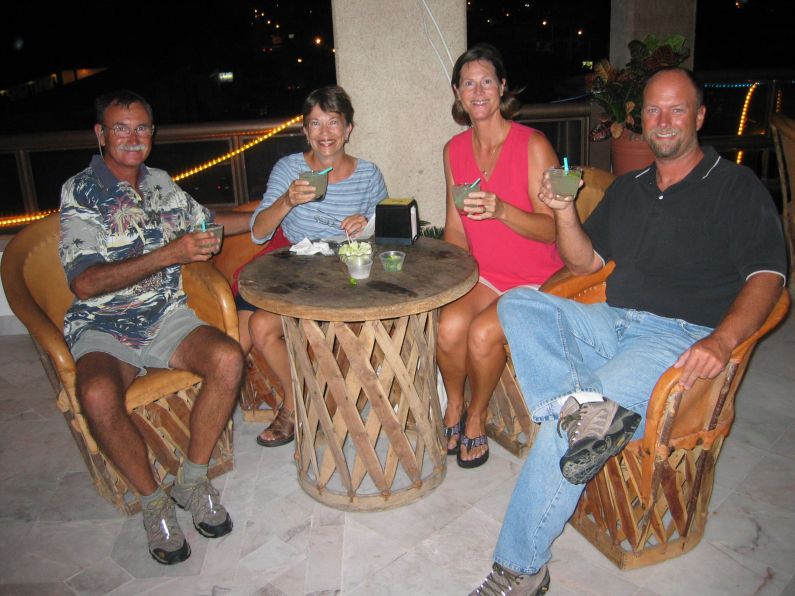
Joe Cindy Linda and John drinking margaritas at the rooftop bar for Linda's Birthday.

Saturday, January 28, 2006

Life on the hook

29 January 2006
Punta Perula, Bahia de Chamela

This morning we put our 50 gallon/hour water maker to work. Yesterday John worked it out with Guillermo at one of the tiendas to have 10 garrafons (five gallon water cooler jugs) of water delivered to the far end of the beach where we land our dinghies. At 8:15 AM he paddled in to shore with the kayak to wait for the 8:30 delivery. Aldo arrived with the water truck at about 8:45, and John called me on the radio to come in with the dinghy. We anchored it in about 4' of water outside the surf break and, wearing our swimsuits, carried each garrafon from the beach to the dinghy. When all 10 were loaded up John helped launch me in the kayak before he jumped in the dinghy, and we returned to Nakia to fill one of our water tanks. We use a siphon pump to get the water from each garrafon into the tank, carefully pouring the last drops from each jug into the first empty so that we get it all. We completed the process at about 09:30.

After a nice breakfast of eggs and potatoes we loaded the 10 empties, tied in bundles of five, and went around to the remaining boats in the anchorage to say hi. There were 12 boats here last night (including three big power boats), but by the time we got out and about only four besides us were left. We had an uneventful dinghy landing (one boat got dumped badly trying to get off the beach yesterday evening; they managed to recover their expensive glasses, but the outboard was completely submerged so they were rowing back to their boat), dumped our garbage in one of the ubiquitous blue barrels behind a palapa restaurant, and began our walk to the other end of town. When John made the inquiry about a water delivery we were returning from a walk along the beach, and he started at the far end of town because he noticed the tienda had a water truck parked right behind it. Next time we'll probably start at the dinghy landing and work our way down until we find someone who can deliver to the beach.

The town was about as lively as it gets around here since it's Saturday. People were lined up at the carniceria for something fatty looking in a huge steel pot full of fat - maybe fresh carnitas? We bought water and a soda and sat on a shady bench in the zocolo (town square) watching the birds and butterflies in the bougainvillea. There was a small street market set up nearby selling new clothing, cosmetics, hair doo-dads, and house wares. Not many other shopping opportunities here, and business looked brisk. Still no sign of life at the only panaderia in town. Last time we were here the woman doing the baking looked like she should probably retire soon, so maybe she's gone to Guadalajara to live with her family.

Everyone agrees the fishing hasn't been very good on the gold coast so far this season. One of the best things since we've been here is the school of two dozen or more crevalle jacks in the anchorage. They aren't good eating but John says they're a lot of fun to catch. He had one yesterday that fought for half an hour, and was three feet long. He hooked a second one which took out 50 yards of line before bending the hooks straight, releasing itself.

We recently had a discussion with another boat regarding being "sophomores" this year. We all agreed that although we're still enjoying Mexico very much, the bloom of first year excitement has worn off and now, instead of it being all adventure, all the time, we feel as though life is a bit more routine. So we apologize for not keeping up the blog on as regular a basis as we did last year, but now you know the reason why.

Linda and John

Wednesday, January 25, 2006

Happy Anniversary day

25 January 2006
Isla Passavera, Bahia Chamela

We celebrated our 15th wedding anniversary today, and had an especially fine time. We woke up to 13' of crystal clear water in the anchorage where, with the almost all sand bottom, it's the nicest swimming pool anchorage on the mainland. It starts getting bouncy in the swell after the wind dies at sunset each night, but I think it's well worth it especially when we have it all to ourselves. In addition to our school of 8" Pacific bumpers, as of yesterday afternoon we also have three to four 2 1/2' crevalle jacks on the prowl. John calls them "the boys," and sometimes they make quite a racket when they slam into the hull trying to get the smaller fish. It's amazing how much time we can spend just gazing into the water waiting for a glimpse of them as they pass by our hull.

After the morning radio nets we hopped into our inflatable double kayak and paddled out to some rocks on the ocean side of Isla Colorado to watch a blow hole. There was a long low swell running so we had to be careful not to get too close to the rocks, but other than that it was relatively calm two mile round trip. We paddled back to Nakia to get shoes so we could go ashore for a short walk. We hadn't been on Passavera before and it's quite a popular roosting area for boobies, frigates, pelicans, and gray headed vultures. We passed 10' from a booby which appeared to be nesting on the ground, and managed not to disturb her too much.

After an early lunch we spent some time reading, and then threw our snorkel gear into the dinghy to go for a ride while we left the generator running on Nakia to recharge the batteries. There was a blow hole near the mainland shore which was pretty spectacular even from a distance yesterday afternoon so we went there first for a closer look. Then we checked out a potential anchorage which we may try tomorrow in hopes that it might be better protected from the swell. Finally we stopped at one of the beaches over on Isla Colorado for some snorkeling but the visibility wasn't very good there. When we got too close to shore the sand was so stirred up that it was like snorkeling in fog. Out by the rocks and more exposed to the surf the organic matter in the water was so thick it seemed like we were snorkeling in a snowstorm. So there you have our "winter weather" report.

We had planned to go into a beach we'd visited last year, but at the last minute John suggested the one next door since it looked like it had a sandier bottom for walking in through the surf. After walking around the small sandy beach we heard strange bird noises coming from the trees above the rocky shoreline. We could see pelicans roosting, then what appeared to be nests, and then finally we made out the white, plucked turkey shapes of baby pelicans! Once we identified one, we could see that there were probably about a dozen in the area in various stages of development, but all looking completely helpless and awkward. What a wonderful and unexpected anniversary gift that was!

Linda and John

Saturday, January 07, 2006

The Mad Gardener

7 January 2006
Ensenada Carrizal (Manzanillo area)

Paradise is still wonderful but not so perfect lately. After happily snorkeling for two days in a row, we jumped in the water for a third round and found ourselves face to face with jelly fish - lots of jelly fish. John doesn't think it's so terrible, but I have to admit it doesn't take many jelly fish to freak me out. So far I've come up with four different species. We identify one of them as "string of pearls" since it's the one that looks like a thin clear piece of line with small brownish dots at intervals along the line. These range anywhere from three inches to two feet long, and are especially frightening looking when you can see their short clear tentacles. The tentacles are only an inch or two long, but John says he's seen tiny fish trapped in them. The other really dangerous one (okay, so I've only seen one in this anchorage so far) is the translucent blue bubble on the surface with dark blue tentacles hanging down from it. Those are supposed to be really painful. There are two others which I don't know anything about. One is golf ball sized, completely clear, and looks kind of like a Chinese lantern. There are lots of these in the water here, so I must have brushed through them without any sting. The one I spotted this morning is something I first noticed when we left Barra de Navidad because there were tons of them out around the point there. It's like a clear nickel sized disc with something brownish in the center. The odd thing is that I've seen them in both single units and multiples attached like rope up to two feet long. I'm not sure I'll be snorkeling today.

Yesterday we took our friends, Roy and Marlene from Jellybean, for our third hike on the beautifully landscaped dirt roads to nowhere in Rancho Majagua. We tried a different fork in the road and once again didn't make it to the end before giving up and turning around. This road stayed right above the coast line headed North, and we turned around when we were almost even with Piedra Blanca. We were almost back to what we assume is the "main" road, possibly leading up to the highway, when a truck with three people in it came roaring up from the direction of the beach. The driver spotted us, screeched to a halt, and backed down to us at high speed. I waved and smiled, happy to finally find someone we could talk to about what this place was all about. But it was immediately evident that this was one pissed off Mexican. His English was limited but he spoke no Spanish to us (even though we were speaking a little to him to start off with). The gist of his tirade was, did we have a problem (which we later understood to mean, did we have a problem understanding that we were trespassing - not, was everything okay), this was private property, even without posted signs it was "logical" that it was private, he had better not see us there again, and "Go back to your boats!"

What left me shaking was that he was clearly so angry with us. This was the first time we'd ever encountered a local who wasn't friendly, even when giving us a gentle admonishment for whatever minor offense we'd committed. Needless to say we analyzed the incident as we hurried the rest of the way back to the beach. The group consensus was that a) he was just a gardener on a power trip, b) he was a caretaker who feared for his job because we had breached security, or c) he had been most worried about us stumbling upon an illegal activity of some sort way back in the woods that might have gotten us into even more trouble. The latter never would have occurred to me, but it seemed to be the most popular conclusion. Or maybe we've all seen too many movies.

Linda and John

Thursday, January 05, 2006

Blog-able Day

4 January 2006
Ensenada Carrizal, Jalisco Coast (100 miles S of Puerto Vallarta)

Well looking at our last blog entry it seems we've been absent for a little too long. You'd think that with the holidays we'd have more than enough to write about but the fact is that we really don't have that much special happening.

That was, until yesterday. But I'll get to that in a minute.

We went from Tenacatita to Barra de Navidad on December 23rd after receiving some boat parts from our friends on Jellybean. They personally delivered them to us after carrying these parts all the way from La Paz. The parts had been carried from San Diego to La Paz by another cruiser and arrived after we left La Paz. That's how we get the things we can't get in Mexico - kind of like the Pony Express.

Anyway, we made it into the Barra de Navidad lagoon without running aground in the narrow muddy channel. Which, judging by the number of boats that ran aground while we were there (one of them twice), can be a very difficult thing to do. After getting settled we took care of the necessities first - laundry, vegetable shopping, and eating out - then took care of less important shopping later in the week.

We spent Christmas day at a potluck dinner with the rest of the cruisers in Barra de Navidad. Two turkeys, baked by a local restaurant, cost the group $60 USD but came stuffed Mexican style with potatoes, bread, chorrizo, olives and raisins. Each person had to chip in $2.50 to cover the price of the turkey, which was a little strange for a potluck, but we all got plenty to eat and drink so I guess it was worth it.

We ended up staying in Barra longer than we had intended and were there for New Year's Eve too. The town pulled out all the stops, complete with a 10 second fireworks show followed by numerous celebratory gun shots. We watched and listened from the comfort (and safety) of our bed.

We departed Barra for Santiago Bay on the 2nd of January and again managed to make it out the narrow channel without running aground. That's four transits without a problem. We started off motoring but eventually the wind built enough for us to set the drifter and the main and we sailed the rest of the way.

The first little sub-bay on entering Santiago Bay is call Ensenada Carrizal. We decided to check it out and what a jewel we found. I'm not sure why this place isn't more popular, maybe it's because there's absolutely nothing here. Which of course is exactly why we like it so much. There are no shore side discos blasting music until all hours. There are no beach vendors selling things you don't need. There are no jet skis, water skiers or banana boats. There is no night time brush burning to drop soot all over the decks. No dogs barking at night or roosters crowing before dawn. There's not even anything in the water - it's crystal clear. Heck, we could get used to this kind of nothing!

We have snorkeled each day since being here and have added three new species of fish to our 'seen it' list: Barber fish, Zebra Moray and Gold Rimmed Surgeon fish.

Yesterday I noticed something that looked like an empty lot on a hill over the bay and we took the dinghy ashore to investigate. It turns out there was probably supposed to be a private development (Rancho Majagua) here at one time but the only evidence are dirt roads (some complete with landscaping and curbs) and road signs. The signs point you to condominiums, lots for sale, and beaches but when we walk the roads they just end in a turn around. No buildings or other signs of development. The best thing is that these roads run through some pretty virgin forest. The flowers are in bloom everywhere and at times we would be walking through clouds of butterflies. Pretty cool. We spent three hours walking the roads today and the closest we came to another person was hearing a Mexican work crew working on some power lines across the valley.

All of this is quite out of the ordinary for the Mexican mainland - we're thinking about staying awhile.

John and Linda
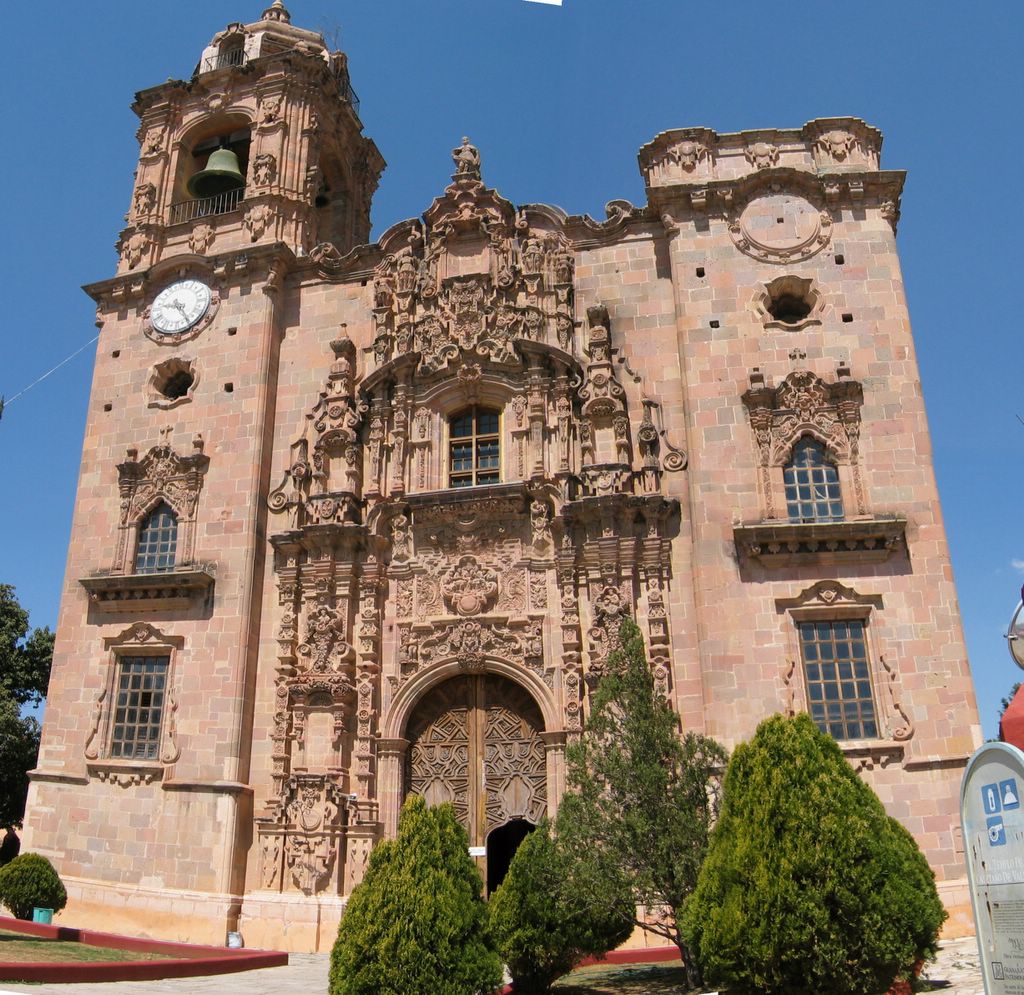
Thursday, December 15, 2005

Serendipity

15 December 2005
Tenacatita

We enjoyed our time in Bahia Chamela, and this time spent most nights anchored off of the village of Punta Perula (aka La Fortuna). One windy day put us on a lee shore so we moved out to the islands for a night, and visited our second favorite deserted beach. The water temp is in the high 70's so we're swimming every day again, which is practically a necessity given the much higher humidity. Unfortunately the two things I most wanted to do in Punta Perula didn't work out this visit. The panaderia (normally open only on the weekends) was closed because the baker was in Guadalajara, and our favorite taco place (again open only on Saturday and Sunday nights) didn't open until 8 PM which was just too late for us to bother with by ourselves. The only reason we even discovered it last year is because we got to drinking margaritas on Maggie Drum and went in to town so late that it was about the only thing still open!

The best thing about our visit occurred by pure chance on Sunday night. First we decided not to go in to town for tacos. Then we turned down a dinner invitation from Secret O' Life (that's how tired we were from the long hike we took with them in the afternoon). Long after sunset we were hailed by them on the VHF to turn on our Christmas lights, which we'd forgotten to do, so there was some chit-chat on the radio with them about how everyone's lights looked. If it hadn't been for all of the above we never would have received a hail from Finisterre letting us know that they had arrived in the anchorage after dark (so they didn't know we were there until they heard us on the radio) and were leaving before dawn the next morning! Their dinghy was stowed on deck so we rowed over for a visit and got to see the "new" Finisterre, glowing white in the moonlight. Yes, since they're headed for Central America Mike convinced Kay to give up their hot dark blue hull for the coolness of white. It looks great and they had only good things to say about the work done by Opequimar in Puerto Vallarta. It was a bittersweet visit since we know we won't be seeing them for some time, but I would have been so disappointed to have missed them. Talk about almost passing ships in the night!

From Chamela we sailed to Careyes on Tuesday and spotted five turtles along the way, two of which appeared to be very attached to each other, we hope on purpose. Careyes is a beautiful spot but the sound and sight of surf pounding on the surrounding rocks (which are lit by spotlights at night!) is unnerving to say the least. We anchored in front of the deserted Club Med where there is only a little sand covering the coral. Our stern anchor drug a bit during the night which put us sideways to the large swell. We ferried 50 gallons of water from the hose at the cement pad near the base of the center palm tree on Playa Rosa. This was accomplished by anchoring the dinghy outside the surf at high tide. I jumped in the surf and waded to shore to fetch the hose and wade it back out to John in the dinghy, where he filled our five garrafons. During our second trip we watched the photo shoot in the corner of the beach. Everyone was fully clothed so guess it wasn't a swimsuit shoot!

After clearing the anchorage we set sail at 11 AM from Careyes bound for Tenacatita. Had a lovely slow sail with our big jib until it got really light and John set the spinnaker. Saw whales, rays, bill fish, and dolphins, but no turtles (attached or otherwise). Unfortunately the breeze was too light by the time we rounded the corner into the bay and we had to motor the last 45 minutes to the anchorage. We are set bow and stern anchor close against the western shore (Dragonfly's spot last year) with seven other boats. We'll probably stay here until Overheated arrives from La Paz with our goodies, and then go into Barra de Navida a few days before Christmas.

Linda and John