Loading Map

Saturday, September 24, 2005

The latest

Well, it's been awhile since I've updated the blog. I'd like to say it's because we've been too busy, but I know you all would just laugh at the outrageousness of that (how can two people without jobs, kids, or schedule be too busy to do anything). So I'll just say it's because I haven't been in the creative writing mood lately.

After our crossing from San Carlos we met up with Milagro and SolMate at Isla Partida. There's another, better known, Isla Partida just outside of La Paz but this Isla Partida is special in it's own right. It reminded me most of the island of Molikini off shore from Maui. It has the same shape, almost as if it were once a volcano and one side of the crater washed away opening up a 'U' shaped bay. We rafted up to SolMate when we got there to pass off all their treasures from the States as well a few 'bonus prizes' we brought back with us. Milagro came over too, and we had a little party watching Stan put together his new fans. Unfortunately the wind came up out of the north (that's where the 'U' is open) and we had to leave the next morning because of the chop driving into the bay.

Our next stop was Ensenada Alacran where we spent four peaceful nights. Backed by a large white sand beach and a small eco-resort (10 yurts and a hut) Alacran was a great place for fishing, swimming and diving. Of course I'm not qualified to do the latter so I was happy playing support crew for Lance and Stan while they swam around in the briny deep. One of their dives was for large 'free swimming' scallops and they managed to bring back enough so each couple could have 4. Now 4 scallops doesn't sound like a lot, but these are BIG, one scallop gives 3-4 ounces of meat, so four is about all two people can eat. When Lance brought his load up to the dinghy he began examining them closely, explaining that when one is down on the bottom it's hard to tell if the scallop is alive or just an empty shell. He threw out a few empties and gave me four which seemed good. We took them back to the boats to clean them and having done my first three easily I started puzzling over the fourth. The first three opened without much of a fight but the fourth wasn't even starting to open. As an experiment I put my knife in at the hinge of the shell and gave a twist and the shell popped right open. However, the inside of the scallop didn't look like the others, in fact it looked like something else entirely. Gently opening the shell, I peeked inside and found a small octopus staring back at me with several egg sacks attached to the inside of the shell. The octopus was holding the shell closed as hard as it could, presumably four legs on the top half and four on the bottom. I showed my discovery to Linda, and then slipped the expectant mother and her brood back into the water where they can finish their development in peace.

There are places to stay all over in this area, probably 30 anchorages in a 60 square mile area. So the next spot 'down the road' is usually only 5-10 miles away making it easy to sail from one spot to the next. This is just what we did to go from Ensenada Alacran to Bahia El Quemado, a whopping six nautical mile jaunt. Amazingly, we actually passed a third anchorage on our way, El Pescador. Since we weren't going far we decided to sail the whole way, even if it meant having to go very slowly. We set our nylon drifter and sailed at speeds anywhere from 1.0 to 4.5 kts and made it to Bahia El Quemado in two and a half hours sailing 7.0 nautical miles to get there. We used the engine when pulling the anchor, but dropped the anchor under sail. All this slow sailing was very amusing to our buddy boats, Milagro and SolMate. We were the brunt of several comments about being purists. That's okay, I'll get them back when they have to lug diesel fuel from the Pemex to their boats in jerry jugs when they have to refuel.

John and Linda

Tuesday, September 13, 2005

Travel Log

I've been thinking about our visit to the USA and thought you guys might be interested in some of the statistics.

We traveled approximately 4000 miles.

We bought 15 tanks of gasoline for two different cars.

On our return trip we carried approximately 1000 lbs of food and equipment in our truck including:

6 gal of motor oil
75 ft of anchor chain
5 ea 70 lb batteries
25 lbs of cous cous
25 lbs of granola
32 cans of Albacore tuna
8 swimming noodles
10 splash bombs
50 lbs of cat litter

We started and finished in San Carlos, Sonora, MX and made stops at the following cities:

Tijuana, BC, MX
San Diego, CA
Long Beach, CA
Redwood City, CA
Weed, CA
Grant's Pass, OR
Milwaukie, OR
Vancouver, WA
Seattle, WA
Winslow, WA
Pendleton, OR
Bend, OR
Fremont, CA
Redwood City, CA (return trip)
Tracy, CA
Oxnard, CA
Tucson, AZ
Nogales, AZ

We slept in one bus, one boat, three campgrounds, one hotel, seven houses, one apartment, and one motel:

Mexican Bus 1 night - August 5
Patti's house 1 night - August 6
Sharon's boat 1 night - August 7
Oregon campground 1 night - August 8
Washington campground 1 night - August 9
Seattle hotel 3 nights - August 10,11,12
Linda B.'s apartment 1 night - August 13
Lucks' beach house 1 night - August 14
Leslie and Tom's house 4 nights - August 15,16,17,18
Oregon campground 1 night - August 19
Frank and Lynn's house 4 nights - August 20,21,22,23
Eliza's house 4 nights - August 24,25,26,27
Patrick and Gina's house 1 night - August 28
Len and Norma's house 2 nights - August 29,30
Tucson motel 1 night - August 31

Thanks to all our family and friends for their kindness and generosity during our mega visit to the wonderful West Coast - we couldn't have done it without you!

John and Linda

Friday, September 09, 2005

Back in Baja

8:00 AM September 9, 2005
28 degrees 45' N, 113 degrees 02' W
Underway from Bahia San Francisquito to Isla Partida (Norte)

We moved out of Marina Real on September 5 as planned, after unloading and stowing everything from the truck, and buying more provisions to fill the larder. We used to list to starboard but now we really list to port because of the five batteries for SolMate stored on that side. After wrapping up all the final arrangements for storing the truck, and getting everything we needed before we left the big city, we departed the San Carlos area on September 7 for an anchorage 20 miles north (Las Cocinas). This gave us a better start position for the crossing to Baja.

John talked to Don Anderson, S/V Summer Pasage, (aka The Weather Guy) and got an all clear for no chubasco activity forecast for that night, so we were underway at 9:30 PM. It turned out to be a very monotonous motor trip with glassy seas all night and the next day. The only event to break the boredom was another 30" male dorado which John brought aboard at 11:00 on September 8. We didn't get any wind until we approached the anchorage at 1:00 PM, and then there was a good land breeze creating too much chop to swim in the cool water - 80 degrees!

Last night we didn't get much sleep when the boat started to roll sideways to the swell at around 11:30 PM. We got up at 3:00 AM to get underway for Isla Partida, where we're meeting SolMate and Milagro with their goodies from the States. It's been another long motor sail today and we're pretty tired after two nights of not much sleep. We're really looking forward to staying put in one place for several days after we get to Partida!

Linda and John

Thursday, September 01, 2005

Hola from San Carlos

Well, we made it back to Mexico safe and sound and without having to pay any duty at the border. The only hiccup was the hour and a half it took us to get the Temporary Import Permit for the truck. It should have been simple, but we didn't have our passports, or our original birth certificates, and they didn't like the copies we presented. John finally stressed the fact that we already had our FM-3 visas, and he eventually got the TIP.

It was 95 degrees down in the cabin, but except for a fishy smell from the chain locker, all is well with the boat. We put some things away, but are saving most of it for what we hope will be a somewhat cooler morning.

Just a quick one to let everyone know where we are again!

Linda and John

Wednesday, August 17, 2005

Mosquitoes and Rain and Bears, oh my!

August 9, 2005
Seaquest Washington State Park, about 150 miles South of Seattle

We didn't have far to go from Portland to Seattle, but didn't want to arrive in Seattle before our motel check-in time, so we decided to find a camp ground somewhere in the middle. There were a couple of possibilities and we stopped at Seaquest first.

Seaquest, contrary to its name, is nowhere near the ocean. It's about 15 miles east of I-5, on the highway to Mount St. Helens. From the entry kiosk it looked like a nice park, so we headed into the camp ground to set up. On the way in we passed a bicyclist heading out of the tent camping area carrying all his camping gear. This should have been our first warning. We pulled into our camp site at around 4:30 PM and I started setting up while Linda wandered off to find the bathroom. When she got back she said there was a group of bicyclists leaving their camp site all complaining about the mosquitoes. Linda asked them, 'What time do the mosquitoes come out?' thinking that they would, as usual, come out at dusk. The cyclist replied, 'They're out now!' Of course I already knew that, because of the swarm buzzing around me as I set up the tent. Linda madly searched the camping gear for some bug repellant and found some years old industrial strength stuff which seemed to dissuade the little beasts even though I'm sure it was well past its expiration date.

Our first disaster averted we sat down (in the tent) to read and while away the evening hours. After a nice hot shower and a bite to eat we bedded down for a cozy nights sleep... which was interrupted at about 1:00 AM by the sound of some slobbery animal nosing around outside the tent. Linda was the first to awake, which was amazing because she can sleep through a gale on NAKIA, and promptly roused me with an urgent whisper, 'John, there's an animal outside the tent!' Being not too very awake, I listened carefully and found that whatever it was was either getting quieter or farther away. I sat for a few seconds and confirmed what I suspected - the animal gave us a slobbery sniff or two, decided we were not good to eat and moved on. I then told Linda to go back to sleep. She never follows my advice on these things so while I reacquainted myself with the inside of my eyelids she sat awake making sure the animal didn't change its mind about its dinner options.

The night went quietly by for another couple of hours until I was awakened by a loud splat somewhere near the tent. I sat up and waited and heard another, then another. It was raining, and I hadn't put the rain cover over the tent the night before. The only thing we had between our nice dry sleeping bags and the rain clouds was a layer of no-see-um netting. So I put my shoes on, not bothering with my pants, and hastily threw the rain cover over the tent while Linda slept soundly in her bag. I guess I should have made some bear noises if I wanted to get her attention.

John and Linda

Tuesday, August 16, 2005

Moving North

August 8, 2005
Vally of the Rogue Oregon State Park
About 250 miles South of Portland

We started our long trip North from San Diego on Saturday afternoon. We didn't have far to go the first day, just to Long Beach to spend the night with Linda's friend Patti. We got to see the results of the extensive renovation done on the house; when we were there many years ago it was just getting started.

We left Patti's house early the next morning (Sunday) and enjoyed a very quick trip into the Bay Area, only 6.5 hours drive from Long Beach. We were amazed that we didn't have any heavy traffic in the LA area or in the Bay Area. We spent the night on Mrs. Robinson (that's a boat, not a person) after having dinner with friends at our favorite U.S. taqueria, La Azteca in Redwood City.

Monday morning found us in line at the DMV before it opened. We want to get our truck back on the road and before we would be able to do that we had to get it registered. When we left it at my sister's house we submitted a certificate of non-opperation. This allowed us to keep from registering it, or so we thought. After standing in line at the DMV we were informed that since we only had it in non-op for 11 months, we had to pay regististration on the 11 months. So we didn't save anything. That's the DMV for you.

After the DMV we made a trip to the Post Office to turn in applications for new passports. That only took a short time so we were on the road to OR before 9:30. Once again we didn't have any traffic to speak of and made it all the way to the Rogue River before we stopped for the night. On the way we couldn't resist stopping for hamburgers at the Weed bowling alley, the best burgers, fries and shakes in Northern California. The camp site at Valley of the Rogue was quiet and clean and there were hardly any mosquitoes in the evening, perfect for a couple of out of practice campers.

The next day we got going bright and early to get to the Portland area to pick up the truck from my sister's house. This we did and then headed to the airport to drop off the rental car. This seemingly simple activity was complicated by having to FIND the rental car office. Which, after driving around the airport, we found is not located at the airport and instead is located in a hotel complex some 3 miles east. We almost had to pay for an extra day because of traffic getting to the return counter.

We made it though and then returned to Milwaulkie to go to Bob's Red Mill for food for the boat. We like a lot of stuff at Bob's Red Mill, especially the Cous Cous and Granola. So, we bought 25 lb bags of both. That may seem like a lot of Cous Cous and Granola (no, we don't mix them together) but we're going to be away from this kind of thing for at least another year so we need to get stocked up.

Our final erand in the Portland area was to investigate puting a cover over the bed of the truck. We'd been thinking about this for awhile and when we noticed a place along the highway that sold pickup tops we decided to stop in and take a look. We were met by a very nice salesman who, after listening to what we wanted, told me it would be about $800 USD to put a shell over the bed of my truck. Now, since the truck itself isn't worth more than $2000 USD, I didn't want to put that much into it. After informing the nice salesman, he remembered a used shell they had in the back - price: $250. Much better. Of course we wouldn't have our choice of color or model, but we could at least take a look and see if we could live with it. Well, it turns out that the used shell matches the paint on the truck pretty close, and is 'high rise' just like I wanted in the first place. Also, it came off an older model Toyota pickup truck. Perfect! So after $20 to have it installed, $20 for a new lock and $20 for a tip to the nice salesman we drove out with a $310 top for our truck. Now we can lock things in the bed and not worry about them getting wet or dirty or stolen.

Off we went with our 'new truck' to find a camp site somewhere between Portland and Seattle...

John and Linda

Thursday, August 11, 2005

New Pics!

Hi Everyone,
We haven't posted any pics in a while, mostly because it takes real internet access to do and we haven't had that in months. So here are a few pictures from our recent advenctures.

John and Linda

Back in the USA, here's our campsite in Rogue River on our way north.

The Dorado we caught coming across the Sea of Cortez to San Carlos

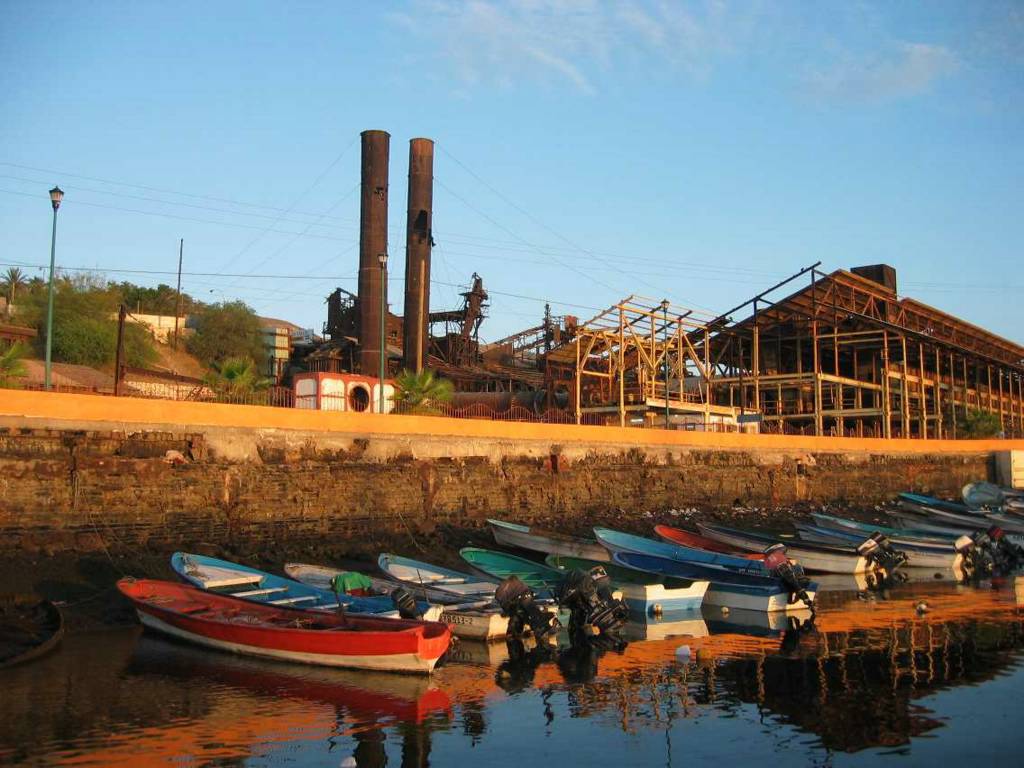
Here is a pic of Santa Rosalia in the morning, it looks so peaceful doesn't it?

Here's a picture of Linda and her buddy Rocky at the 'noodle party'. A noodle party is where we all sit around on noodles or other pool toys in the water on hot afternoons.

Here is NAKIA decked out for 4th of July at Burro Bay. Unfortunately you can't see all the flags very well because the sun awning is in the way, but there's no way we were going to take the sun awning down on a 96 degree day!

Wednesday, August 10, 2005


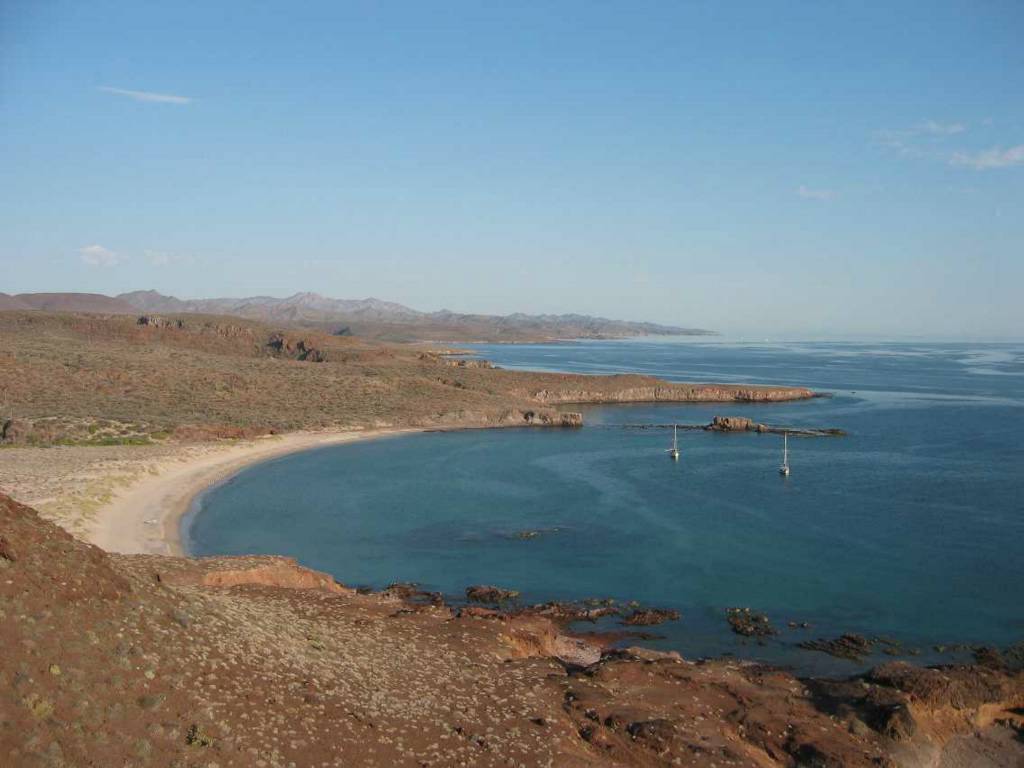
Here is NAKIA and SOL MATE at anchor in Medano Blanco. Nice Beach!

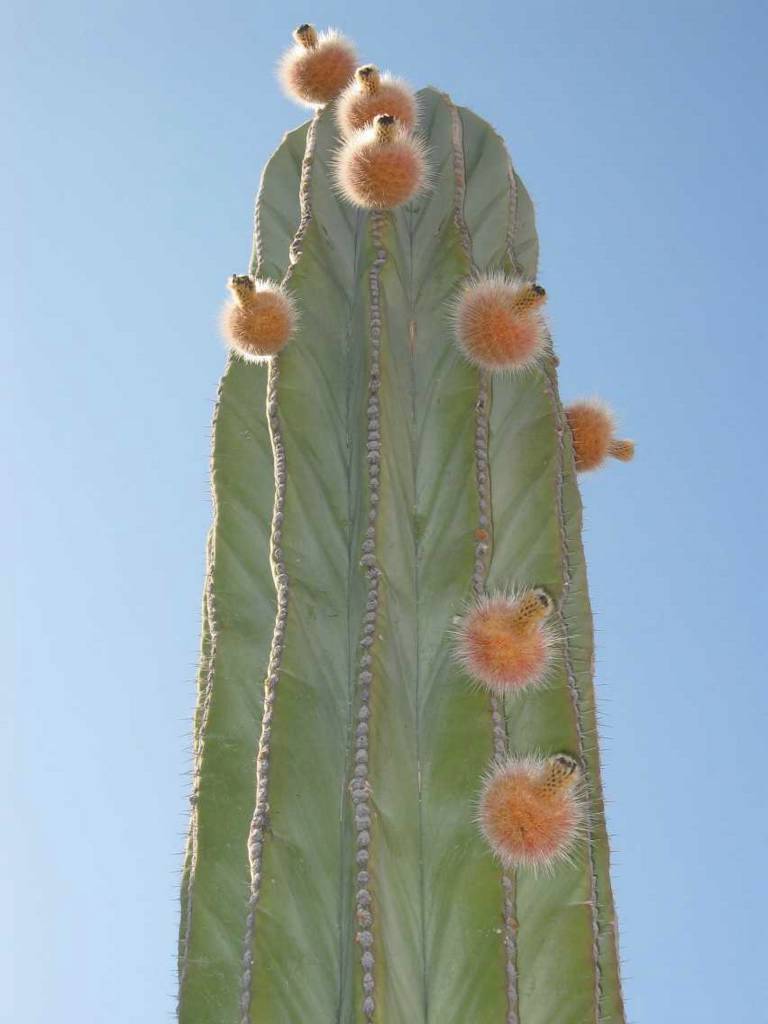
These are blossoms on a large cactus. This picture is from La Ramada North of San Juanico.

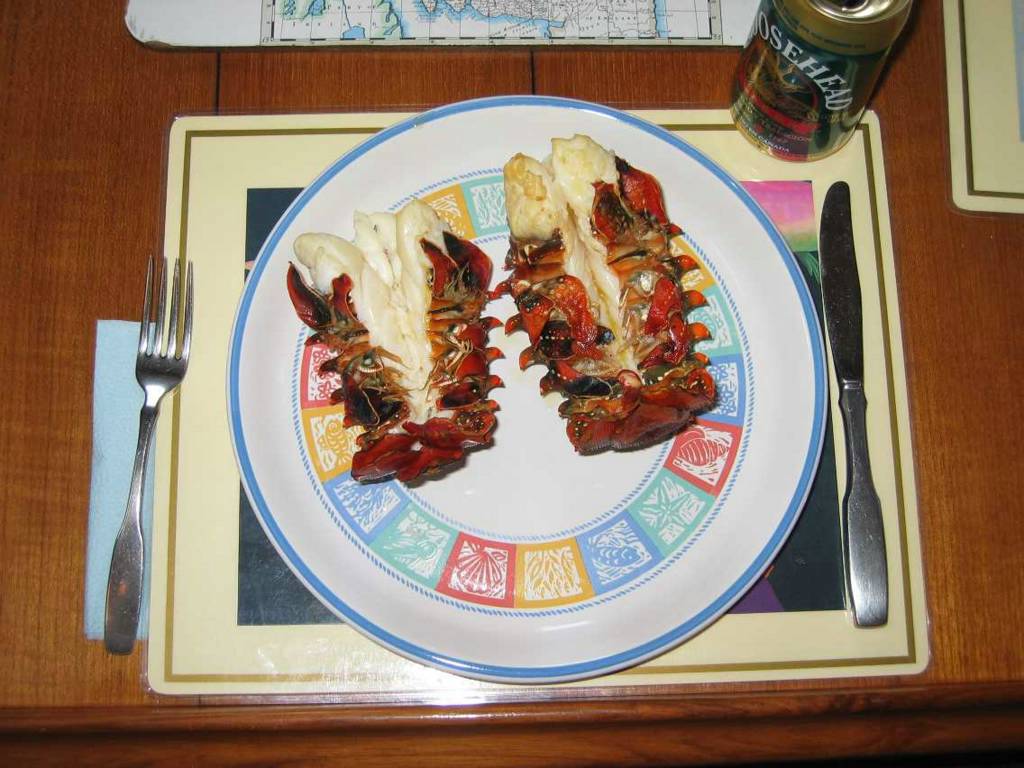
Two 'bugs' we got at Isla Carmen, very tasty.

Linda and John at Rancho Viejo in La Paz, having dinner to say good-bye to Dave and Debbie and Jan and Rich.

West Coast Tour

August 9, 2005
Seaquest Washington State Park, Approx 80 nm S of Seattle (46o 25' N 122o 32' W)

We departed San Carlos/Guaymas late Friday afternoon (the 5th) and started our long driving adventure that will take us up and back down the entire west coast of the United States. Our journey began with the shuttle bus from Marina Real to San Carlos. Just as the shuttle was dropping us off at the bus stop a bus pulled up. We thought this was going to be a good omen (not having to wait for the bus) and boarded the rattle trap local bus for the 15 minute ride to Guaymas. On arrival in town we walked the three blocks to the main bus terminal (actually four separate bus companies located on the four corners of an intersection) and went in to inquire about tickets. We chose to take the TAP line, because the pictures of the busses at their ticket counter were fancier then the pictures at the other line's ticket counters. TAP is $10 more expensive than the other lines too, so we figured it had to be better. The only problem is that the TAP line only has three busses that go from Guaymas to Tijuana 6pm, 7pm and 9pm. All the other lines have busses that leave every hour. We were about two hours early for the 6pm bus and didn't mind waiting. Unfortunately the 6pm bus was sold out so we had to buy tickets for the 7pm bus. No problem, we sat back to wait... and wait... and wait... it would have been nice if the terminal were air conditioned, considering it was about 95 degrees and 80% humidity. Oh well, we had a great bus coming, we were sure. We watched 5 or 6 busses leave the other terminals with 'TIJUANA' showing in their destination board and decided that they were all inferior rides, our bus would be much better, if it would only arrive. 7:15 rolled around and the 6pm bus finally arrived. Great, were we going to have to wait until 8:15 for our 7pm bus? No, the ticket attendant assured me that our 7pm bus would arrive shortly and sure enough, it arrived 'right on time' at 7:45. The rest of the 14 hour ride to Tijuana was uneventful, except for having our passports checked by immigration. We're convinced the only reason Mexican's check gringo's papers is because Mexican's are always getting checked when they're in the US.

We arrived in Tijuana early Saturday morning, ready for our next battle with Aduana, otherwise known as Mexican Customs. We want to bring a few things back with us to the boat. We're bringing our truck back to store in Mexico so this is an opportunity to bring things that won't fit in a carry-on bag. We were advised by other cruisers to get a letter from the marina stating that these things were parts for a boat which was on a temporary import permit. Then we wouldn't have to pay duty. The letter, and a list of the items, would need to be stamped by Customs before we left Mexico to prove that we didn't have these things on departure (or some other similarly confusing reason). Then when we return with the things, we show Customs the stamped letter and list and no duty is paid. Wonderful, no? As they say, it sounds good on paper. The problem was that we couldn't find a single Customs official in Tijuana willing to stamp the letter and list. We tried. Very hard. We spent 2 hours and went to 4 different customs officials and no one would get out their stamp pad. Finally we decided to give up and try again when we return (I'll walk back into Mexico via Nogales the day before we drive in and try to get the stamp then, stay tuned for further developments).

Finally we continued our journey by waiting in line for 45 minutes to walk through the boarder crossing. This wasn't as bad as it could have been, the line was reported to be 90 minutes long that day and it was only because of our search for a Customs agent that we entered the line half way in from the back of the line. We boarded the North bound trolley to meet our friends Ron and Anita who agreed to give us a ride to the airport to pick up our rental car. Not before going to lunch at Point Loma Seafood though. We can't come through San Diego and pass that up! After lunch Anita and Ron drove us to the rental car office to pick up our next ride, a Pontiac Sunfire which we'd be driving to Portland, OR over the next few days.

To Be Continued...

John and Linda

Thursday, July 28, 2005

Back to the 'Other Side'

July 28, 2005
San Carlos, Sonora, 27o 56' N 111o 03' W, About 250 mi S of Nogales AZ

We had a pretty good weather window to cross the Sea of Cortez Monday night so we got the boat ready and hauled anchor at 0100 Tuesday morning to make the 80 nm passage from Isla San Marcos to San Carlos. This was a lot earlier in the month than we wanted to be here but long term weather this time of year is highly unpredictable so we bit the bullet and made the jump.

The trip over was pretty un-eventful, we had light NW winds for most of the trip, motorsailing (that means running under power of the engine with the sails up to help as much as they can) all but an hour. I heard a couple of large whales cross our wake in the night and Linda saw some dolphin jump high out of the water in the morning but other than that we didn't see much in the way of wildlife. However, I trolled two lures and managed to catch a 31 in. Dorado (Mahi-Mahi) in the morning. This is the first Dorado we've caught since early December, last year. So far we've had three excellent meals from this one beauty and have about three more to go.

We arrived at 3pm Tuesday and dropped anchor in Bahia San Carlos which is one of the most protected natural harbors we've visited in Mexico. To date, only Puerto Escondido has better all around protection from the wind.

It's obvious to me that the mainland of Mexico gets the most money. Even though the prosperity and glitz of Baja towns like La Paz and Cabo San Lucas are impressive, the development in little bergs like San Carlos is even more so. There are expensive vacation homes all around the hills of Bahia San Carlos and Guaymas, an industrial port city 15 minutes by bus up the road from San Carlos, is easily as hustle-bustle as Mazatlan or Zihuatanejo.

We spent our first day here riding the bus out to Guaymas to find out about cross country bus service to Tijuana. It's even easier and cheaper then La Paz, $56 USD one way leaving every hour on the half hour. There are three bus lines offering about the same service so we should have no problem finding a seat for our trip back to the States.

A slip in a marina is not as simple though. There are slips available in Marina San Carlos; we're not sure how many, but they are first come, first serve so if someone takes the last slip before we do we'll have to go elsewhere. Not that we're anxious to leave the boat in Marina San Carlos, since it's $10.75 USD per foot per month. For NAKIA that's $430 USD for one month slip rental, $175 more then we paid in the states. This is the off season and most marinas offer discounts just to keep their slips full, not MSC apparently. Fortunately, there are also slips available at Marina Real, about 10 nm from Marina San Carlos, for $230 USD. If the facilities there are as secure (we've yet to take a look) we'll probably be leaving NAKIA there.

The weather took a turn for the worse since we've been here. Though the temps are not as high as on the Baja, the humidity is much higher. And because of the mountains to the east, we get huge lightning storms developing every afternoon. These storms are pretty incredible, size wise, and after they spend all afternoon getting higher and bigger they slowly start making their way down the mountains and out into the Sea of Cortez bringing lightning, high winds and rain with them. The really bad part is the wind and lightning don't really get cranked up until after midnight so it's not until you're trying to get a good nights sleep that the boat starts to bounce around w/ gusts over 30 kts and lightning going faster then flash bulbs at a New York fashion show. I had to sleep with a pillow over my eyes last night just to keep from getting woke up. Of course Linda is oblivious to it all and sleeps right through without even so much as turning over.

Oh well, we only have a week to put up with this stuff and then we can get on our bus to the States.

John and Linda

Sunday, July 24, 2005

Electricity

July 24, 2005
Isla San Marcos, 27o 14' N 112o 07' W (10 mi SE of Santa Rosalia)

We moved back to Isla San Marcos the other day to get away from the muck and expense of Santa Rosalia. The town is very nice but the harbor is really dirty. Every night at sunset about 100 pangas leave to go squid fishing. They return between 10pm and 2am, offload their catch, and then proceed to clean their boats in the harbor, washing all the squid ink and other assorted muck into the waters of the harbor. Both nights we were there I woke up thinking 'what is that SMELL!'

There's not much going on at Isla San Marcos; we're really here to stage for our crossing to San Carlos which we think we'll try in the next few days. They weather was a little strange yesterday and the day before. We had constant overcast, high temps in the low 80s, and night before last it rained pretty hard for about three hours. The boat feels nice and clean after not being washed for weeks.

A friend recently sent us email asking how we manage to keep up with the increased battery load due to the hot weather. The short answer is we use a 1000 watt Honda generator to run the battery charger. On average, we have to do this about 3 hours every other day. We could run the generator every day but it's a little noisy and it seems like we get charge faster if we let the batteries get down to about 30% discharge before we run it.

Now for the long answer, you can skip this if you don't want a lot of boat related details. Our battery bank is four each six volt golf cart batteries, lead acid. This gives us about 440 amp hours of capacity, but I program the battery monitor with 400 just to make sure we have a little reserve. We have a Cruising Equipment battery monitor which tells us how much battery capacity we have left in percent (it will also tell us how many amp hours we've used but I like the percent meter better). We have three ways of charging the batteries: 1) a 30 amp IOTA battery charger, 2) a 90 amp Balmar alternator, and 3) two 55 watt solar panels (110 watts).

A couple of comments on the charging facilities. First I wish I had a bigger battery charger. I installed the 30 amp thinking we'd only use it when tied to a dock so it didn't need to be very big. That was before we bought the generator. Now I'd have a 55 amp battery charger if I was sure the 1000 watt Honda would run it. Second, I wish I had room for more solar panels. I think if I had about 150 watts more I could just about keep up with our load. If I had 250 watts more I know I could keep up, the thing is there just isn't room on NAKIA for 16 sq ft of solar panels (4 ft x 4 ft). On the other hand, I've only seen one boat in the Sea of Cortez that I thought had enough solar power. It was a power boat with a big back deck covered by a bimini. The entire area above the bimini was solar panels, I figure about 1000 watts.

We don't have a wind generator, and I don't think I would want one. Most of the ones we've seen (heard) are pretty noisy. Others are quieter, but don't seem to put out as much. I'm not sure I could live with the noise unless it put out 10 amps and even then I'd probably shut it down at night to sleep.

We don't have a water maker (more on that later) so our biggest draw is our refrigerator. It's an Adler Barbour Super Cold Machine, it draws about six amps and though it has an option for water cooling I've yet to install it. This is the 'next big thing.' We have a pretty small fridge, enough to hold 4 liters of water, some beer, a couple heads of cabbage, four or five cucumbers, condiments, cheese, tomatoes, and avocados. We also have a small freezer which will hold two ice trays (yes we make ice) and about four pounds of meat. The fridge is cooled by a spill over fan from the freezer. Several years ago, when we first got the boat, I re-insulated the box with six inches of extruded polystyrene (Dow blue board) against the hull and four inches on the sides and top. I did this because I found that the existing insulation was soaked through with water that leaked in from the drain in the bottom of the fridge. The re-insulated box does not have a drain. All that seems pretty good, but in fact worse then the amount of cold lost through the insulation is the cold lost when you open the box to get something out. If I had the chance, I'd put a small water tank (2-3 liters) in the fridge and plumb it into the pressure water system. That way we could have a cold drink w/o opening the box.

Like I said, we don't have a water maker. This was an 'experiment' on our part, to see if we can live without one before we commit to the bucks, and we're still not sure if we want one. It would be nice to have the extra capacity that a water maker enables, but we're not sure it's worth the expense and maintenance hassles. As it is we can go about four weeks on our tanks (105 gal in the boats tanks and 25 gal in plastic jugs). That's about 4.5 gal per day (2.25 per person per day). We don't do laundry on NAKIA but out of that 4.5 gal per day we get a daily shower (bathe in the sea and then rinse with fresh water), wash dishes, and all the water we can drink. We get water when it's available, either at a dock or from water purification plants. Every town has a purification plant and you can usually have a truck deliver water to the shore where it's a short carry to your dinghy. Cost for this water is anywhere from $.80 to $2 per five gallon jug. We have five jugs which we bought on the mainland, actually we just paid the deposit on them, for $4 each. We give the water truck driver our empties and he gives us full jugs. $2 for five gallons might seem like a lot, but if you consider that a water maker can easily cost $5000, we can buy 12500 gallons of water @ $2/5 gal before we pay for a water maker. I read an article recently in which the author said he's run his 180 gal/day water maker for 1500 hours over the last four years(approx 12000 gal). His water maker still hasn't covered the original purchase price, not to mention new filters and repairs. All that said, we may still install a water maker, there's nothing like knowing for sure where your next five gallons of water is coming from.

I hope that covers some questions on cruising. Let us know if you have more, and we'll try to post answers.

John and Linda

Saturday, July 23, 2005

The best meal in Santa Rosalia

July 21, 2005
Santa Rosalia, 27o 20' N 112o 15' W

There are a lot of great restaurants in Santa Rosalia. Many, you could say most, provide their diners with the luxury of air conditioning. The best meal to be had in Santa Rosalia, however, is not held within the confines of a cooled building.

You'd think that cruisers, who've spent most of their time in humid 90 degree weather, would rather lounge with a cold beer while waiting patiently for their meal in a room cooled to a civilized 75 degrees. But no, the first place anyone heads for in Santa Rosalia is at the busy street corner of Avenida Obregon and Pedro Altamirano. Sitting catty corner from the church designed by Eiffel, who also designed a tower in Paris, is a white cart which supplies road side diners with that most Mexican of foods, Salchichas (Hot Dogs).

Now I can hear you thinking, Hot Dogs are not Mexican. Well they are when they're cooked like Chuyita cooks them. Allow me to describe the process. First take 2 pounds of bacon trimmings, and fry them until all the fat is rendered. Remove the cooked bacon bits and set them aside. Now take your Hot Dog and spiral wrap it with a slice of bacon and deep fry it in the rendered bacon fat for a minute or two. Place the Hot Dog in a firm bun (not the fluffy nothing buns we use in the US) and add onions, tomatoes, squirts of ketchup, mayo, and a yellow cheese product (can you say secret sauce), and top it with the bacon bits fried in the first step. Total cost, about $1.30 - cheap, eat three. If you're lucky, Chuyita will even give you a free bumper sticker.

We were only in Santa Rosalia for two nights, and the second night we really did want to be civilized and eat in the comfort of air conditioning, but before we left we bought five Hot Dogs to take back to Isla San Marcos with us. They weren't for us though, they were for Earl and Maria off Dos Brisas who, having left Santa Rosalia a few days before, were experiencing Hot Dog withdrawals. Hopefully one of our friends will bring some Dogs out to us before long.

John and Linda

Sunday, July 17, 2005

Cephalopod Sport Fishing

July 17, 2005
Isla San Marcos, 27o 14' N 112o 07' W (10 mi SE of Santa Rosalia)

The other night Lance on Milagro suggested we do a little night fishing for one of the Baja's most prolific species - squid. All that's needed is a hook and a bit of glow-in-the-dark plastic. Lures are sold specifically for squid fishing and they look like an elongated plastic egg made out of glow-in-the-dark plastic with a 'basket of spikes' at the bottom. Of course I don't have one of these purpose-built lures, but I do have a bottom jig that has glow-in-the-dark paint on it, and I figured that would be good enough.

We weren't going to be the only boat on the water though; we'd be joining some 100 or so Mexican fishing boats that fish the same area for squid nearly every night. They are based out of Santa Rosalia and every evening around 5pm they leave to go fishing. They return around 11 or 12, usually with 1000 lbs of squid 'fillets.'

We began our outing just before sunset. I've been told that it's not completely necessary to fish at night, squid can be caught during the day, but that fishing at night is cooler so that's when the Mexican fisherman do it. Anyway we set out, four of us (Stan from SolMate, Lance from Milagro, Earl from Dos Brisas and me) and got set in our fishing spot after about five minutes. We used a flashlight to 'charge' the glow-in-the-dark lures and then dropped them down to the bottom. The water is pretty deep, probably 200 ft, so it takes a long time to get to the bottom. The good thing is that you usually don't have to wait that long before a squid takes your lure. The 'strike' isn't much at all. The lure will be dropping and then all of a sudden it will stop, almost like hitting the bottom, except that when you try to bring the lure back up a little you find out that you're hooked up to something big.

I'm sure a lot of you are thinking, 'How hard can it be to catch squid; I've had calamari rings and they aren't that big,' well these are not those kind of squid. These are much bigger - up to six feet! I had the lightest rig, 7' pole with 20 lb test line, and a lot of times they would take line in long runs. The biggest one I caught was about four feet long and I had to bring it up to the boat three times before I could release it. The first two times I got it up to the boat and it took off on another run.

Another thing about squid fishing is what to wear. A bathing suit is best, and nothing else. Squid, you see, have two methods of propulsion. First they have large triangular 'fins' that they flap in the water to move about gently. Then they have the 'warp drive' which is part of their breathing system. It's comprised of the mantle and a jet nozzle. To breathe they draw water in through the mantle and over their gills, then they expel it through the jet nozzle. The expulsion part they can do with amazing force and, if they happen to be close to the surface when they do it, and pointed towards the boat, someone is going to get wet! It's like a mini fountain going off right in front of you. Of course it doesn't take long to figure out how to 'steer' them so that when they're next to the boat it's your boat partner that gets soaked, not you. This is the second thing that makes squid fishing difficult, just try to reel in a three foot squid while getting shot in the face with a geyser of salt water and laughing hysterically.

The next challenge is releasing the squid. Since a small one is plenty for two meal's worth of calamari steaks, you do a lot of catch and release. The catching part is easier then any other fish in the sea, but it's the releasing part that can be a little unnerving. Unlike fish, where all you have to worry about is keeping them immobile while you remove the hook, the buisness end of a squid comes equipped with 10 arms covered by suction cups. The hook will be on one or more of these arms and to release it you have to get pretty close. As soon as you do the squid takes the other eight or nine arms and tries to grab a hold of you. Having dozens of little suction cups grab onto your skin is pretty creepy, let me tell you. Also in the middle of the arms is the squid's mouth which has a beak much like a parrot, and just about as powerful. Get too close to that and you can lose a finger.

Anyway, we each caught a squid for dinner and had our fun catching, squirting, and releasing and got back about midnight with a lot of good memories.

You might think that's the end of the squid fishing tale, but no. The next evening, just before sunset, Linda was about ready to take a swim and wash up (we bath in the sea using salt water soap, then rinse in fresh water) when she noticed several large fish swimming around under the boat. She wasn't quite ready to jump in, so I got my pole out and dropped the lure in the water, just for fun. I hadn't removed the lure I used for squid, but when I'm just playing around I don't usually care too much what's tied on the line. Sure enough after about five seconds I hooked one of what ever it was, and boy it was big! I carefully steered it away from the boat and then jumped into the dinghy to finish pulling it in. As soon as I got it up to the boat I recognized the fountain. I'd hooked a two foot squid in 20 feet of water. Not only that but there were three more swimming around the one I'd hooked, all of them 'flashing' from red to white and back once every second or so. They change the color of their skin so fast it's amazing! Of course this put an end to Linda's plans for a bath at dusk, forever! Who wants to get in the water with the possibility of some hungry squid mistaking your foot for a fish?

I had Linda untie the dinghy from NAKIA so I could release the squid without worrying about getting hung up on the anchor chain or rudder. I ended up getting a little ride around the anchorage as the squid pulled the dinghy about a quarter of a mile before I could let it go, and getting soaked by multiple jets of salt water before I could get the hook out. So much for my last pair of nice clean shorts.

John

Monday, July 11, 2005

Cruising Highs and Lows

July 11, 2005
Isla San Marcos

Well, just when you think you're ready to throw in the towel on the cruising life, nature throws you something amazing to remind you why you're out here living the simple life instead of sitting in a cubicle making tons of money.

I'd been having a "poor me" day on Saturday - just tired of everything on the boat being salty and sticky, and of constantly feeling like I'm stewing in my own juices. I'm not the kind of gal who enjoys the "glow" of perspiration, and boy have we been dripping sweat this past month. We now seek out a spot in an anchorage that will get us close enough to a hill to block the sun (preferably setting, but even rising is a bonus if it gives us an extra hour of shade). And even though we shower as late as possible in the day, it's usually a challenge to stay clean and dry for more than about 30 minutes. I have to admit that this sometimes makes me want to scream.

So yesterday morning I was fantasizing about our upcoming trip back to the land of: limitless fresh water flowing from pressurized faucets (you try living on 2.5 gallons of water per person, per day, every day, for the unforeseeable future); push-button, fresh water, flush toilets; air-conditioning (fans are nice, but not so helpful when they're blowing hot air around); electricity you don't have to monitor daily and make yourself when it gets low; big refrigerators full of ice and cold drinks; and big grocery stores where what you purchase doesn't have to be inspected for roaches, weevils, or their eggs before you bring it into your home.

Anyway, I was sitting out on deck enjoying my pre-dawn coffee, trying not to sweat as I drank it, when I saw what looked like a few dolphins in the distance. But then I heard and saw a blow that would be more typical of a whale. I got the binoculars out and confirmed that they were not dolphins but some kind of small whale. John thought he noticed one that seemed headed in our direction, but he was in the middle of listening to the morning radio net and went back below. It didn't take long before all 4-6 of the creatures were in the anchorage right next to the boats. It was still early and I didn't want to yell, so it took three tries, ending in, "Get up here now!", to get John back on deck to see one just as it swam under the surface past Nakia's starboard side. I couldn't believe it at first because they seemed so small (and there was no male with a telltale tall dorsal fin) but John correctly identified them as Orca whales. I so closely identify these with the colder waters of the Pacific Northwest that I was astonished to see them here.

It didn't take long for us to realize that the whales were working as a group to get their breakfast buffet of manta rays herded to the table. While I regret seeing any beautiful creature become a meal, it was hard not to admire the organized lunging and tail slapping of this small pod of whales. I let John have the close up view with the binoculars while I stayed a bit more removed with the big picture. The whales moved through the anchorage between the boats and shore, probably pinning the school of rays in the shallower waters to prevent their escape. This went on for a good 20 minutes before the Orcas had eaten their fill and quietly moved out to deeper water. We noticed a large school of manta rays which still swam intact at the opposite end of the anchorage and half expected the Orcas to return for them, but they didn't appear to be interested.

John and I then joined Stan and MJ from SolMate on a dinghy expedition around the point for a few hours. We did some shelling, explored the rock caves, and snorkeled before returning to the anchorage where Earl and Maria from Dos Brisas were out rowing in their dinghy trying to shoot pictures of jumping manta rays. It was a huge school (easily over 100 animals) and you could see their dark underwater shadow and ripples on the surface as they swam back and forth against the shore. After politely waiting for SolMate and Dos Brisas to get their close up views of the rays leaping out of the water, John and I asked if anyone would mind if we snorkeled with them. We made one last check for Orcas before sliding into the water and slowly swimming towards the rays. Water visibility was low so it was tough to tell exactly when you were at the edge of the school and I caught them headed straight towards me the first time. What a thrill to have them swimming underneath me and parting around me to pass! We each got a few good views before deciding to leave them in peace and returning to the anchored dinghy.

So - the question is does seeing Orcas in the morning and swimming with manta rays in the afternoon make all my personal discomfort worth it? Well, maybe not 100%, but it's sure a great reminder of why we're out here in the first place!

Linda

Saturday, July 09, 2005

Hot Fourth

July 9, 2005
Isla San Marcos (23o 13' N 112o 07' W, about 10 mi SE of Santa Rosalia)

We stayed at Los Pilares for two nights. It would have been very nice except for the bees. The are the most difficult insect pests to deal with. They come to the boat looking for fresh water and investigate every little nook and cranny they can get their little bodies into. If they find any water, they go back to the hive and bring back a couple hundred of their buddies. SolMate left some water filters soaking in the cockpit to find a swam of 100 or so buzzing around the boat. They aren't that dangerous, like they say if you leave them alone they'll leave you alone, but the sound of 100 bees buzzing around your head is a little too much to take. The beach at Los Pilares, though not very inviting for sitting on, had very good shelling. We spent many hours looking for new kinds and trying to identify them. One afternoon we dinghied a couple miles back down the coast to the manganese mines. There are many abandoned buildings and a huge open pit which would have been fun to hike around, but unfortunately it was too rough to land. Maybe next time we can hike into the mines from the anchorage.

After two nights at Los Pilares we moved up the coast with the plan of going to Pta Santo Domingo (just inside Bahia Concepcion). When we got to Pta SD we found about a two foot wind chop running out of the bay so we decided to stop at Pta Aguja instead. It was nice, we were by ourselves, but the wind came up in the afternoon making it a little uncomfortable.

After one day at Pta Aguja we went over to Pta SD and picked up Stan and MJ from SolMate for a day trip to Mulege for provisions. We dropped anchor off the river mouth and dinghied in since the entrance is too shallow to get NAKIA through, and then left the dinghies at the beach near the mouth of the river. We chatted with a bus driver who was leaving a load of divers at the docks and then started the long walk into town. About the time we were wishing there was a taxi around a big bus drove up behind us and threw open the door. It was our friend from the beach there to save us. He gave us a ride into town where we immediately headed for the grocery stores. One other stop we needed to make was for water. NAKIA doesn't have a water maker, unlike 90% of the other boats in Mexico, so I'm constantly worrying about where and how to get pure water for her tanks. The good thing is that people in towns also worry about where/how to get pure water. As a result just about every town has one or two reverse osmosis water plants where city water is purified and bottled in five gallon jugs. They charge about $1 per jug and will deliver it by truck almost anywhere you ask. So, after walking around for 5-10 minutes, we found the local reverse osmosis water plant and I talked to the attendant to arrange for a truck to bring water to the dinghy down at the beach in two hours.

We took a taxi back to the beach and took all our groceries back to NAKIA then loaded the empty water jugs into the dinghy to exchange for fresh ones from the water truck. The truck was 20 minutes late, right on time for Mexico, and we loaded 25 gallons of pure fresh water into the dinghy for the trip back to NAKIA.

After spending the night at Pta Santo Domingo we moved into the oven of Bahia Conception and Burro Bay. The water temp there was 86o F and it got up to 97o F in the cabin the first day. Linda was still able to sleep in the pullman berth with two fans running, but I had to sleep on deck. This was the first time I'd had to get out of the cabin to sleep, but it was just too stuffy below for me. The next day was The Fourth, we're not sure how hot it got, since we were busy on shore with at the big party. There was a big picnic with potluck sides and free hot dogs and chili provided by Gary (a guy who's been living in his shack on the beach for 10 years), and ice cold beer served for $1 a bottle. We both played water volley ball, though Linda had a tough time with the loosey goosey "rules" (whoever had the ball started it over the net, you didn't have to serve it, and you could actually catch it with both hands to throw it back over to the other side). The fireworks were a little disappointing - a bunch of expired flares - but we'd done what we went to do and that was have a party with all our cruising friends.

On the 5th we moved to Santispac to go out to dinner for Stan's birthday. The high that day was 102o F in the cabin, but that wasn't the worst part. When it was 102o it was pretty dry, so even though it was hot it was quite bearable. Then the wind shifted and the temp dropped to 96 but the humidity went way up, and we were all wishing for the dry 102o F back. We went out to dinner at Ray's, the fanciest local restaurant (www.rayshaciendainn.com.mx), and we very pleased by the quality of the food and the presentation. Seafood entrees (including salad and vegetable) were 110 pesos, margaritas - 40, limonada - 25, and kahlua rice pudding - 35. I had calamari steak and Linda had scallops breaded in panko crumbs; both were excellent and, except for wiping the sweat from our brows during the meal, this rates as one of our best meals in Mexico.

Early the next morning (the 6th) we set sail back to Pta Santo Domingo where we were the only boat in the anchorage. Everyone else was still in Santispac. We found the water temp had gone up a little while we were in Bahia Concepcion and the temp was a little warmer, but it never got much above 93 so we were a lot happier. We spent the days walking on the beach looking for shells, scrubbing the bottom of the dinghy, and snorkeling out around the point. The high point of the snorkeling trips was sighting about a dozen large (up to 3 ft) rooster fish swimming around the reef. Of course we only got the anchorage to ourselves for one night as the rest of the Fourth of July party came out of Bahia Concepcion the next day. But we had fun for awhile.

After two nights at Pta SD we set sail for points north, hopefully cooler, and dropped anchor at Isla San Marcos (about 10 mi South East of Santa Rosalia). The trip was uneventful and we arrived to find 80o water and 88o air. I don't think it's been over 90o since we've got here, much better. There are really cool caves to explore right around the corner, so we're looking forward to spending some quality time here, before we get set to go back to the states for Linda's 30th(!) high school reunion on August 13.

All for now,

John and Linda

Thursday, June 30, 2005

Outside The Box

June 30, 2005
Ensenada las Pilars
One mile SE of Punta Concepcion

Blue Moon did not leave La Ramada after all so we decided to move on instead. On June 26 we rounded Punta Pulpito and exited "the box" of tropical storm area delineated by our insurer. (There was no official ceremony, or even a sigh of relief since there are no guarantees that a hurricane couldn't still come North of the box and paste us.) We motored past a few boats anchored in San Antonio, and ducked into San Sebastian to check it out. There's a small community of gringo type vacation homes at the head of a cove surrounded by reef. Looked nice but the water was opaque and our hook didn't set on the first try in the rocky bottom so we decided to join Stan and MJ on SolMate at Punta El Medano Blanca instead. This is a nice 2-3 boat anchorage with a white sand beach and snorkeling reef.

We went snorkeling a few times during our stay there, and saw some baby Sergeant Majors on the reef. They're about the size of a dime to a quarter - very cute. Stan mentioned that he'd seen some even smaller ones by their boat, but I said we'd been seeing those regularly in Mexico and I thought they were something different because they aren't flat. They hang around our rudder right on the surface and I've been calling them bumblebee fish because they look like a miniature, bullet shaped, striped bee - fat and cute. Well, I swam back to the boat from the beach and took a closer look at the little guys by the boat (I'm swimming with snorkel and fins all the time now. Kind of cheating but I can exercise and see everything at the same time.). Sure enough they are so immature that they haven't grown into their adult looking phase yet. I wonder what they're doing so far away from the reef; most of the time they show up around the rudder almost as soon as we've dropped the anchor. I also saw an adult that was so blue that at first I thought it was another kind of fish. When the males are in their breeding phase they change from yellow and black stripes to blue starting at their head. So sometimes their front half is blue, with barely discernible dark stripes, and their back half is still yellow and black. Fun to see all the variations. I also saw my first live lobster after swimming over three molts. He was a big one down in a crack between big rocks (and yes, he was definitely moving). And I finally saw a turtle while snorkeling in Mexico. He didn't stick around long but it was exciting to finally see one under water here after seeing so many from the boat.

Although John has steadfastly maintained that we can do without a water maker, and therefore we are philosophically opposed to accepting water from other cruisers who have them, we crossed the line and let SolMate give us 35 gallons the other day. Stan said he had to run his generator anyway and that it's better to use the water maker on a regular basis, so we let him talk us into it. Of course Stan is also a representative for Spectra water makers so he may just be angling for a sale. :-)

Yesterday we went for our first hike in ages. We got a nice early morning start to beat the heat, skipping our morning coffee and the radio nets. It's an easy couple of miles on an actual path out to the non-functioning light on the point, so John decided to up the ante by climbing a steep ridge halfway there "to get some cardio." I followed him for a few minutes until I realized that it was going to be much more difficult coming down on the loose shale than it was going up. So I told him I was going back down and out towards the light. (There was a trail! It isn't often we have a nice trail to walk on, so it was kind of a no-brainer to me...) I walked on by myself and when John finally caught up to me he announced that he'd fallen coming down and hopefully his ankle was only badly sprained and not fractured. He still maintains that it's more fun to risk pain and suffering in the pursuit of adventure than it is to travel the well worn path, but I wish sometimes he'd stick to the darn path.

The wind picked up in a major way after we got back to the boat, and our conversations later in the afternoon with SolMate (who'd moved on that morning) and Dos Brisas (in a similar cove north of us) made us start to think that it was time to leave. We had a nice downwind sail, made even nicer by the fact that we were in the shade of our wing and wing sails until the wind died during the last hour of the trip. We arrived about an hour before sunset and worked up such a sweat getting things put away/set up that we had to cool off with a swim. It's so humid here that right after sunset dew started forming on the decks. Then a breeze came off the land and dried everything off. Then the wind shifted and we had dew again. And this was all in the space of about 20 minutes. Today it's still moist, but at least there's a stiff breeze blowing to keep us cool. Tomorrow we will probably move to Santo Domingo at the entrance to Bahia Concepcion.

John has been busy with sewing projects lately. He made a bug screen for our main hatch and a new version of a wind scoop for our forward hatch. We have a commercial tall wind scoop but it casts a shadow on our solar panel which we mount on our staysail boom when we're at anchor. So he's made a low profile one now, and the only suggestion I have for people making their own is not to use spinnaker cloth. It's a little noisy, but John assures me the crackly crunch will wear out of it soon.

The ankle seems to be healing, the toe is getting better, and the bee sting is only the size of a golf ball (did I forget to mention the bee sting?). As John says, he's only a mess from the right knee down!

Linda

John's Fishing Report:
I spent one evening trolling around the reefs hoping to catch a nice trigger fish or a cabrilla and had a little bit of excitement. When doing this kind of trolling, I zig-zag into and away from shore and I started noticing that I was getting strikes on the off shore runs so I changed my route to just the offshore area (maybe 200 yards offshore). I kept getting these large pulling strikes but not hooking up. The rod would bend, the drag would run off, I'd stop the outboard and start to reel in only to find nothing attached. Finally I got what felt like a solid hook up, and whatever it was didn't fight very hard, though it pulled in short strong bursts and obviously weighed a lot. It didn't take long to get it up to the boat where, in the failing light, I STILL couldn't figure out what it was. Finally within 5 ft of the boat I pulled it out of the water and found a 2 ft squid firmly attached to the lure. I netted it and took it back to show Stan and MJ on SolMate and Linda, before figuring out how to let it go. They are supposed to be good to eat but the cleaning process is long and involves soaking overnight in milk to get rid of the salty taste, definitely not worth it. In the end I had to cut part of one of its tentacles off to set it free, but that's ok cause it will grow back, I think.

John

Monday, June 27, 2005

More from Ensenada Puerto Almeja

June 25, 2005
Ensenada Puerto Almeja (aka La Ramada), 26o 23' N 111o 27' W
About 40 miles south of Mulege

After three days of blasting wind all day the wind finally quit, of course now it's a LOT hotter, 88o F during the day and cooling off to 80 by bed time. The bad thing is, at about 3am a westerly wind comes up that's just as hot as the sun beating down on the deck. Last night it was 87o F at 0400. Makes it hard to sleep even without clothes or covers...

Ray and Jayne from Adios and Alan from Blue Moon taught us about 'Chocolates' yesterday. Chocolates (prounounced "cho ko lah' tays") are brown clams that live in 10-20 ft of water. They're easy to find by the tubes they use to breathe and feed through. They show on the bottom as two small white tubes at the bottom of a 1/2" indentation in the sand. To gather them you look for the two holes from the surface and once you sight them you swim down (it helps if you do it at low tide, that way the water's shallower) and dig them out of the sand. I even designed and built a special shovel made out of a piece of 2 inch ABS plastic pipe. An hours worth of diving and we had more than enough for dinner. We cooked them over an open fire on the beach at sunset with nothing more then a bit of tobasco sauce to garnish them. Very tasty.

We also did a little snorkeling, even though the water has been very opaque (making the visibility bad - maybe 10 ft), and I saw what I think was a Jeweled Moray Eel.

The fishing hasn't been that great and the worst possible thing I can imaging happening happened the other night. I was trolling out around some rocks and getting a lot of needle fish strikes (needle fish have very bony mouths so they rarely get hooked) when I got a big strike and pulled hard to set the hook. That's when the line parted and I lost my best (read most productive) lure. Bummer! Lures like it are simply not available in Mexico, so now I have to find my 'next best lure'.

Adios left this morning, leaving only Blue Moon and us in Ensenada Puerto Almeja. Alan says he's taking off tomorrow, which may give us the chance to have an anchorage to ourselves for once. Hopefully no one will come in tomorrow to spoil our skinny dipping plans.

John and Linda

Tuesday, June 21, 2005

More Life in Paradise

June 21, 2005
Ensenada Puerto Almeja (aka La Ramada)
About 40 miles south of Mulege

Last night during my usual getting ready for bed routine I noticed that the head (toilet) didn't seem to be acting like its normal self. John tried banging on some hoses and things which has helped get past the blockage before, but no luck. So we were up until 2 AM to get the job done right this time. Because of the nature of the problem it's usually best to do this when you're the only boat in the anchorage or in the dead of night. People don't really appreciate having sewage dumped into their swimming pool, even when it's a very large swimming pool. There wasn't a lot of it, but one of my jobs was to bucket brigade the stuff draining from the disconnected holding tank hose. So imagine me having to walk from the head (all the way up in the bow of the boat) past a big bucket of anchor rode, over tool boxes, up the companionway steps and out to the side of the boat where I could dump the contents over the side. The worst moment was when I inadvertently bumped the lifeline and splashed a few drops up into my face. Gross!

This morning John's doing some clean up since he had to empty out the space he was working in. He also helped the other boat anchored here fix a problem with their solar panels, which turned out to be a broken wire. I wiped down the fiberglass on the side of the boat which was still in the morning shade, wiped down the rusty salt water splash marks from our anchor chain in the chain locker, and lugged two five gallon water jugs from the bow of the boat to the stern to siphon them into the main water tank. I did all this before 10 AM and was sweating bullets the whole time. Yesterday morning it was 77.7 degrees at 7 AM, and the main problem is that the humidity has been high. Makes it kind of tough to enjoy that morning cup of coffee.

Yesterday we moved to this smaller anchorage (only a couple of miles from San Juanico) with our neighbor, Adios. We were actually the first boat here for a change and got to pick our spot. Is still breezy most of the day but not nearly as bad as the previous place. I swam to the beach and John followed me in the dinghy (he still has to keep his foot dry while his injury heals). I walked up a road in nothing but my bathing suit and reef shoes, with a swim fin for a shade visor, while he collected wood on the beach. Kind of nerve wracking to walk a rough dirt road out into the desert half-naked by yourself, but that's how desperate I was for the exercise. Kept imagining what I would say if I ran into anyone. The usual, "Hola! Buenas tardes. Como esta?" didn't seem like it would really be enough in this case! I swam back to the boat (paranoid the whole time about running into a jelly fish, but I didn't) and we went for a short dinghy ride to explore the shoreline. I still love seeing the ospreys and spotting their huge nests. After dinner at sunset we took all our paper garbage to an existing rock fire ring on the beach and burned it. This helps cut down on the amount of garbage we have to keep on board until we get to a town where we can dispose of it. Was nice to have an almost full moon to enjoy while we were standing around our little bonfire.

We keep hearing on the Sonrisa HAM net that Bahia Concepcion is even hotter and more humid so we're still in no hurry to get up there for the Fourth of July.

John Here:
If all this playing with the toilet stuff sounds familiar, see 'Head Games' from August 21, 2005. I guess it just goes to show that there are some things that are really hard to keep working on a boat. Personally, disgusting as it is, I'd rather have to work on the toilet plumbing over and over than have repeated problems with the engine. At least the parts are cheap and if you have a total failure you can use a bucket as an emergency backup.

Linda and John

Sunday, June 19, 2005

Happy Father's Day!

June 19, 2005
San Juanico, Baja California del Sur, 26o 21' N 111o 25' W
About 40 miles south of Mulege

Hope the Dads are enjoying all the things that fathers like best today - family, friends, and BBQs!

Unfortunately this has been one of those weeks where paradise hasn't quite lived up to its name, and we're going a little stir crazy. For me, it started after we left Puerto Escondido. We were shooting for Puerto de la Lancha on Isla Carmen so that John could hook up with Bob on Air Power to do some fishing, but the wind was not in our favor and when we started taking spray over our freshly washed fiberglass we bailed for Puerto Ballandra (also Isla Carmen) instead. This was a pretty, well protected cove with lots of bait fish and at least a dozen larger fish herding them around (you could see them making a wake right at the surface). But the water clarity was poor and we had a few mud wasps trying to build a nest underneath our anchor windlass so we decided we'd leave the next morning.

Got an early start for the motor trip around the corner to anchor with Air Power and Adios in La Lancha, where there is no sandy beach to gaze upon, there were many stinging jellyfish (string of pearls), there are no trespassing signs on shore, and the wind came up every afternoon. We stayed there for two nights and John did a lot of fishing with Bob. They came back the first day with a couple of good sized "bugs" (it isn't legal for us to take lobster so cruisers only take bugs). Maybe it was because it was the first time we've cooked them ourselves, but we weren't all that impressed. Dungeness are still our crustaceans of choice. The next morning they got up early and went out fishing for five hours, returning with a few tasty fine scale trigger fish for our dinner.

On we went to Isla Coronados trying to sail most of the way to conserve fuel. This was a very pretty and protected anchorage with a beautiful white sand beach, shade palapas, an outhouse, and a groomed trail as part of the park system under which these local islands fall. We swam from Nakia to shore and didn't have a problem with jellyfish. We read a sign stating there is a 20 peso/person/day park fee. The over 60 crowd is exempt from the fee, as are "residents," and there was a rumor that an FM-3 visa would qualify for the latter. But this didn't seem to work for another boat in the anchorage so don't count on it. It was nice to get some exercise and get off the boat for a little while, the first time for me since leaving Puerto Escondido.

By the time we swam back to the boat we had over twice as many bees as when we left. We think this may be because SolMate had tried putting water out for them up on the bow of their boat, the theory being that if they have a water source they won't bother the rest of the boat looking for more water. Sounds like a good idea but I think maybe it just ends up drawing more bees to your boat! Most people go the opposite route, trying to eliminate all sources of open fresh water on the boat - dry sponges, dry sinks, etc. Today we heard that some people go so far as to kill them by attracting them with sugar water laced with detergent. This seems kind of cruel but I guess that's just because we have yet to experience our first real bee swarm. I'm sure I'll be changing my tune after that.

On Friday, when we moved from Isla Coronados to San Juanico (back on the Baja), it was just one of those days where everything seemed to go wrong. To get away from the bees (which returned exactly at sunrise; did you know that bees use the sun to navigate?) we left before the wind had filled in and so drifted around in circles for an hour. Finally we had a nice sailing breeze to get to the big open anchorage where there were already five other boats. But as we made our final approach into the anchorage, instead of getting calmer (which is kind of the point of going into an anchorage, I think, to get out of the wind), the wind seemed to pick up intensity. We still needed to get our main sail down and in an attempt to get it down and all rolled up in a hurry the boom came off the boom gallows, the topping lift hadn't been secured, and John went down hard on the side deck, splitting open the bottom crease of his pinkie toe where it attaches to the foot.

We managed to get anchored fine after that, but it's been windy every day, starting a couple of hours earlier in the morning each day and not easing up until after sunset. On top of the wind chop there's a swell running which keeps us rolling even with the rocker stopper out. This morning we moved farther south to try and tuck in closer behind the reef but it doesn't seem to have helped much. So swimming is out, dinghy touring is out (too wet and rough), and outdoor showering is out. I managed to get one swim to shore late on our arrival day and haven't been off the boat since then. Of course everything but fishing is out for John until his toe heals up.

The rest of the time we read, eat, sleep, and sweat too much. We don't want to move north to Bahia Concepcion too soon for the Fourth of July celebration because people up there are already melting from the heat. We've noticed much higher humidity here too - we're sticky all day and the decks are wet well before sunset. So the best thing about the wind here is that it gives us built-in air conditioning while we wait to move into the real heat.

John here:
Bob and I went night fishing night before last, the idea being that red snapper and other large bass types (big grouper included) feed at night. That didn't really turn out to be the case, but we did have a bit of fun on the way out. It was right near sunset and we decided to troll our way out to the rocks where we were going to fish for 'the beeg ones.' About half way there I got a huge strike but no hook up, very encouraging, so we circled our way back around and sure enough I hooked into something that started pulling line out at a very rapid pace. 25 minutes later, Bob netted my 24 inch Jack Crevalle (kre-VAL-ey). Talk about fun! These fish are not good eating but have a reputation as fierce fighters and after examining my lure I believe it. Two out of three barbs on each of the two treble hooks were bent straight! I managed to get him in on a single barb barely hooked into his lip. After a short time in the net to get the hook out back he went to fight another day. I hooked another one later on the way out but was 'in a hurry' to bring it in and must have pulled the hook out.

The night fishing turned out to be a bust, the only thing we caught was a moray eel that Bob hooked. Talk about a handful, it would tie itself into knots and squirm all over the place. It took us almost 20 minutes just to get the hook out. Both of us. Holding on to it with both hands. I hope I never hook another one of those!

There's no such thing as too much fun, so last night right at sunset I trolled by myself through the same area where I hooked the Crevalle last night. I hooked another one that took about 20 minutes to land, it was around 28 inches, then trolled a little longer and hooked another one that took almost 45 minutes to land! It measured over 30 inches, and towed the dinghy over 1/4 mile. (The reason it was taking so long to land these two fish is that my net is too small for them, I have to get them tired enough that I can grab them by the tail to get the hook out.) I'm not sure how long my lure is going to last with these guys crushing it, but I intend to find out.

Linda and John
-------------------------------------------------
Do not push the "reply" button to respond to this
message if that includes the text of this original
message in your response. Messages are sent over a
very low-speed radio link.

The most concise way to reply is to send a NEW message
to: "S/V Nakia" <WBD3734@sailmail.com>
If you DO use your reply button, be sure to delete
the original message text and these instructions
from your reply.

Replies should not contain attachments and should be
less than 5 kBytes (2 text pages) in length.

This email was delivered by an HF private coast station
in the Maritime Mobile Radio Service, operated by the
SailMail Association, a non-profit association of yacht
owners. For more information on this service or on the
SailMail Association, please see the web site at:
http://www.sailmail.com

Sunday, June 12, 2005

Puerto Escondido

June 12, 2005
Puerto Escondido, Baja California del Sur

We stayed in Agua Verde until June 5, hiking in the hot sun and snorkeling in the cold water. We saw an osprey and an octopus. The local goats made their ritual evening strolls along the hillsides surrounding the anchorage. With a well-stocked tienda and fresh tortillas within walking distance, it was hard to leave.

We moved on to Isla Monserrate and anchored off low yellow sand bluffs. Although we gave it our best shot, hiking here was next to impossible because of the dense brush and cactus, but the beach was perfect for walking and shell hunting. We stayed a few extra days when we heard that Bob on Air Power was coming in. He and John went spear fishing together and John came back with something called a Hog fish for dinner. We all did some snorkeling out on the reefs to the east and it was the best visibility and most fish we've seen so far. Really a pretty place and we were glad to have spent the extra time there.

We were going to "run out" of water at any minute according to John's calculations, so we were a little antsy to get to Puerto Escondido. We might have run out of the water in our tanks, but we still had 16 gallons in jugs in case that happened. But we were also out of fresh provisions so it was time to go and get restocked. Puerto Escondido is great. There was a big fuss when they installed moorings in the inner, almost landlocked, harbor, but they only charge one peso per foot per day, plus 10%, and now that you don't have to pay to check-in, it seems reasonable to us. There's a place to dump garbage, a dinghy dock, a place to fill water jugs from a hose, and it's been flat calm at night. The only drawback is that it's 25 miles to Loreto with no bus service to speak of. People who base out of here have cars, which would make life much easier.

Yesterday we got seven people together to hire a seven passenger taxi van for the day. Our driver, Gustavo, picked us up at 9:30 AM and drove us into Loreto to run all our errands. We dropped three people off at an internet cafe and the remaining four drove from ferreteria to ferreteria looking for acetone, butane, and hydraulic fluid among other things. We must have tried at least half a dozen places before John finally gave up on the latter, and we cut Gustavo loose until Noon. The four of us walked around town (fishing tackle was the next goal), and checked out the Malecon, before rendezvousing at the internet cafe. Gustavo then drove us all back to the center of town where we had a nice lunch at Cafe Ole. We split up for some quick shopping and sight-seeing and met back up at the taxi again at 2:00. Then we did our "big shop" with stops at the supermercado (not so super after La Paz!), fruteria, panaderia, and finally, the deposito. By the time we arrived back at the dinghies it was almost 4:00 and everyone was tired. The taxi was 700 pesos round trip, and split seven ways it was worth it. It was especially nice to be able to store our purchases in the back of the taxi throughout the day, instead of having to haul everything around with us the entire time!

But it wasn't time to relax yet. John needed to go up the mast to 1) fix the roller furling (which got a little messed up when he made the mistake of letting off halyard tension before unfurling the drifter), 2) attach the Mexican courtesy flag to the outer shroud (this way it won't bang on the shrouds like it does from the flag halyard), and 3) affix reflective tape to the mast to make it easier to find Nakia in a crowded, dark anchorage (Phil, remember the panga ride in Turtle Bay?!). While John was up the mast I was putting away the mass of stuff we'd bought. This entails taking everything out of boxes (actually I did that before we even put it in the dinghy), wiping off dusty cans, labeling cans with a Sharpie, removing labels from cans, stowing everything, and separating the tortillas. The latter is something we learned about only recently. We had trouble with our fresh tortillas sticking together until John finally asked a local what to do about it. The secret is that you need to separate all of them until they've had a chance to cool, then you can stack them again and store them. So picture a kilo each of corn and flour tortillas strewn about all over the galley and dining table. In the midst of all this I was up and down the companionway helping John while he was up the mast.

We finished all that at 6 PM and John decided it was time to go fly fishing. He got quite a rush when he hooked a bonito which took off so hard that he had to grab the pole with both hands. He's using barb less hooks now which makes releasing the fish we don't want to eat (so far, most of them) much easier.

Today was water day. John made four trips to the water hose with our six water jugs to fill the tanks (on both Air Power and Nakia) while I used some old water from our emergency jug to wipe down the fiberglass and try to get the boat cleaned up a little. Of course we chose to be on one of the moorings that's farthest away from the water hose because it's in the shade earlier than the others, so each trip was a long one. We're getting our three gasoline jugs filled here but it's costing 375 pesos for about 40 litres (about $2.62/gallon plus delivery charge plus Pemex, the national gas chain, ripoff; it's a ripoff because we paid for 50 litres and only got 40 even though the meter on the pump said 50 litres; this happens all the time).

Stan and MJ on SolMate need to make a beer run so, in lieu of the hike we were going to do today, we're going to walk with them to Willy's tienda which is down the road about 45 minutes at the junction with Highway 1. We've already been to the one at Tripui RV Park, about a 15 minute walk. For those of you that read about the fire that destroyed most of it, Tripui is really looking good. There's a beautiful pool outside the office/gift shop/internet cafe and the grounds are lovely.

Tomorrow we move back out to the islands with a stop at Isla Carmen first. Our short term goal is to reach Bahia Concepcion by July 1 for the Fourth of July celebration at Burro Cove.

Linda and John

Tuesday, May 31, 2005

Lightening Strikes

May 30, 2005
Agua Verde, Baja California del Sur, 25o 30' N 111o 03' W
About 90 miles North West of La Paz

We spent an afternoon at the sand spit on Isla San Jose to take the lagoon river trip. The weather had been kind of over cast and humid all day and after we had been anchored at Isla San Jose for half an hour or so we started hearing the distant rumble of thunder. There was a big power boat anchored close by and they started pulling their anchor around the time the lightning started. The problem with being anchored near a sand spit is that we had full visibility of the lightning all around, so it looked like it was much closer then it actually was. Anyway, the power boat was pulling his anchor but not really going anywhere. At one point we heard him make a comment about 'staying near the lightning rod', which we figured was supposed to be our aluminum mast sticking 50 feet into the air. Linda and I sat in the companionway watching the lightning and hoping that we wouldn't become the protection for a power boat worth 10 times our little boat and finally it became apparent that the storm was going to pass far to the south of us.

With that bullet dodged the big power boat motored off into the distance and we got ready for our Jungle River Trip. We loaded up snorkeling gear, fishing pole and other water toys and headed into the 'river'. A friend had told us that there was good fishing in the inlet so I put out a lure and sure enough something started chasing it. I got a strike and hooked a small fish that I was delighted to find to be a small rooster fish, my first ever. I've been 'dreaming' about catching one of these since I'd read about them before my bicycle trip with Mike Green in the '80s. This one was pretty small though, so it didn't put up the huge fight that rooster fish are known for and in a few seconds I had him next to the boat. Unfortunately he got off the hook just as we were getting ready to take his picture. The rest of the river trip was pretty uneventful. The channel is very short and it ends in a lagoon that doesn't inspire much awe. Maybe if the weather were better... Soon after we reached the lagoon the weather started closing in again so we high tailed it back to NAKIA to get near some higher ground, this time however we didn't get nearly as much lightning as the previous storm so we were much more relaxed.

Our destination was a short run across the channel to San Evaristo where we spent two nights with three other boats; SolMate, Secret O' Life and Mutineer V. There are supposed to be a couple small tiendas in San Evaristo so we went ashore one day to see if we could find them (we're getting pretty low on fresh provisions). The first store turned out to be closed so we went on down the road to the reported location of a second store which turned out to be a few small shelves in the kitchen of a local's house. After putting the owner through all the trouble of showing us around we felt like we should buy something, so we bought 18 eggs at a cost of about $1.50. Big spenders. The next day we took a hike up the hills overlooking the anchorage where we found the crews of SolMate and Secret O' Life already at the top. They had started after us but took a shorter route. Oh well, we beat them sailing all the time so I guess they get to win the hiking contest (just kidding you guys!).

We left San Evaristo and had a great sail to Bahia Rincon (corner or nook bay). What an awesome place! It's one of those places that not too many people stop because it's close to a lot of other, better anchorages but they're the ones missing out. It's a little cove out of the wind surrounded by high cliffs, several hundred feet high. There's a smooth sandy bottom about 35 feet down and good fishing all around (I caught a leopard grouper and another bottom fish). We only stayed one night but probably could have stayed several as long as the wind continued to come out of the south.

The next morning we left around 10 to make it to our planned anchorage at Los Gatos around 2pm. Of course when we got to Los Gatos we were wishing we were back at Bahia Rincon. The southeast swell was rolling directly into Los Gatos and no matter where we went in this little bay we couldn't find any place out of the swell. Our backup, a spot around from the point nearby was equally bad so we bit the bullet and made for Agua Verde, another 20 miles away. In the end we had a great sail getting there, even if it was a little longer than it should have been. A few weeks ago I hooked the autopilot to the GPS, so the autopilot will actually take us from waypoint to waypoint without us having to tend the course. We just have to watch for traffic. This works great as long as I enter the waypoints into the GPS correctly, which in this case I was off by about 3 miles on one of the waypoints. The autopilot did as it was told and steered us about two miles past my 'intended' waypoint before I noticed and corrected the error. Good thing I was pay attention, those machines will get you every time if you don't watch out. We pulled into Agua Verde two hours before sunset to a welcoming from several rays jumping in the late afternoon sun. I guess it's not all bad.

Today is Memorial Day and there's going to be a potluck party on the beach. We're taking a cabbage salad and were going to be taking cupcakes until we found that the cake mix we've been saving for so long is a little too old to be good now. Guess we shouldn't have saved it for so long!

John and Linda

Tuesday, May 24, 2005

Exciting times

May 24, 2005
North end of Isla San Francisco, 24o 50' N 110o 35' W
About 40 miles NE of La Paz

We played 'find the best anchorage' at Isla la Partida for a few nights last week. After leaving No Name Cove #7 we moved into Caleta Partida which was much more protected, as we hoped. The problem was that there were a few other boats there and since we'd spent a few nights there with Megabyte a month ago we felt we 'knew' the anchorage and were kind of bored being there.

The highlight was taking the dinghy through the shallow gap that separates Isla la Partida from Isla del Espiritu Santo and out into the wild blue Sea of Cortez. It was a perfect day and our destination was a sea cave which we'd been told had a sand beach inside it. We searched up and down the coast and could only find one cave that was deep enough to enter in the dinghy. It didn't have a sandy beach inside, but it did have some pretty cool snorkeling in and around it. We anchored the dinghy inside the cave and were rewarded by spotting a banded guitar fish (like a cross between a shark and a ray) lounging in the shade of the cave.

However, a few nights in the familiar Caleta Partida were enough, so we moved around the corner to El Cardonal. Literally around the corner, but once again we were anchored by ourselves. Our first night was more or less tolerable, given the fact that El Cardonal is much less protected from the evening La Paz wind known as the Coromuel, and we spent the next day snorkeling on a reef outside the anchorage and exploring the beach near NAKIA.

The afternoon was topped off when Linda noticed the Dockwise* ship passing the island. We knew it would be carrying our friend Dave and his boat Megabyte so while Linda called Dave on the VHF radio I went out in the dinghy (it was seriously flat calm) to take pictures and wave good-bye. Definitely a cool way to bid so long to Dave and Megabyte.

Of course we should have known that the flat calm I took the dinghy out in was the proverbial calm before the storm. Just before dinner the wind started coming up and it was blowing directly into the anchorage. By sunset we had 25 knots and a 2 ft wind chop bouncing us around and threatening to blow us onto the beach behind us. Reluctantly we pulled anchor and, with the light of a 3/4 moon, motored back around the corner to Caleta Partida. This was no easy feat, the wind out in the channel was blowing over 30 knots and the seas were much higher. We were towing the dinghy, with the motor mounted on it (something we almost never do, even in good weather), and NAKIA was only able to make 1-2 knots into the steep Sea Of Cortez chop. We had a well laid out route on the GPS though, thank goodness for computer charting, and made it in with the worst part of the trip being the huge amount of salt spray covering the boat.

That was about enough of Caleta Partida for us, we decided to move to Isla San Francisco the next day. We sailed most of the way and pulled into the anchorage in the late afternoon to find our friends Stan and MJ on SolMate already anchored there. After five or six nights of getting blown around by the Coromuel we decided to pull as deep into the 'hook' as we could, since this would provide the best protection from the SW. We dropped the anchor in a very thin 10 feet of water and backed down hard to ensure that we wouldn't drag. All this preparation was a good thing because as soon as we got back from cocktails on SolMate the wind piped up and the Coromuel blew with a vengeance. The next night was more of the same, except with the added inconvenience of a rolly swell that came into the anchorage which kept me awake all night. Time to move on.

We'd heard people on the radio talking about the north end of Isla San Francisco and our guild book described an open anchorage there so we decided to take a look. It was a quick evening run from the 'hook' to the north end where we found three other sailboats and a powerboat anchored. We followed our herd instinct and anchored near the sailboats and felt secure for the evening. The Coromuel blew like always, but we were well protected. However, once again we had the nagging roll of a swell which swept the anchorage all night long. That'll teach me to follow my herd instinct. The next morning we broke ranks and found a nice little nook where we could be out of the swell and get even better protection from the wind. The remaining swell was easily handled by our rocker-stopper and we finally got a good nights sleep.

Tomorrow we plan on moving across the channel in the morning to explore the estuary on Isla San Jose, a 'Jungle River Trip' which is supposed to be very scenic. This is just a day anchorage however, as the no-see-ums are terrible there and anyone staying past sunset is looking to get eaten alive. We plan to move to San Evaristo long before the sun reaches anywhere near the horizon.

John and Linda

* Dockwise is a company that makes its money transporting yachts all over the world. Their ships are designed to sink deep enough to allow the yachts to drive into and over the ship's cargo deck. Divers then build steel supports under the yachts, (underwater!), and then they pump the water out of the ship, raising the yachts out of the water. The ship then drives to its destination carrying the yachts. When it arrives the ship is sunk again and off come the yachts. It's expensive but wear and tear on the yachts is very low and the ship makes very good time.

Tuesday, May 17, 2005

Cruising again

May 17, 2005
No Name Cove, Isla del Espiritu Santo, 24o 30' N 110o 23' W
(Approx 20 mi NE of La Paz)

As usual, because we were 'in port' I let the blog go for a while. Sorry about that but I can't seem to get motivated to write when there are things like movie theaters, super markets and restaurants within walking distance.

The boat was in La Paz for almost a month after we returned from our foray into the Sea of Cortez with M/V Megabyte. Here are the highlights from that month:

April 17
Arrived La Paz, docked in Marina Palmira
We needed someplace to keep NAKIA while we took a trip back to the US and Marina Palmira has a good deal where you buy as many days as you like and then you can use them up over the next 8 months. We paid for a month of moorage and plan to come back in on our way south next fall.

April 19-27
Bus trip to San Diego
This was a biggie, our tourist visas were going to expire at the end of April so we needed to go back to the US to get new ones. The trip to San Diego involved a 23 hour bus ride. The bus was very nice, complete with bathroom and 4 DVD movies (half of which were in English). We arrived early in the morning on the 20th and went to Chula Vista to take our friends Ron and Anita to the airport. They were nice enough to let us use their car and sleep on their boat while they were in New Orleans for the jazz festival.
Instead of getting new tourist visas we got FM-3 visas, which cost $136 USD each and let us stay in MX up to a year without renewing them. Hopefully this means fewer long bus rides back to the US.
We also spent a lot of time and money shopping for things we can't get easily in MX like boat parts. This turned out to be the largest expenditure of time, as we ended up waiting for some engine parts to be delivered.
The bus trip back to La Paz was just like the first, except we left in the evening instead of the morning, so we arrived late in the afternoon on the 27th. Of course for this trip we had bags and bags of boat parts and supplies, the cause for much worrying about Mexican Customs which in the end was a piece of cake.

May 1
NAKIA, leaves Marina Palmira to anchor at 'El Magote'
One requirement for getting our FM-3's was to declare a domicile in Mexico, this turned out to be a week long process involving much paper work and some very un-becoming photos. It didn't cost any more, but it was going to take an extra week for processing so we decided not to use up our marina days and moved NAKIA out to the anchorage where we began our own 'La Paz Waltz' (the 'dance' boats do in the La Paz anchorage which is caused by the stiff currents that run through it).

May 6
Moved closer to town, internet access no good at 'El Magote'
Strangely enough, just about the entire La Paz anchorage is covered by wireless internet access. We had spotty service out at El Magote so moved closer to town to get better reception.

May 15
Depart La Paz
Our FM-3's complete, our good-byes said, we left the last big city we'll see until we return 6 months in the future. From here on out the towns are smaller, less prosperous, and farther apart then other places we've been in MX. Our favorites from La Paz: 1) fish tacos from Super Tacos of Baja California Hermanos Gonzales, 2) Arrachera beef from Rancho Viejo, 3) $2.30 USD for movies at the first run, first rate movie theater, 4) last but not least, hanging out with our friends Dave and Debbie from Megabyte and Rich and Jan from Slip Away.

We departed La Paz at about 0700. When we told one cruiser what time we planed on departing he was shocked and asked "Why so early?" I explained that a fair wind blew in the morning, which we could use to SAIL to our destination. This seemed a novel concept to him, even though he owns a sailboat. Like most sailors in MX, he prefers to wait for flat calm so he can motor to his destination. This summer we plan to make sure we sail as much as possible, even if it means going from anchorage to anchorage at less than 3 knots.

On the way we received a radio call from our friends Mike and Kay on Finisterre, who were anchored in Bahia Balandra. Without thinking I said we were already past Balandra and that we'd have to catch them another time. Of course if I'd looked at the chart, I would have found that we were right next to Balandra and all we had to do was turn and anchor to spend some time with them. Of course an hour later I was looking at the chart and noticed that we were then 5 miles from Balandra so we brought the boat about and began sailing for the anchorage where we did indeed have lunch with Mike and Kay. (We did almost the entire trip under sail too, including anchoring under sail, the only time we motored was to get away from the dock at Marina de La Paz).

Balandra is very pretty, but there's also a road that comes from La Paz, so it was crowded with tourists and we decided to stay only one night. The next day we hauled anchor and moved up the islands looking into anchorages trying to find one we liked. The first one was too small, the second one was too big, the third one, you guessed it, was just right. Un-named, and also uninhabited, cove #7 on Isla del Espiritu Santo was perfect. It has a small beach which we can easily swim to, goats roaming the hills backing the anchorage, fish jumping in the evening, and best of all we've spent two nights here without another boat in the anchorage with us so we can swim and bathe without the encumbrance of clothing. Nature boy and girl strike again.

The downside to #7 is the wind blasts into it at night making for a very uncomfortable place to sleep, so we plan on moving around the corner to one of the other more protected anchorages later this afternoon. I guess we have to get our swim suits out now.

John and Linda