December 24, 2004
Zihuatanejo, Guerrero Coast, Mexico (17o 38' N 101o 33' W)
"Oh the weather outside is frightful, but the fire is so delightful
and as long as we've no place to go: Let it snow, let it snow, let it snow"
That's what the singers on the town stage are singing, if you can believe it. Of course they're singing in Spanish, but the tune is unmistakable and remarkably the 'let it snow' part is in English. Did I mention the low temperature today was 78 degrees? I'm not holding out much hope for snow...
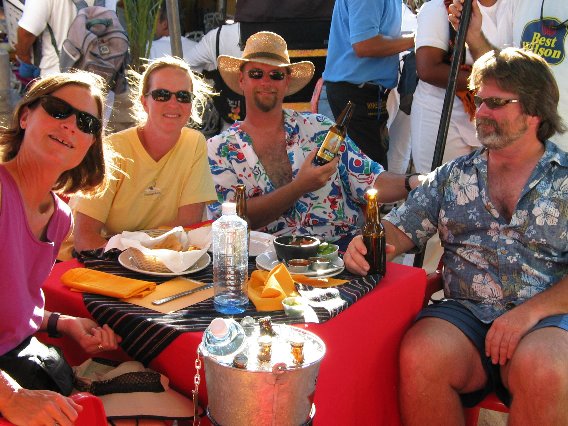
We went to Pozole Thursday yesterday for lunch and had a great time. It was set up by Rick, of Rick's Bar, an American who runs a cruiser hangout in town. Linda and I and six other cruisers boarded a set of taxis which took us to the restaurant. Pozole is a traditional meal served on Thursday. We're not all that sure why it's served on that day, but the story is that pigs are traditionally slaughtered on Wednesday and in an effort to eat all the pork before Friday (meat not being allowed on Friday) soup was made on Thursday. Pozole is a light brothy soup with hominy and meat, either pork or chicken. The meal began with a plate of tapas (taquitos, small chili rellenos, chips, pork rinds, avocados and beans) and would have been very reasonably priced except for the tequila we began sipping. We all blame Roberto for starting it, but in the end we (Roberto, Joe and I) had consumed almost $60 USD in tequila. It was worth it though. This amount of drinking took the better part of the afternoon and as a result we were there long enough to see three excellent performances. The first was a solo singer who played the guitar, the second was two young men and two young women who did traditional dances on the tiny stage, and the third was a much larger guitar/percussion band who were still singing when we staggered out.
Unfortunately, we returned to the beach to find our dinghy less than fully inflated. The large repair patch from the panga propeller in Bahia Santa Maria must have gotten blown off by the increased pressure caused by the heat. Not the greatest Christmas present, but at least we're surrounded by friendly cruisers who will no doubt be very helpful in repairing it again.
Merry Christmas every one!
John and Linda
|
|
Showing posts with label Mexico 2004. Show all posts
Showing posts with label Mexico 2004. Show all posts
Friday, December 24, 2004
Sunday, December 19, 2004
More updates
December 19, 2004
Zihuatanejo, Guerrero Coast, Mexico (17o 38' N 101o 33' W)
We left Tenacatita bay on the 14th at 1000. It's 220 nm from Tenacatita to Zihuatanejo so we expected to take two nights. We planned on taking it slow, motoring at reduced RPM and sailing whenever the wind would drive us at 2.5 kt or more. The first day and night were mostly uneventful. We had a nice afternoon sail on the first day, close reaching in the sea breeze, and then motored most of the first night. Dawn on the second day revealed an overcast sky, part of the 'Pineapple Express' our weather man has been talking about for days. The sea breeze never really filled in until around 1300. Even at that it was pretty light but I decided to set the spinnaker anyway. There wasn't enough wind for the main, so I dropped it and we sailed quietly along with only the spinnaker to drive us. Linda was below sleeping and I was looking forward to my off watch so I could enjoy snoozing in the quiet calm too. I went off watch at 1500 and immediately laid down for a nap. Of course 10 minutes later the boat heeled over in a gust and I decided to take the spinnaker down. We dropped the spinnaker without incident, hoisted the main and rolled out the jib. The main had a reef in it from when we were motoring so I shook it out and we were sailing along at about 4 kts. That's when the real fun began. Looking ahead I could see a line of big black clouds which looked like they were dropping a lot of rain. I remarked to Linda that it looked like a squall, not that I really know what a squall looks like, but that's what I imagine they look like. Anyway within 10 minutes the wind went from 8 kts to 25 and it was time for more sail changes! Roll up the jib, reef the main, set the staysail and we were sailing at 6 kts on a close reach! The worst thing is we were on a lee shore, just 7 miles to leeward and the coast was waiting to swallow us whole. Fortunately we were able to make some distance off shore and sailed along happily enough, watching the waves grow and grow. Three hours later, the sun was going down, the waves were 6-7 feet and the boat was soaked. Thankfully the wind was starting to die down, however all it did was change direction on us. Right after the squall blew itself out we were saturated by the scent of wet earth in the air. This was pretty strange considering it had been blowing directly on-shore for the last 3 hours. Sure enough, within 30 minutes the wind was blowing directly offshore at 20-25, the bad part being that the waves still hadn't had a chance to die down from the squall so the new wind, blowing directly against the waves, made them even higher and steeper! Time to soak down the other side of the boat! We sailed almost all night and pulled into Zihuatanejo bay at around 10 am, just as planned, well almost.
We finally managed to leave the pack behind and arrived at Zihua by ourselves. That's not to say that there are no other boats here. There are 15 in the general area, but at least we didn't arrive within a few hours of them. Most of the boats from Tenacatita decided to spend Christmas and New Years at Barra de Navidad, an expensive ($1.50 USD per foot!) marina/resort so we may not be seeing them for awhile.
We spent our first day walking around town looking at things and found the two most important places - the tortillaria and the bakery (panaderia). Of course there are more than one of each, and in fact we don't really even need to go to the specific shop as we found out when we went to the greatest place in town - the public market! We spent our second day walking around this wonderful place with its close set stalls and narrow aisles. You can find whatever you need from pork to power tools, from cucumbers to Christmas lights, from freshly made cheese to freshly made shoes, all within a single building on one city block. We ate lunch at one of the 'Fondas' (small food stands in one section of the market) and then loaded our bag full of fresh provisions to take back to the boat.
If there's any down side to Zihuatanejo it's the anchorage. It's calm enough but, as usual, the city sewers empty into the bay and many of the cruisers said the anchorage is not safe to swim in. Oh well, a clean clear spot to anchor is only a mile or two away and with a gelato shop within 100 yds of where we park our dinghy I don't mind having to use a little outboard gas to go for a swim.
Zihuatanejo, Guerrero Coast, Mexico (17o 38' N 101o 33' W)
We left Tenacatita bay on the 14th at 1000. It's 220 nm from Tenacatita to Zihuatanejo so we expected to take two nights. We planned on taking it slow, motoring at reduced RPM and sailing whenever the wind would drive us at 2.5 kt or more. The first day and night were mostly uneventful. We had a nice afternoon sail on the first day, close reaching in the sea breeze, and then motored most of the first night. Dawn on the second day revealed an overcast sky, part of the 'Pineapple Express' our weather man has been talking about for days. The sea breeze never really filled in until around 1300. Even at that it was pretty light but I decided to set the spinnaker anyway. There wasn't enough wind for the main, so I dropped it and we sailed quietly along with only the spinnaker to drive us. Linda was below sleeping and I was looking forward to my off watch so I could enjoy snoozing in the quiet calm too. I went off watch at 1500 and immediately laid down for a nap. Of course 10 minutes later the boat heeled over in a gust and I decided to take the spinnaker down. We dropped the spinnaker without incident, hoisted the main and rolled out the jib. The main had a reef in it from when we were motoring so I shook it out and we were sailing along at about 4 kts. That's when the real fun began. Looking ahead I could see a line of big black clouds which looked like they were dropping a lot of rain. I remarked to Linda that it looked like a squall, not that I really know what a squall looks like, but that's what I imagine they look like. Anyway within 10 minutes the wind went from 8 kts to 25 and it was time for more sail changes! Roll up the jib, reef the main, set the staysail and we were sailing at 6 kts on a close reach! The worst thing is we were on a lee shore, just 7 miles to leeward and the coast was waiting to swallow us whole. Fortunately we were able to make some distance off shore and sailed along happily enough, watching the waves grow and grow. Three hours later, the sun was going down, the waves were 6-7 feet and the boat was soaked. Thankfully the wind was starting to die down, however all it did was change direction on us. Right after the squall blew itself out we were saturated by the scent of wet earth in the air. This was pretty strange considering it had been blowing directly on-shore for the last 3 hours. Sure enough, within 30 minutes the wind was blowing directly offshore at 20-25, the bad part being that the waves still hadn't had a chance to die down from the squall so the new wind, blowing directly against the waves, made them even higher and steeper! Time to soak down the other side of the boat! We sailed almost all night and pulled into Zihuatanejo bay at around 10 am, just as planned, well almost.
We finally managed to leave the pack behind and arrived at Zihua by ourselves. That's not to say that there are no other boats here. There are 15 in the general area, but at least we didn't arrive within a few hours of them. Most of the boats from Tenacatita decided to spend Christmas and New Years at Barra de Navidad, an expensive ($1.50 USD per foot!) marina/resort so we may not be seeing them for awhile.
We spent our first day walking around town looking at things and found the two most important places - the tortillaria and the bakery (panaderia). Of course there are more than one of each, and in fact we don't really even need to go to the specific shop as we found out when we went to the greatest place in town - the public market! We spent our second day walking around this wonderful place with its close set stalls and narrow aisles. You can find whatever you need from pork to power tools, from cucumbers to Christmas lights, from freshly made cheese to freshly made shoes, all within a single building on one city block. We ate lunch at one of the 'Fondas' (small food stands in one section of the market) and then loaded our bag full of fresh provisions to take back to the boat.
If there's any down side to Zihuatanejo it's the anchorage. It's calm enough but, as usual, the city sewers empty into the bay and many of the cruisers said the anchorage is not safe to swim in. Oh well, a clean clear spot to anchor is only a mile or two away and with a gelato shop within 100 yds of where we park our dinghy I don't mind having to use a little outboard gas to go for a swim.
NAKIA Fun facts
We're in the Central time zone now.
Closest US city is probably Brownsville, Texas, 550 nm to the north east.
San Francisco is about 1700 nm from Zihuatanejo as the crow flies.
Since July 1, NAKIA has traveled almost 3600 nautical miles ranging from the high northern latitude of 51o N to our current tropical latitude of 17o N
Where we are here, in Zihuatanejo, we have about 11.5 hours of daylight per day (including twilight). In San Francisco there is about 10 hours of daylight per day. At our northern most point in Canada, there is about 8.5 hours of daylight per day.
You can buy the Mexican version of Crystal Light in flavors like Horchata, Tamarindo, Pineapple w/green tea, Pina Colada, Guava, Lime Mint, Watermelon, Mango, Grapefruit, Mandarin, Flor de Jamaica (haven't quite figured out what this one is yet, but it's red), and Orange Pineapple. We love the stuff so much that yesterday we stocked up with 52 packets!
As if to prove to you that they really are food, a popular brand of hot dogs here is "Fud" (the 'u' in Spanish is pronounced 'oo').
Closest US city is probably Brownsville, Texas, 550 nm to the north east.
San Francisco is about 1700 nm from Zihuatanejo as the crow flies.
Since July 1, NAKIA has traveled almost 3600 nautical miles ranging from the high northern latitude of 51o N to our current tropical latitude of 17o N
Where we are here, in Zihuatanejo, we have about 11.5 hours of daylight per day (including twilight). In San Francisco there is about 10 hours of daylight per day. At our northern most point in Canada, there is about 8.5 hours of daylight per day.
You can buy the Mexican version of Crystal Light in flavors like Horchata, Tamarindo, Pineapple w/green tea, Pina Colada, Guava, Lime Mint, Watermelon, Mango, Grapefruit, Mandarin, Flor de Jamaica (haven't quite figured out what this one is yet, but it's red), and Orange Pineapple. We love the stuff so much that yesterday we stocked up with 52 packets!
As if to prove to you that they really are food, a popular brand of hot dogs here is "Fud" (the 'u' in Spanish is pronounced 'oo').
Saturday, December 18, 2004
Updates
December 18, 2004
Zihuatanejo, Guerrero Coast, Mexico (17o 38' N 101o 33' W)
Well it's been some time since I've updated the blog so I thought I'd write a few notes down to keep everyone informed of what's been going on. I guess the reason I haven't been writing is there's not much out of the ordinary happening, I guess I like to have something interesting to write about.
Tenacatita:
We spent 9 nights in this large bay on the Colima coast. There are a number of anchorages. Once again, we arrived 'in company' with several other boats. Same as before, we didn't announce our plans to leave Careyes but at soon as we were out of the anchorage we heard the other boats on the VHF talking about getting underway. I guess you could say we're trend-setters.
Our first big activity in Tenacatita was to take the Jungle River Trip. Several of the boats in the anchorage agreed to make the run together (perhaps thinking that ten dinghies would be less likely to get attacked by crocodiles). We got up early in the morning (1000) and headed in.
The Jungle River Trip is a 4 mile dinghy ride from the north east anchorage, inland through a mangrove swamp, to the outer anchorage in Tenacatita bay. It was pretty cool, kind of like cruising Georgiana Slough in the Delta, only shorter and much narrower. For about half a mile the water is completely over hung with mangrove trees and the channel is only 10-12 ft wide. At the end of the trip you can pull your dinghy up on the inside of the sand spit that separates the outer anchorage from the mangrove swamp. The 'town' of Tenacatita is on the sand spit and there are a number of palapa restaurants to relax at after worrying about the nasties in the swamp. We made the trip in company with about 7 dinghies which was fun. At one point we had three dinghies rafted together so only the center dinghy had to run its motor.
The next day we took a taxi to La Manzanilla, the closest town, to do some shopping. We got an unexpected treat, when we got out of the cab the driver said, "Don't miss the crocodiles!" We walked over to where he was pointing and there in the lagoon were about 15 crocs up to 15 ft! There was a chain link fence around the lagoon for protection, whether it was the crocs or us being protected is uncertain. We followed the road around the lagoon to the beach where we found a flaw in the protective barrier - the fence was laid flat, one of its posts having been toppled. There was a clear path all the way down to 'Crocodile Beach' although no one wanted to take me up on my offer of 20 pesos to the first person to touch a crock. I wonder why!
One of the other boats in the anchorage told us about a laundry service through the hotel. You drop your laundry off at a palapa on the beach and the hotel on-call doctor comes and picks it up (there aren't enough emergencies to keep him busy so he does laundry on the side). He takes it back to his home based facility and washes, dries, folds and packs in plastic all of your laundry for 10 pesos per kilo (40 cents per pound). He supplies the detergent, softener and big plastic bags. Linda wasn't 100% satisfied with the results, the clothes weren't quite dry and they used more softener then she normally does, but she's having a hard time justifying doing our own laundry. Our cost to do it ourselves is usually more then 60 cents per pound!
After a few days we moved over to the outer anchorage which I liked much better. There were no big hotels to blast disco music at night and all the palapa restaurants closed up at 7 pm so it was very quiet. It was here that we had out first experience getting water outside of a marina. We'd noticed several water delivery trucks drive through town and stop at the various palapas. One day we stopped one and inquired about the price. 13 pesos (about $1.15) buys you 5 gallons of purified water. There is a one time deposit on the bottles (they are water cooler style 5 gallon jugs) of 40 pesos, presumably we can turn the bottles in for a refund. We decided to get 5 jugs, for a total of 265 pesos, and loaded them into the dinghy. It was a little challenging rowing them out to the boat (we didn't have the outboard on because the landing was so close to where we anchored) but it was easy enough to put all 25 gallons on the boat and get them into the tank. The next day we repeated the experiment, however this time while we were waiting for our specific water truck to come by a 'local' told us he wasn't working that day. We decided not to wait any longer and bought our jugs from one of the palapas for a slightly inflated price of 15 pesos. Sure enough, as were loading our 'expensive' water into the dinghy we saw our water truck drive by out on the street. Sooner or later I'll learn who to trust when, I hope.
That's all for now, I'm writing more but want to get this posted before the end of the weekend.
Next up:
Mr. Toad's Wild Ride from Tenacatita to Zihuatanejo
How not to lose weight by shopping and eating at the public market
NAKIA fun facts, where the heck are we and how far have we been anyway?
Zihuatanejo, Guerrero Coast, Mexico (17o 38' N 101o 33' W)
Well it's been some time since I've updated the blog so I thought I'd write a few notes down to keep everyone informed of what's been going on. I guess the reason I haven't been writing is there's not much out of the ordinary happening, I guess I like to have something interesting to write about.
Tenacatita:
We spent 9 nights in this large bay on the Colima coast. There are a number of anchorages. Once again, we arrived 'in company' with several other boats. Same as before, we didn't announce our plans to leave Careyes but at soon as we were out of the anchorage we heard the other boats on the VHF talking about getting underway. I guess you could say we're trend-setters.
Our first big activity in Tenacatita was to take the Jungle River Trip. Several of the boats in the anchorage agreed to make the run together (perhaps thinking that ten dinghies would be less likely to get attacked by crocodiles). We got up early in the morning (1000) and headed in.
The Jungle River Trip is a 4 mile dinghy ride from the north east anchorage, inland through a mangrove swamp, to the outer anchorage in Tenacatita bay. It was pretty cool, kind of like cruising Georgiana Slough in the Delta, only shorter and much narrower. For about half a mile the water is completely over hung with mangrove trees and the channel is only 10-12 ft wide. At the end of the trip you can pull your dinghy up on the inside of the sand spit that separates the outer anchorage from the mangrove swamp. The 'town' of Tenacatita is on the sand spit and there are a number of palapa restaurants to relax at after worrying about the nasties in the swamp. We made the trip in company with about 7 dinghies which was fun. At one point we had three dinghies rafted together so only the center dinghy had to run its motor.
The next day we took a taxi to La Manzanilla, the closest town, to do some shopping. We got an unexpected treat, when we got out of the cab the driver said, "Don't miss the crocodiles!" We walked over to where he was pointing and there in the lagoon were about 15 crocs up to 15 ft! There was a chain link fence around the lagoon for protection, whether it was the crocs or us being protected is uncertain. We followed the road around the lagoon to the beach where we found a flaw in the protective barrier - the fence was laid flat, one of its posts having been toppled. There was a clear path all the way down to 'Crocodile Beach' although no one wanted to take me up on my offer of 20 pesos to the first person to touch a crock. I wonder why!
One of the other boats in the anchorage told us about a laundry service through the hotel. You drop your laundry off at a palapa on the beach and the hotel on-call doctor comes and picks it up (there aren't enough emergencies to keep him busy so he does laundry on the side). He takes it back to his home based facility and washes, dries, folds and packs in plastic all of your laundry for 10 pesos per kilo (40 cents per pound). He supplies the detergent, softener and big plastic bags. Linda wasn't 100% satisfied with the results, the clothes weren't quite dry and they used more softener then she normally does, but she's having a hard time justifying doing our own laundry. Our cost to do it ourselves is usually more then 60 cents per pound!
After a few days we moved over to the outer anchorage which I liked much better. There were no big hotels to blast disco music at night and all the palapa restaurants closed up at 7 pm so it was very quiet. It was here that we had out first experience getting water outside of a marina. We'd noticed several water delivery trucks drive through town and stop at the various palapas. One day we stopped one and inquired about the price. 13 pesos (about $1.15) buys you 5 gallons of purified water. There is a one time deposit on the bottles (they are water cooler style 5 gallon jugs) of 40 pesos, presumably we can turn the bottles in for a refund. We decided to get 5 jugs, for a total of 265 pesos, and loaded them into the dinghy. It was a little challenging rowing them out to the boat (we didn't have the outboard on because the landing was so close to where we anchored) but it was easy enough to put all 25 gallons on the boat and get them into the tank. The next day we repeated the experiment, however this time while we were waiting for our specific water truck to come by a 'local' told us he wasn't working that day. We decided not to wait any longer and bought our jugs from one of the palapas for a slightly inflated price of 15 pesos. Sure enough, as were loading our 'expensive' water into the dinghy we saw our water truck drive by out on the street. Sooner or later I'll learn who to trust when, I hope.
That's all for now, I'm writing more but want to get this posted before the end of the weekend.
Next up:
Mr. Toad's Wild Ride from Tenacatita to Zihuatanejo
How not to lose weight by shopping and eating at the public market
NAKIA fun facts, where the heck are we and how far have we been anyway?
Saturday, December 04, 2004
Bahia Chamela and Bahia Careyes
December 4, 2004
Bahia Careyes, Jalisco Coast (19o 24' N 105o 01' W)
We left Bahia Chamela this morning after spending 4 nights in what turned out to be a very nice little place. Bahia Chamela is a mini cruising ground with an anchorage near a town and a couple of islands out in the bay. We stopped at the islands on our way into the bay and liked it so much we dropped the anchor for two nights.
It was a little exposed to wind and sea but the fact that the water was clear with great snorkeling made up for any downside (I could easily see the anchor drop into clean sand through 20 feet of water). Another great feature was a small bay where hotels sometimes brings guests. The beach at the head of the bay is clean white sand and there's a large palapa built above the beach. We spent two wonderful afternoons there snorkeling and laying in the hammock we strung on the rafters of the palapa.
After we had our fill of solitude and quiet we moved over to the town anchorage. Most of the other boats were there and if easy access to beach restaurants and small mercados is your idea of a great anchorage, this place is for you. Of course there wasn't any good snorkeling within swimming distance, the pangas roared off of the beach at 0630 and the smell of burning garbage hung thick in the air every night. But it was nice enough.
Bahia Careyes, according to the guide book, is "one of those picturesque hideaways you dreamed about before you started cruising." There are three small beaches tucked back behind two islands. You anchor off a beach, outside of the hotel's swimming area, and the islands 'protect' the anchorage. Nice in theory, but it's pretty rolly. Also, the hotels at the head of each beach are very high end. An ice cream at the hotel deli was 66 pesos ($6 USD) and if you want a day pass to use the pool, it will cost you 660 pesos ($60 USD) per person. I think we'll pass.
It didn't get any better at the restaurant at the head of another beach, 70 pesos for a coke and a beer (plus tip). The third beach has a Club Med (Playa Blanca) which, thankfully, is closed. So I guess you could say it's very inexpensive. You don't get anything, but you don't have to pay anything either.
On the bright side we caught a 3 ft dorado (mahi-mahi) on the way over. Of course it's too big to fit in the fridge so we gave a lot of it away but it was definitely the biggest fish we've caught to date.
John and Linda
Later that same day...
Well the Club Med turned out to be very interesting indeed. We took the dinghy over and pulled up on the beach (the nicest beach of the three little coves) and wandered around the deserted grounds. Everything was complete, if in a state of disrepair. Rooms, bars, pools, restaurants and the gym all seemed ready to accommodate hordes of singles ready to meet each other. All that was lacking was a big "Se Vende" sign out front. We saw no one, not even the gardener who'd been busy knocking ripe coconuts off the trees and piling them up. I liberated two for drinking later. We did get to see some of the locals: four cotamundi (three babies and a mother) who descended from a coconut tree as we approached. We hung out on the pretty white sand beach and bathed outside the surf (wishing the entire time that the water was turned on so we could use the beach shower to rinse off with fresh water).
Bahia Careyes, Jalisco Coast (19o 24' N 105o 01' W)
We left Bahia Chamela this morning after spending 4 nights in what turned out to be a very nice little place. Bahia Chamela is a mini cruising ground with an anchorage near a town and a couple of islands out in the bay. We stopped at the islands on our way into the bay and liked it so much we dropped the anchor for two nights.
It was a little exposed to wind and sea but the fact that the water was clear with great snorkeling made up for any downside (I could easily see the anchor drop into clean sand through 20 feet of water). Another great feature was a small bay where hotels sometimes brings guests. The beach at the head of the bay is clean white sand and there's a large palapa built above the beach. We spent two wonderful afternoons there snorkeling and laying in the hammock we strung on the rafters of the palapa.
After we had our fill of solitude and quiet we moved over to the town anchorage. Most of the other boats were there and if easy access to beach restaurants and small mercados is your idea of a great anchorage, this place is for you. Of course there wasn't any good snorkeling within swimming distance, the pangas roared off of the beach at 0630 and the smell of burning garbage hung thick in the air every night. But it was nice enough.
Bahia Careyes, according to the guide book, is "one of those picturesque hideaways you dreamed about before you started cruising." There are three small beaches tucked back behind two islands. You anchor off a beach, outside of the hotel's swimming area, and the islands 'protect' the anchorage. Nice in theory, but it's pretty rolly. Also, the hotels at the head of each beach are very high end. An ice cream at the hotel deli was 66 pesos ($6 USD) and if you want a day pass to use the pool, it will cost you 660 pesos ($60 USD) per person. I think we'll pass.
It didn't get any better at the restaurant at the head of another beach, 70 pesos for a coke and a beer (plus tip). The third beach has a Club Med (Playa Blanca) which, thankfully, is closed. So I guess you could say it's very inexpensive. You don't get anything, but you don't have to pay anything either.
On the bright side we caught a 3 ft dorado (mahi-mahi) on the way over. Of course it's too big to fit in the fridge so we gave a lot of it away but it was definitely the biggest fish we've caught to date.
John and Linda
Later that same day...
Well the Club Med turned out to be very interesting indeed. We took the dinghy over and pulled up on the beach (the nicest beach of the three little coves) and wandered around the deserted grounds. Everything was complete, if in a state of disrepair. Rooms, bars, pools, restaurants and the gym all seemed ready to accommodate hordes of singles ready to meet each other. All that was lacking was a big "Se Vende" sign out front. We saw no one, not even the gardener who'd been busy knocking ripe coconuts off the trees and piling them up. I liberated two for drinking later. We did get to see some of the locals: four cotamundi (three babies and a mother) who descended from a coconut tree as we approached. We hung out on the pretty white sand beach and bathed outside the surf (wishing the entire time that the water was turned on so we could use the beach shower to rinse off with fresh water).
Tuesday, November 30, 2004
Thanksgiving
November 28, 2004
Ipala, Jalisco Coast (20o 14' N 105o 34' W)
The cruiser potluck at Philo's was pretty good. More than enough to eat and some great dishes (sweet potatoes with marshmallows almost as good as Kimmie makes!). But the turkey was a little over cooked. Too bad they didn't have Frank around to tell them when they were done.
Even though we enjoyed shopping in La Cruz (there are a lot of mini-supers in La Cruz) the dinghy landing was too disgusting to want to stay longer. The 'sewage treatment plant' empties into a stream that runs into the harbor where you land your dinghy. I'm not sure what kind of 'treatment' they put the sewage through but it's not very effective in my opinion.
As a result we moved back to Punta de Mita. Friday we took a walk on the beach and looked for a tortilleria in town (where tortillas are made fresh every day). In spite of only having five streets to search we were unable to locate it. For all we know Punta de Mita does not have an actual tortilleria, though were assured by a number of locals that the town was so equipped. I'm sure the problem was the people saying that there was a tortilleria were all men; the women we asked either didn't know or thought that there wasn't one. We could have gone with the more reliable opinion, the women's, and saved ourselves the trouble but we needed the exercise the search provided.
This morning we awoke at 0430 to make the trip from Punta de Mita to Ipala, a short hop of 45 miles. I'm sure you're wondering why we got up so early for what should be about an 8 hour trip. Well between Punta de Mita and Ipala lies the dreaded Cabo Corrientes (Cape Currents) and common wisdom is to round this formidable headland in the early morning or at night. We chose the former and went around in dead calm conditions at 1000. Even though it was calm there was quite a sea running because of the 1 kt foul current running against us. Cape Current strikes again.
The forecast (if you can call it that; we get our weather from an amateur prognosticator who's every other sentence is 'you have to take this with a grain of salt') called for NW wind 10-15 kt. Imagine our surprise when around 1200 an 18 kt SOUTHERLY wind starts to blow. If it wasn't bad enough that we had to beat into wind and sea, the anchorage we were going to is completely open to the south allowing the full force of the wind and chop to churn the little harbor into a washing machine! Shortly after the wind came up one of the boats who was out ahead of us and all ready anchored called to tell us that we might want to reconsider. We did. After arriving in the general vicinity of the anchorage we hove to on the off shore tack to wait. There was no way we could move to the next harbor. It was only 50 miles away and if we sailed directly there we'd arrive in the middle of the night. So we chose to wait offshore from Ipala for an hour to see if the wind might change to it's forecast direction. I made bread and Linda took a nap.
Sure enough, around 1500 the wind died and we went into the anchorage to see what we could see. There was still a stiff chop bouncing around but we could tell it would eventually die down. We set the anchor and jumped in to cool off.
It seems as though we're finally getting acclimated to Mexico. In addition to eating tortillas instead of bread, we also find the water a little chilly if it's temperature isn't above 82 degrees. In addition we find we need a blanket if the temperature in the cabin falls below 78 degrees. Brrr, that's cold!
Oh well, I guess that's enough of our hardship and despair. Tomorrow we're moving to Chamela where there are supposed to be many fun activities from snorkeling to beach combing. I hope the water's not too cold.
John and Linda
Ipala, Jalisco Coast (20o 14' N 105o 34' W)
The cruiser potluck at Philo's was pretty good. More than enough to eat and some great dishes (sweet potatoes with marshmallows almost as good as Kimmie makes!). But the turkey was a little over cooked. Too bad they didn't have Frank around to tell them when they were done.
Even though we enjoyed shopping in La Cruz (there are a lot of mini-supers in La Cruz) the dinghy landing was too disgusting to want to stay longer. The 'sewage treatment plant' empties into a stream that runs into the harbor where you land your dinghy. I'm not sure what kind of 'treatment' they put the sewage through but it's not very effective in my opinion.
As a result we moved back to Punta de Mita. Friday we took a walk on the beach and looked for a tortilleria in town (where tortillas are made fresh every day). In spite of only having five streets to search we were unable to locate it. For all we know Punta de Mita does not have an actual tortilleria, though were assured by a number of locals that the town was so equipped. I'm sure the problem was the people saying that there was a tortilleria were all men; the women we asked either didn't know or thought that there wasn't one. We could have gone with the more reliable opinion, the women's, and saved ourselves the trouble but we needed the exercise the search provided.
This morning we awoke at 0430 to make the trip from Punta de Mita to Ipala, a short hop of 45 miles. I'm sure you're wondering why we got up so early for what should be about an 8 hour trip. Well between Punta de Mita and Ipala lies the dreaded Cabo Corrientes (Cape Currents) and common wisdom is to round this formidable headland in the early morning or at night. We chose the former and went around in dead calm conditions at 1000. Even though it was calm there was quite a sea running because of the 1 kt foul current running against us. Cape Current strikes again.
The forecast (if you can call it that; we get our weather from an amateur prognosticator who's every other sentence is 'you have to take this with a grain of salt') called for NW wind 10-15 kt. Imagine our surprise when around 1200 an 18 kt SOUTHERLY wind starts to blow. If it wasn't bad enough that we had to beat into wind and sea, the anchorage we were going to is completely open to the south allowing the full force of the wind and chop to churn the little harbor into a washing machine! Shortly after the wind came up one of the boats who was out ahead of us and all ready anchored called to tell us that we might want to reconsider. We did. After arriving in the general vicinity of the anchorage we hove to on the off shore tack to wait. There was no way we could move to the next harbor. It was only 50 miles away and if we sailed directly there we'd arrive in the middle of the night. So we chose to wait offshore from Ipala for an hour to see if the wind might change to it's forecast direction. I made bread and Linda took a nap.
Sure enough, around 1500 the wind died and we went into the anchorage to see what we could see. There was still a stiff chop bouncing around but we could tell it would eventually die down. We set the anchor and jumped in to cool off.
It seems as though we're finally getting acclimated to Mexico. In addition to eating tortillas instead of bread, we also find the water a little chilly if it's temperature isn't above 82 degrees. In addition we find we need a blanket if the temperature in the cabin falls below 78 degrees. Brrr, that's cold!
Oh well, I guess that's enough of our hardship and despair. Tomorrow we're moving to Chamela where there are supposed to be many fun activities from snorkeling to beach combing. I hope the water's not too cold.
John and Linda
Punta de Mita
November 25, 2004
Punta de Mita, Banderas Bay, Mexico (20o 45' N 105o 32' W)
We've spent the last couple days at Punta de Mita getting in the 'swing' of things again. Reading on the boat, walking around town and taking a hike out to the far west point.
The walk around town didn't reveal anything special. Although we did walk past some new condos being built which, according to the billboard, start at $325,000 USD. That's pretty fancy for someplace 10 miles from the nearest gas station!
I've had an ear ache (from getting water in my ear while swimming) and have run out of ear drops. The drops I use are mostly rubbing alcohol, so I've been searching the local shops to find a small bottle which I can use to refill my ear drop bottle. Of course I don't know what the phrase for 'rubbing alcohol' is in Spanish, nor do I know the word for 'rubbing' (thank goodness the Spanish word for 'alcohol' is 'alcohol'!) so I've been describing what I need as 'alcohol por su piel' (alcohol for your skin). This had not been too successful. However last night we went into a different mini-super (really a convenience store) and after describing what I needed the shop keeper reached behind the counter and produced a small bottle labeled 'Alcohol (SIN DESNATURALIZAR)'. That's funny, I thought, SIN in Spanish means 'without'. The label seemed to suggest this is pure alcohol without the denaturing contents that make rubbing alcohol un-drinkable. I unscrewed the cap and took a whiff. Sure enough, moonshine! No wonder they had it behind the counter. I've yet to try it in my ear, but I'm sure the effect will be far more dramatic then that north of the border stuff. And no, I don't have any ideas of drinking it.
You may recall my writing about the 'fish fountain' we'd get in some anchorages (small fish jumping sound like a babbling fountain). It turns out Mexico has its own version. The difference is you have to wait for it. When we first arrived at Pt. de Mita we noticed a huge school of fish which would churn the surface of the water white on occasion, but the school always seemed to be near one boat in the anchorage. After a day or so we also noticed a few fish swimming around under NAKIA. They seemed to like the protection of the boat over them. They provided a small 'fish fountain' from time to time, but nothing very spectacular. The next day there were a few more fish, and the next day even more. Our fish fountain was getting pretty big. About the third day we caught up with the people from the boat which had the large school. They'd been anchored in the same spot for several weeks, no doubt collecting a large school of fish during their stay.
That's about all for this report. We're going to Thanksgiving dinner at a local cruiser's hang out this evening. Should be fun but we miss our friends who will be celebrating on Angel Island.
John and Linda
Punta de Mita, Banderas Bay, Mexico (20o 45' N 105o 32' W)
We've spent the last couple days at Punta de Mita getting in the 'swing' of things again. Reading on the boat, walking around town and taking a hike out to the far west point.
The walk around town didn't reveal anything special. Although we did walk past some new condos being built which, according to the billboard, start at $325,000 USD. That's pretty fancy for someplace 10 miles from the nearest gas station!
I've had an ear ache (from getting water in my ear while swimming) and have run out of ear drops. The drops I use are mostly rubbing alcohol, so I've been searching the local shops to find a small bottle which I can use to refill my ear drop bottle. Of course I don't know what the phrase for 'rubbing alcohol' is in Spanish, nor do I know the word for 'rubbing' (thank goodness the Spanish word for 'alcohol' is 'alcohol'!) so I've been describing what I need as 'alcohol por su piel' (alcohol for your skin). This had not been too successful. However last night we went into a different mini-super (really a convenience store) and after describing what I needed the shop keeper reached behind the counter and produced a small bottle labeled 'Alcohol (SIN DESNATURALIZAR)'. That's funny, I thought, SIN in Spanish means 'without'. The label seemed to suggest this is pure alcohol without the denaturing contents that make rubbing alcohol un-drinkable. I unscrewed the cap and took a whiff. Sure enough, moonshine! No wonder they had it behind the counter. I've yet to try it in my ear, but I'm sure the effect will be far more dramatic then that north of the border stuff. And no, I don't have any ideas of drinking it.
You may recall my writing about the 'fish fountain' we'd get in some anchorages (small fish jumping sound like a babbling fountain). It turns out Mexico has its own version. The difference is you have to wait for it. When we first arrived at Pt. de Mita we noticed a huge school of fish which would churn the surface of the water white on occasion, but the school always seemed to be near one boat in the anchorage. After a day or so we also noticed a few fish swimming around under NAKIA. They seemed to like the protection of the boat over them. They provided a small 'fish fountain' from time to time, but nothing very spectacular. The next day there were a few more fish, and the next day even more. Our fish fountain was getting pretty big. About the third day we caught up with the people from the boat which had the large school. They'd been anchored in the same spot for several weeks, no doubt collecting a large school of fish during their stay.
That's about all for this report. We're going to Thanksgiving dinner at a local cruiser's hang out this evening. Should be fun but we miss our friends who will be celebrating on Angel Island.
John and Linda
Thursday, November 25, 2004
Punta de Mita
November 25, 2004
Punta de Mita, Banderas Bay, Mexico (20o 45' N 105o 32' W)
We've spent the last couple days at Punta de Mita getting in the 'swing' of things again. Reading on the boat, walking around town and taking a hike out to the far west point.
The walk around town didn't reveal anything special. Although we did walk past some new condos being built which, according to the billboard, start at $325,000 USD. That's pretty fancy for someplace 10 miles from the nearest gas station!
I've had an ear ache (from getting water in my ear while swimming) and have run out of ear drops. The drops I use are mostly rubbing alcohol, so I've been searching the local shops to find a small bottle which I can use to refill my ear drop bottle. Of course I don't know what the phrase for 'rubbing alcohol' is in Spanish, nor do I know the word for 'rubbing' (thank goodness the Spanish word for 'alcohol' is 'alcohol'!) so I've been describing what I need as 'alcohol por su piel' (alcohol for your skin). This had not been too successful. However last night we went into a different mini-super (really a convenience store) and after describing what I needed the shop keeper reached behind the counter and produced a small bottle labeled 'Alcohol (SIN DESNATURALIZAR)'. That's funny, I thought, SIN in Spanish means 'without'. The label seemed to suggest this is pure alcohol without the denaturing contents that make rubbing alcohol un-drinkable. I unscrewed the cap and took a whiff. Sure enough, moonshine! No wonder they had it behind the counter. I've yet to try it in my ear, but I'm sure the effect will be far more dramatic then that north of the border stuff. And no, I don't have any ideas of drinking it.
You may recall my writing about the 'fish fountain' we'd get in some anchorages (small fish jumping sound like a babbling fountain). It turns out Mexico has its own version. The difference is you have to wait for it. When we first arrived at Pt. de Mita we noticed a huge school of fish which would churn the surface of the water white on occasion, but the school always seemed to be near one boat in the anchorage. After a day or so we also noticed a few fish swimming around under NAKIA. They seemed to like the protection of the boat over them. They provided a small 'fish fountain' from time to time, but nothing very spectacular. The next day there were a few more fish, and the next day even more. Our fish fountain was getting pretty big. About the third day we caught up with the people from the boat which had the large school. They'd been anchored in the same spot for several weeks, no doubt collecting a large school of fish during their stay.
That's about all for this report. We're going to Thanksgiving dinner at a local cruiser's hang out this evening. Should be fun but we miss our friends who will be celebrating on Angel Island.
John and Linda
Punta de Mita, Banderas Bay, Mexico (20o 45' N 105o 32' W)
We've spent the last couple days at Punta de Mita getting in the 'swing' of things again. Reading on the boat, walking around town and taking a hike out to the far west point.
The walk around town didn't reveal anything special. Although we did walk past some new condos being built which, according to the billboard, start at $325,000 USD. That's pretty fancy for someplace 10 miles from the nearest gas station!
I've had an ear ache (from getting water in my ear while swimming) and have run out of ear drops. The drops I use are mostly rubbing alcohol, so I've been searching the local shops to find a small bottle which I can use to refill my ear drop bottle. Of course I don't know what the phrase for 'rubbing alcohol' is in Spanish, nor do I know the word for 'rubbing' (thank goodness the Spanish word for 'alcohol' is 'alcohol'!) so I've been describing what I need as 'alcohol por su piel' (alcohol for your skin). This had not been too successful. However last night we went into a different mini-super (really a convenience store) and after describing what I needed the shop keeper reached behind the counter and produced a small bottle labeled 'Alcohol (SIN DESNATURALIZAR)'. That's funny, I thought, SIN in Spanish means 'without'. The label seemed to suggest this is pure alcohol without the denaturing contents that make rubbing alcohol un-drinkable. I unscrewed the cap and took a whiff. Sure enough, moonshine! No wonder they had it behind the counter. I've yet to try it in my ear, but I'm sure the effect will be far more dramatic then that north of the border stuff. And no, I don't have any ideas of drinking it.
You may recall my writing about the 'fish fountain' we'd get in some anchorages (small fish jumping sound like a babbling fountain). It turns out Mexico has its own version. The difference is you have to wait for it. When we first arrived at Pt. de Mita we noticed a huge school of fish which would churn the surface of the water white on occasion, but the school always seemed to be near one boat in the anchorage. After a day or so we also noticed a few fish swimming around under NAKIA. They seemed to like the protection of the boat over them. They provided a small 'fish fountain' from time to time, but nothing very spectacular. The next day there were a few more fish, and the next day even more. Our fish fountain was getting pretty big. About the third day we caught up with the people from the boat which had the large school. They'd been anchored in the same spot for several weeks, no doubt collecting a large school of fish during their stay.
That's about all for this report. We're going to Thanksgiving dinner at a local cruiser's hang out this evening. Should be fun but we miss our friends who will be celebrating on Angel Island.
John and Linda
Sunday, November 21, 2004
Cruising. Finally!
November 21, 2004
Punta de Mita, Banderas Bay (20o 45' N 105o 32' W)
We left Paradise Marina yesterday after 10 long days tied to the dock. Our destination was Punta de Mita, 12 nm to the west, but on the way there the wind came up on the nose so we altered course to the north and dropped anchor at La Cruz for the night. Total distance traveled: 9 nm. On shore a brass band blared away, it being revolution day, and we swam in the 80 degree water to clean off sunscreen and sweat.
This morning we hauled anchor and set sail in the warm land breeze to drop anchor in our original destination, Punta de Mita. Even though we're a short day sail away from Puerto Vallarta and the Paradise Village Marina, we feel like we're finally cruising in Mexico. Fun as it was riding the bus into PV, drinking cold beers at the Yacht Club, swimming in the resort pools, and shopping in the mall, it just didn't feel like anything we'd call cruising. After arriving here we put up the sun awning, had lunch, spent the afternoon reading in the cockpit, and went for a dinghy ride. Now that's cruising.
We plan on being here three nights and then moving back to La Cruz on Wednesday for Thanksgiving Dinner at Philo's, the local cruiser hangout. It's potluck and Linda wants 'real' mashed potatoes so the only thing we have to do between now and then is find some Idaho russets (or a reasonable substitute). Yep, that ought to take two days.
John and Linda
Punta de Mita, Banderas Bay (20o 45' N 105o 32' W)
We left Paradise Marina yesterday after 10 long days tied to the dock. Our destination was Punta de Mita, 12 nm to the west, but on the way there the wind came up on the nose so we altered course to the north and dropped anchor at La Cruz for the night. Total distance traveled: 9 nm. On shore a brass band blared away, it being revolution day, and we swam in the 80 degree water to clean off sunscreen and sweat.
This morning we hauled anchor and set sail in the warm land breeze to drop anchor in our original destination, Punta de Mita. Even though we're a short day sail away from Puerto Vallarta and the Paradise Village Marina, we feel like we're finally cruising in Mexico. Fun as it was riding the bus into PV, drinking cold beers at the Yacht Club, swimming in the resort pools, and shopping in the mall, it just didn't feel like anything we'd call cruising. After arriving here we put up the sun awning, had lunch, spent the afternoon reading in the cockpit, and went for a dinghy ride. Now that's cruising.
We plan on being here three nights and then moving back to La Cruz on Wednesday for Thanksgiving Dinner at Philo's, the local cruiser hangout. It's potluck and Linda wants 'real' mashed potatoes so the only thing we have to do between now and then is find some Idaho russets (or a reasonable substitute). Yep, that ought to take two days.
John and Linda
Friday, November 12, 2004
PV and Pictures
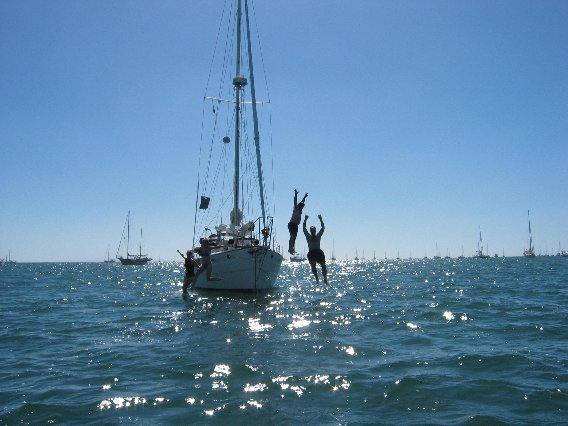
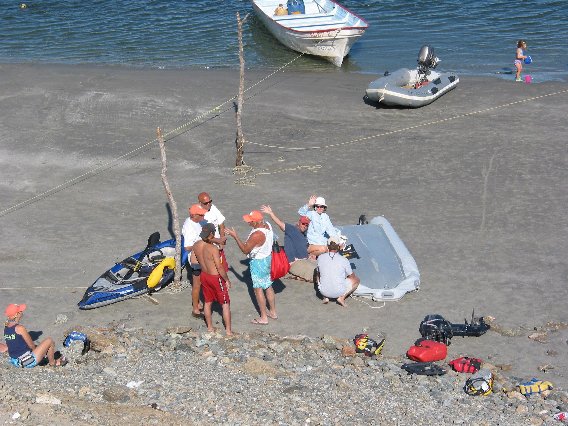
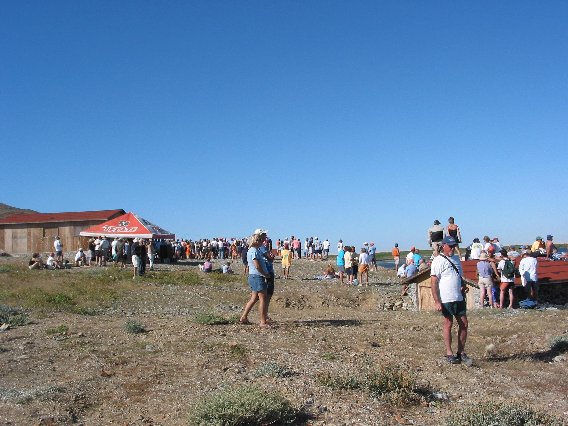
We're in Puerto Vallarta for the next week so there won't be many new posts to the blog. However the Yacht Club has wireless internet so I'm able to post a few pictures which have been backing up. Enjoy!
We'll be here 'til mid next week,
John
We'll be here 'til mid next week,
John





Subscribe to:
Comments (Atom)